

The European standard “EN 12663 Railway applications - Structural requirements of railway vehicle bodies” consists of the following subsections published under the same title:
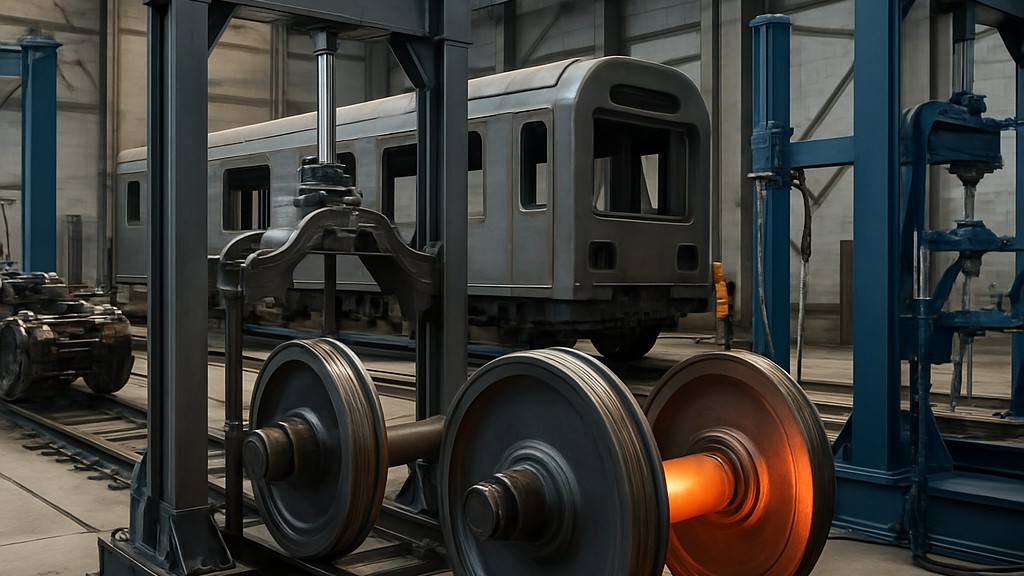
The structural design of railway vehicle bodies depends on the loads to which they are subjected and the properties of the materials from which they are manufactured. This standard aims to provide a uniform basis for the structural design of vehicle bodies.
For the purposes of this standard, the following terms and definitions apply:
The coordinate system is shown in the standard. The positive direction of the x-axis (corresponding to the longitudinal axis of the vehicle body) points in the direction of motion. The positive direction of the z-axis (corresponding to the vertical axis of the vehicle body) points upward. The y-axis (corresponding to the transverse axis of the vehicle body) lies in the horizontal plane, completing the right-handed coordinate system.
The structural requirements in this standard are described as follows: Railway vehicle bodies must withstand maximum loads consistent with their operational requirements and provide the required service life with an adequate probability of withstanding under normal operating conditions. The ability of the railway vehicle body to carry the required loads without permanent deformation or fracture must be demonstrated by calculation or testing as described in the verification program included in this standard. The assessment should be based on the following criteria:
Data describing the expected service conditions should be part of the specification. From this data, all significant load cases should be defined in a manner consistent with the acceptance criteria. Where appropriate, the hardness criteria defined herein should be part of the specification. The requirements of this standard are based on the use of metallic materials, and the requirements defined in this standard apply only to these materials. If different (non-metallic) materials are used, the fundamental principles of this standard should still be applied, and appropriate data representative of the performance of these materials should be used.
For the purposes of applying this standard, all railway vehicles are divided into categories. The classification of different categories of railway vehicles is based solely on the structural requirements of the vehicle bodies. Customers are responsible for determining the category to which their railway vehicles will be designed. Customers will vary in their choice of category, taking into account maneuvering conditions and system safety measures. This is expected and should not be considered a conflict with this standard.
Due to their unique structure and distinct design objectives, three main groups are distinguished: locomotives, passenger cars, and freight wagons. These three groups can be further subdivided according to their structural requirements. Categories for freight wagons are taken from EN 12663-2.
This standard defines the loads carried by vehicle bodies and special equipment, gives material data, specifies its use, and provides the principles and methods to be used for design verification through analysis and testing.
Two methods are given for this design validation:
Freight wagons are divided into categories defined solely by the structural requirements of their vehicle bodies. Some freight wagons do not fit into any of the defined categories; the structural requirements for such freight wagons should be part of the specification and based on the principles presented in this standard.
This standard applies to all freight wagons in the EU and EFTA territories. The requirements specified assume operating conditions and situations common in these countries.
The EN 12663 standard defines the structural requirements for railway vehicle bodies, helping to ensure safety, reliability, and durability in train design and production. The key reasons for the vital importance of this standard are:
Our organization, which has been supporting businesses across all sectors for years through a wide range of testing, measurement, analysis, and evaluation activities, has a strong team of employees who closely follow global developments in science and technology and are constantly improving themselves. In this context, we also provide testing services in accordance with the EN 12663 Railway Applications - Structural Requirements for Railway Vehicle Bodies standard.
To get an appointment, to get more detailed information or to request an evaluation, you can ask us to fill in our form and reach you.

