

The European standard “EN 50125-1 Railway applications - Environmental conditions for equipment - Part 1: Railway vehicles and vehicle-mounted equipment” aims to define environmental conditions in Europe. It is also applicable elsewhere by agreement.
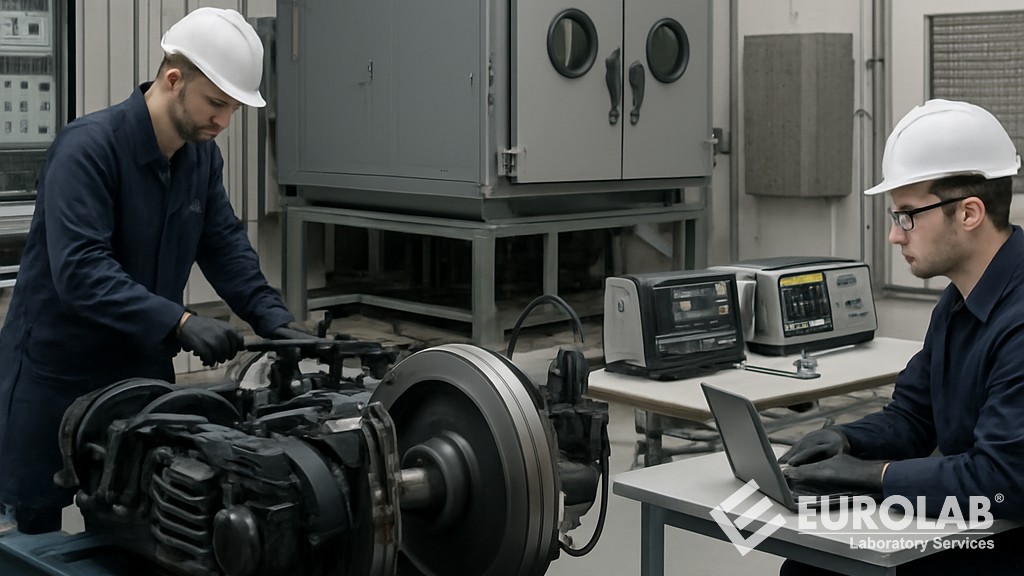
This standard covers the definitions and ranges of the following parameters: altitude, temperature, humidity, air movement, rain, snow and hail, ice, solar radiation, lightning, and pollution for railway vehicles and vehicle-mounted equipment (mechanical, electromechanical, electrical, electronic).
Specifically, this standard defines the interface conditions between the vehicle and its environment. The defined environmental conditions are considered normal in service. Further information on challenging conditions can be found in the EN 16251 standard.
Railway vehicles or parts may be used outside of specification, even with reduced performance. In these cases, relevant operating regulations may be required to ensure technical compatibility between the railway vehicles and the environmental conditions.
The microclimates surrounding the components may be defined by relevant product standards or specific requirements. The effects of occupants on the equipment and the effects of the equipment on occupants are not considered in this standard. This standard does not apply to cranes, mining vehicles, and cable cars. Furthermore, this standard is not applicable to natural disasters (e.g., earthquakes).
In the world of high-risk rail operations, where safety, reliability, and efficiency are non-negotiable, the design and deployment of electrical and electronic equipment must account for numerous environmental challenges. From extreme temperatures on remote lines to vibrations from passing trains and electromagnetic interference in crowded city stations, rail infrastructure faces conditions that can jeopardize even the most robust systems.
The EN 50125 standard is a multi-part series summarizing the climatic, mechanical, and electrical challenges encountered in railway environments across Europe. While adaptable globally through supplier-customer agreements, its primary focus is on ensuring that equipment, from railway cars to fixed installations, can perform reliably under defined normal service conditions. This standard does not prescribe specific test methods but provides fundamental parameters for designers to calculate reliability, usability, sustainability, and safety criteria.
The EN 50125 standard is divided into three complementary sections, each tailored to different categories of railway equipment. This modular approach provides a consistent framework for environmental classification while enabling targeted application.
The EN 50125-1 standard addresses equipment installed on trains, including control systems, passenger information displays, and traction electronics. It defines environmental classes according to the train's operational profile (high-speed intercity services, freight transport, or urban metro).
The basic requirements are as follows:
Compatibility ensures that onboard systems remain operational throughout the entire lifecycle of railway vehicles, reducing downtime and enhancing passenger safety.
Compliance with the EN 50125 standard goes beyond mere regulatory requirements; it is a cornerstone of modern railway engineering. By standardizing environmental profiles, it ensures:
Compatibility typically includes the following:
There are challenges, particularly for lightweight high-speed rail, such as balancing robustness with weight/cost constraints, but ongoing revisions are also accounting for climate change impacts such as intensifying storms.
As railways become electrified and digitized (with autonomous trains and 5G-enabled signaling), the EN 50125 standard is evolving to address emerging threats. Recent changes consider cyber-physical vulnerabilities related to environmental stressors, and future updates may integrate sustainability measures such as energy-efficient cooling in hot climates.
In the age of net-zero goals, this standard not only protects operations but also supports greener infrastructure by promoting robust and low-failure-rate designs.
In short, the EN 50125-1 standard, as proof of the rigorous foresight required in railway engineering, transforms potential environmental hazards into predictable parameters. Whether it's reinforcing a signaling relay against snowstorms in the mountains or strengthening a substation in a polluted industrial area, this standard ensures that railways operate with impeccable precision.
For many years, our organization, with its competent and experienced staff, has been understanding the needs of its customers, providing the advanced testing services they require, and assisting them in the establishment, implementation, and improvement of management systems. Within this framework, we also provide testing services to businesses in accordance with the “EN 50125-1 Railway applications - Environmental conditions for equipment - Part 1: Railway vehicles and vehicle-mounted equipment” standard.
To get an appointment, to get more detailed information or to request an evaluation, you can ask us to fill in our form and reach you.

