
STM-C-703-A Railway Wagons - Seat Cover Approval

STM-C-703-A Railway Wagons - Seat Cover Approval

The “STM-C-703-A Railway carriages - Seat cover approval” standard, developed by the French National Railways (SNCF), is a railway material specification for the approval of seat covers within the scope of railway flooring materials. This specification describes the qualification and approval requirements for textile and leather seat cover materials used in passenger railway vehicles.
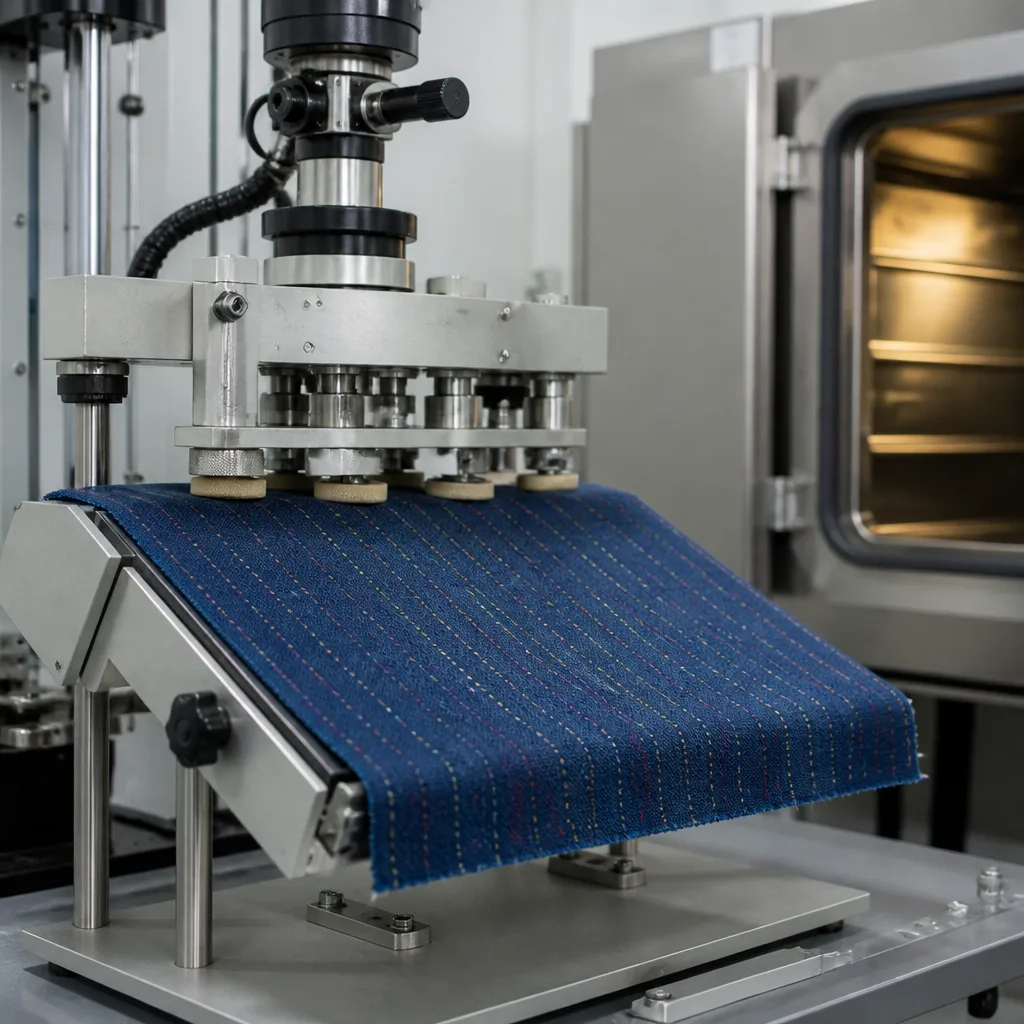
STM-C-703-A Railway Wagons - Seat Cover Approval

Unlike manufacturing standards that describe how a material should be produced, the STM-C-703-A standard focuses on homologation (qualification). Before a seat fabric or upholstery material can be installed in railway vehicles, it must successfully demonstrate compliance with defined mechanical, environmental, aesthetic, safety, and durability requirements.

Passenger train seats are subjected to years of continuous service under harsh conditions. Seat upholstery must withstand the following:

  • Regular passenger use
  • Repeated wear
  • Cleaning chemicals
  • Exposure to UV rays
  • Temperature and humidity changes
  • Vandalism
  • Fire safety requirements
  • Color fading
  • Mechanical wear

The STM-C-703-A standard provides a standardized assessment procedure that ensures only qualified materials are approved for railway applications. This specification helps railway operators in the following areas:

  • Standardizing the quality of upholstery.
  • Increasing passenger comfort
  • Reducing maintenance costs
  • To extend service life
  • Ensuring security compliance.
  • To provide a consistent internal view across fleets.

The STM-C-703-A standard generally applies to seat upholstery materials used in passenger railway vehicles. These include:

  • Woven fabrics
  • knitted fabrics
  • Velvet upholstery
  • Synthetic leather
  • Natural leather
  • Laminated flooring materials
  • Composite seat upholstery

This specification is designed for materials used in the following vehicles:

  • High speed trains
  • Regional trains
  • Intercity train cars
  • Passenger carriages
  • Sleeping cars
  • Renovated railway interiors

Typical qualification requirements are defined in this standard as follows:

  • Mechanical durability: Materials are tested against the following types of resistance:
    • Wear
    • Surface wear
    • laceration
    • Tensile strength
    • Seam strength
    • Puncture resistance
    • Flexible cracking

These tests simulate passenger usage over many years.

  • Appearance preservation: Seat upholstery should retain its appearance after prolonged use. Typical considerations include:
    • Color stability
    • Tissue preservation
    • Surface quality
    • Pattern distortion
    • Pilling resistance
    • Wrinkle resistance
  • Fire performance: The interiors of passenger trains require stringent fire safety measures. Seat upholstery is typically evaluated for:
    • Flame propagation
    • heat release
    • Smoke formation
    • Toxic gas emissions
    • Spontaneous extinguishing behavior

This specification is used in conjunction with SNCF fire safety requirements for railway equipment.

  • Resistance to cleaning: Passenger seats are cleaned frequently. Materials are evaluated for resistance to the following:
    • detergents
    • disinfectants
    • Stain removers
    • Su
    • Alcohol-based cleaners
    • Repeated cleaning cycles

The aim is to ensure that routine maintenance does not damage the flooring.

  • Environmental durability: Seat materials are exposed to various environmental conditions throughout their lifespan. Tests include:
    • Exposure to high temperature
    • Exposure to low temperatures
    • humidity cycle
    • UV / light aging
    • Dimensional stability

These assessments confirm that the materials retain their properties after environmental aging.

  • Passenger comfort: In addition to durability, certified materials should ensure a pleasant passenger experience. Typical features include:
    • Surface sensation
    • Breathability
    • Flexibility
    • Comfort on long journeys
    • Compatibility with seat foam
  • Vandalism resistance: Public transport seats are frequently subjected to intentional damage. Depending on the railway operator's requirements, materials may be evaluated for resistance to the following:
    • cuts
    • scratches
    • Graffiti
    • Ink blot
    • Surface damage
    • chemical attack

The relevant French railway standards address vandalism performance for flexible seat upholstery.

A qualification program under the STM-C-703-A standard includes the following:

  • Abrasion resistance: Martindale or equivalent abrasion test.
  • Tensile strength: A measure of fabric strength.
  • Tear resistance: Resistance to tearing forces.
  • Seam strength: The strength of the seams.
  • Color fastness: Resistant to light, friction, washing, and perspiration.
  • Dimensional stability: Post-aging shrinkage.
  • Hair growth: The formation of hairs on the surface.
  • Flexibility resistance: Repeated bending.
  • Resistance to cleaning: Chemical exposure.
  • Fire behavior: Railway flammability tests.

The STM-C-703-A standard is part of SNCF's broader framework for railway interior materials. Related standards include:

  • STM-C-701 Textile floor coverings (carpets)
  • STM-C-708 Flexible polyurethane foam products
  • STM-C-005 Decorative standards used in railway wagons.
  • ST-M 052 Railway textile products
  • ST-M 117 Passenger seats, sleeping cars and beds
  • SNCF fire safety certifications for interior materials.

Together, these features help ensure compatibility and consistent quality in railway interior components.

Manufacturers whose products meet the STM-C-703-A standard can demonstrate that their seat upholstery provides the following:

  • Suitable for railway passenger service.
  • Provides long-lasting durability.
  • It retains its appearance even after years of use.
  • It supports passenger comfort.
  • It meets the operator's quality expectations.
  • It reduces maintenance and replacement costs.
  • It integrates with other approved railway interior materials.

For railway operators, this feature simplifies procurement by providing a standardized approval process for paving materials.

Consequently, seat upholstery is among the most frequently used interior components in passenger trains. They are subjected to friction, loading, cleaning, and environmental stresses on every journey. Premature wear or failure can increase maintenance costs, reduce passenger satisfaction, and jeopardize the fleet's appearance.

The STM-C-703-A standard provides a structured approval framework that enables the acceptance of materials capable of meeting the demanding requirements of railway service. By emphasizing durability, safety, appearance preservation, and ease of maintenance, this specification contributes to reliable, comfortable, and cost-effective passenger rail operations.

For many years, our organization, with its competent and experienced staff, has been understanding the needs of its clients, providing the advanced testing services they require, and assisting them in the establishment, implementation, and improvement of management systems. Within this framework, we also provide testing services in accordance with the STM-C-703-A standard.

WhatsApp

