UIC 566 Loads of Wagon Bodies and Components
The “UIC 566 Loads of wagon bodies and components” standard, developed by the International Union of Railways (UIC), describes the load conditions and structural strength requirements for passenger wagon bodies (and components) in railway vehicles. This standard remains a fundamental reference for the design, verification, and approval of passenger wagons, particularly in Europe and regions that follow UIC recommendations.
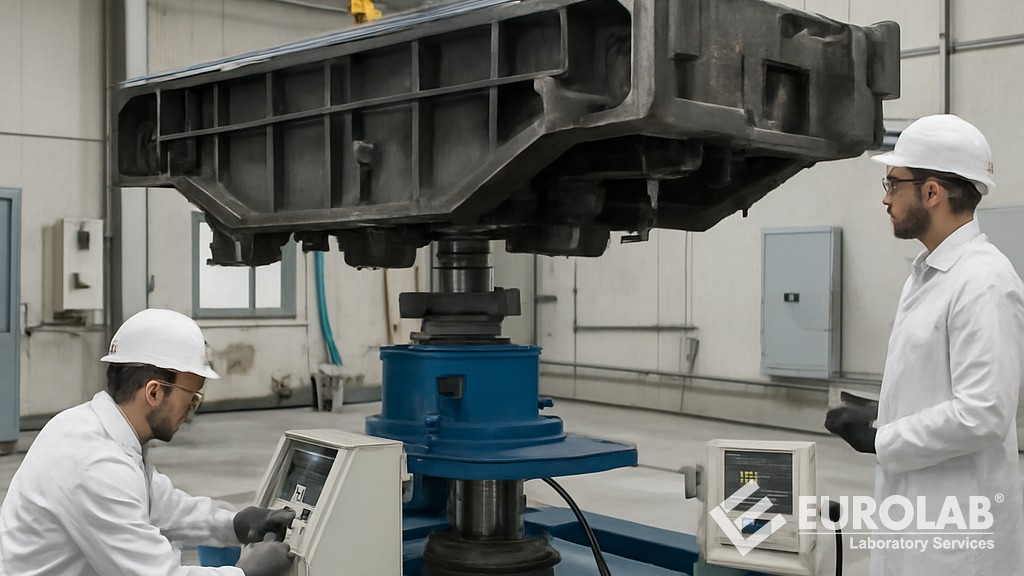
The UIC 566 standard specifies the mechanical loads that railcar bodies, subframes, side walls, roofs, ends, and interior fittings must withstand to ensure structural integrity, passenger safety, and operational reliability. This standard covers:
- Static and quasi-static loads (e.g., end compression and tensile forces, vertical loads from passengers and equipment).
- Dynamic effects during service include longitudinal forces arising from couplings, buffering, and towing devices.
- Special load conditions such as lifting/jacking, bending, and overloading scenarios.
- Strength criteria for the entire wagon body and for individual components such as seat attachments, walkways, and interior panels.
This standard distinguishes between different vehicle types (e.g., conventional railcars, multi-unit railcars) and applies primarily to passenger vehicles rather than locomotives or freight cars.
The UIC 566 standard includes various forced load scenarios, typically verified through calculations, finite element analysis, or physical testing:
- End loads: Longitudinal compressive and tensile forces on fasteners (typically 2000 kN compression in older designs, variations for high-speed or specific fastener types).
- Vertically distributed loads: Represents the weight of passengers and equipment.
- Lateral loads: These result from cornering, wind, or centrifugal forces.
- Torsional loads: Simulates rail bending or uneven support during lifting.
- Test loads for interior components: such as seats, tables, luggage racks and compartments (e.g. forward/backward forces on seat backs to simulate a collision or emergency braking).
- Vibration and fatigue considerations: Recommendations for assessing long-term endurance.
These loads are typically expressed as safety factors, and the structure should not exhibit permanent deformation or failure under test loads, while the ultimate loads ensure that there will be no catastrophic collapse.
The UIC 566 standard has served as the fundamental reference for passenger carriage design in many countries for decades. It has influenced, partly replaced, or supplemented several European norms.
- The standard “EN 12663-1 Railway applications - Structural requirements for railway vehicle bodies - Part 1: Locomotives and passenger carriages” is now the main harmonized standard under the EU's interoperability technical specifications.
- The “EN 15227 Collision resistance requirements” standard is often used in conjunction with the UIC 566 standard for specific load conditions.
Many national regulations, type approvals, and research papers still directly refer to the UIC 566 standard, especially for older fleets or conventional railcars that are not high-speed.
Practical applications of this standard include:
- Design and homologation of new passenger carriages.
- Strength verification of seats and interior fittings (e.g., static load tests on seat frames).
- Compatibility assessments for international traffic on UIC member networks.
- A benchmark for comparing structural performance between older UIC-compliant vehicles and newer EN-compliant vehicles.
While newer high-speed railcars tend to more closely follow the requirements of the EN 12663 standard, the UIC 566 standard remains valid for conventional passenger railcars, multiple units, and in regions where a full transition to EN standards has not yet taken place.
This standard, which remains an important part of the legacy of railway engineering, ensures that passenger vehicles can safely withstand the forces encountered in daily operations and in exceptional circumstances.
The main reasons why the UIC 566 standard is considered so important are as follows.
- It ensures structural safety and integrity: It defines realistic mechanical load conditions (static, quasi-static, and dynamic) that passenger car bodies, subframes, roofs, ends, and interior fittings must withstand. This includes high compressive/tensile end loads, vertical passenger/equipment loads, torsion from track irregularities or lifting, and forces on components such as seats and luggage racks.
- It promotes international compatibility and interoperability: This standard enables passenger railcars to operate safely on international routes, simplifies cross-border maintenance, and supports compatible railcar fleets among UIC member railways.
- Design, testing and certification basis: This standard serves as the primary reference for the following:
- Finite element analysis, strength calculations, and physical testing during vehicle design and homologation.
- Internal passive safety features (e.g., seat anchoring and load-bearing requirements during emergency braking or impacts).
- Old and traditional passenger carriages and multiple units.
- A bridge between old and modern standards: Although partially superseded by standards such as “EN 12663-1 Structural requirements for railway vehicle bodies” and “EN 15227 Collision resistance”, UIC 566 remains valid for:
- Old fleets and maintenance.
- Countries that have not fully transitioned to technical interoperability specifications.
- Situations where established and proven criteria are provided for specific load conditions or components.
- Contributing to a broader railway safety culture: This standard supports the mission of technical harmonization for safe and efficient railway operations worldwide. It helps prevent structural failures caused by overloading, fatigue, or unpredictable forces and has been implemented globally to maintain high levels of safety in passenger rail.
In conclusion, the UIC 566 standard is one of the cornerstones of building reliable and safe passenger vehicles, especially for conventional and international services. It balances structural integrity, passenger protection, and operational practicality. Even as new standards evolve, its principles continue to underpin much of modern railway vehicle engineering.
For many years, our organization, with its competent and experienced staff, has been understanding the needs of its customers, providing the advanced testing services they require, and assisting in the establishment, implementation, and improvement of management systems. Within this framework, we also provide testing services to businesses in accordance with the "UIC 566 Loads of wagon bodies and components" standard.



