

The French standard “NF F16-101 Railway vehicles - Fire behavior - Material selection” describes a set of selection criteria for materials used in the construction of railway vehicles based on their fire behavior. The aim of this standard is to propose a method for classifying materials for railway vehicles based on standardized test results. This classification method sets targets and also takes into account the combustion of materials, the opacity of combustion emissions, and toxicity.
Indeed, given the high occupied space ratio in a confined environment characteristic of rail transport, this standard specifies critical concentrations of products that could cause specific reactions, particularly panic, among passengers in the event of a fire. Therefore, this standard should not be applied to areas other than rail vehicles without prior studies.
The purpose of this standard is to establish rules for material selection based on fire behavior in terms of fire response, smoke opacity, and toxicity of emitted gases. This standard defines classification objectives and specifies the minimum classifications that must be followed according to the relevant material type. The acceptance conditions for materials are included in the standard annex (Annex A).
This standard applies to all non-metallic materials, excluding paints, that form part of passenger cars, cabs, minibuses, observation wagons, railcars and their trailers, as well as driver's cabs and locomotive cabins. This standard is supplemented by the NF F16-102 standard for electrical equipment.
In the high-risk world of rail transport, where thousands of passengers rely daily on the safety and reliability of trains, fire prevention is paramount. Countries with extensive high-speed rail networks have long been leaders in establishing stringent fire safety standards for rail vehicles. One of these critical standards is NF F16-101, which regulates the fire behavior of materials used in rail vehicles. This standard is a cornerstone of fire safety regulations in the rail industry.
The NF F16-101 standard focuses on non-metallic materials, excluding paints, incorporated into passenger cars, cabs, vans, cruise cars, railcars, trailers, and driver cabs. Its primary aim is to minimize fire risks by classifying materials according to their fire reaction, smoke opacity, and gas toxicity. This ensures that evacuation is possible even in the event of a fire, and that harm to passengers and crew is limited.
The NF F16-101 standard essentially defines classification objectives and minimum compliance levels based on the material's end-use in rail transport. Materials are evaluated according to three main criteria: flammability (M rating), combustibility (I rating), and smoke/toxicity (F rating). These ratings guide material selection, with stricter requirements for high-risk areas such as passenger compartments.
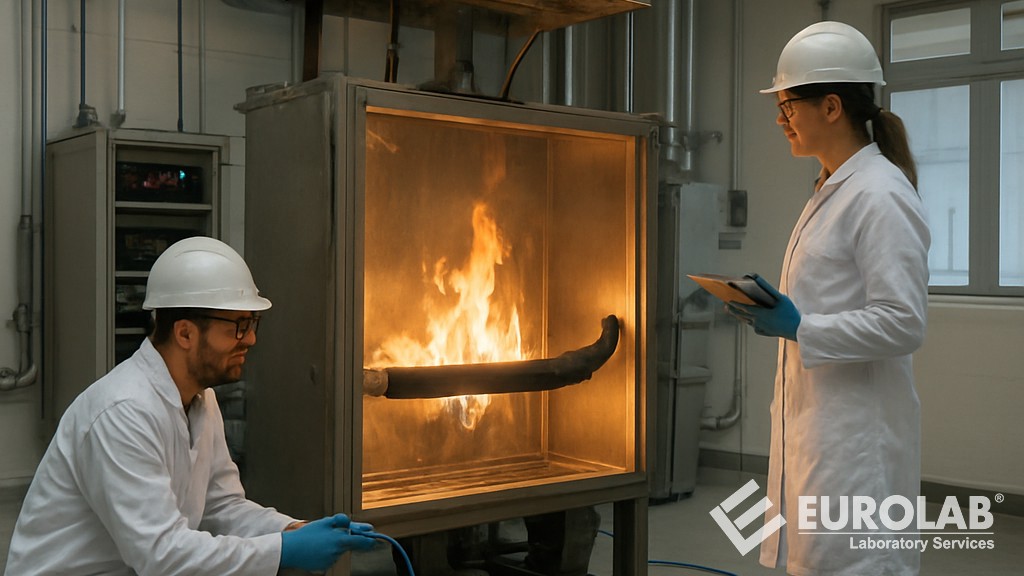
Tests under NF F16-101 are rigorously conducted and typically performed by accredited laboratories. Samples are conditioned to simulate real-world humidity and temperature before being exposed to flames, heat sources, or furnaces. For electrical components, the NF F16-102 standard is supplemented with specific tests for wiring and insulation.
Compatibility includes the following:
Failure to comply with standards may result in the suspension of vehicle certification.
Consequently, the NF F16-101 standard remains an indispensable tool for engineers, manufacturers, and regulators in their pursuit of zero-fire tolerance transportation.
For many years, our organization, with its competent and experienced staff, has been understanding the needs of its clients, providing the advanced testing services they require, and assisting in the establishment, implementation, and improvement of management systems. Within this framework, we also provide testing services to businesses in accordance with the "NF F16-101 Railway Vehicles - Fire Behavior - Material Selection" standard.
To get an appointment, to get more detailed information or to request an evaluation, you can ask us to fill in our form and reach you.

