CISPR 16 Specification for Radio Disturbance and Immunity Measuring Devices and Methods
The standard “CISPR 16 Specification for radio disturbance and immunity measuring devices and methods” published by the International Committee on Radio Interference (CISPR) consists of the following subsections published under the same title:
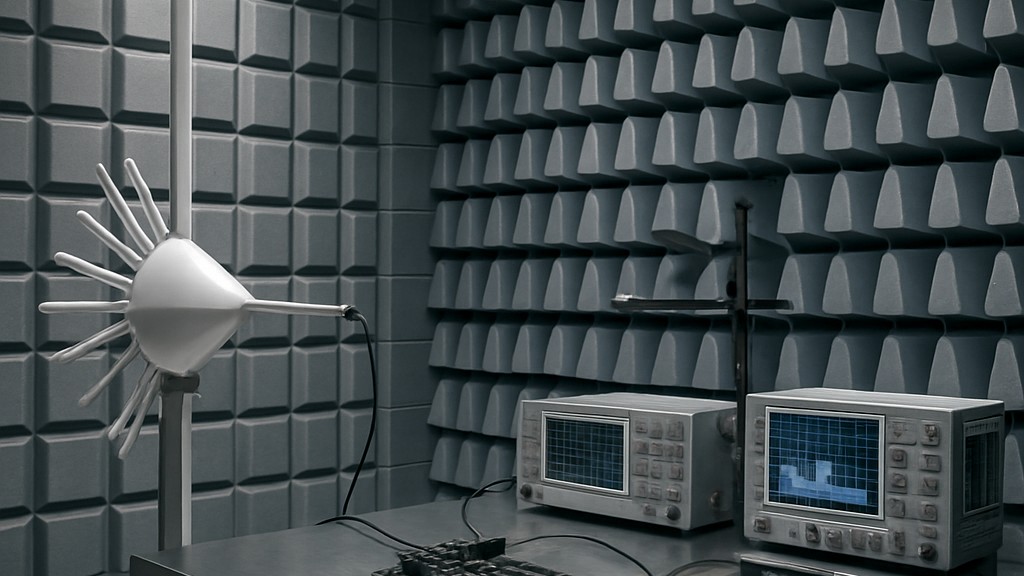
- The standard "CISPR 16-1-1 Part 1-1: Radio disturbance and immunity measuring instruments - Measuring instruments" describes the characteristics and performance of equipment used for measuring radio interference in the frequency range 9 kHz to 18 GHz. This standard also includes requirements for special equipment for discrete interference measurements.
The CISPR 16-1-1 standard is a core electromagnetic compatibility (EMC) standard for use by IEC product committees. Product committees are responsible for determining the applicability of a core EMC standard. The specifications in this standard apply to electromagnetic interference (EMI) receivers and spectrum analyzers. The term "measuring receiver" used in this standard refers to both EMI receivers and spectrum analyzers. Calibration requirements for measuring receivers are discussed in detail in the standard's annex (Annex J).
- The standard “CISPR 16-1-2 Part 1-2: Radio disturbance and immunity measuring equipment - Link devices for conducted disturbance measurements” describes the characteristics and performance of equipment used for measuring radio disturbance voltages and currents in the frequency range 9 kHz to 1 GHz.
The CISPR 16 standard is a core EMC standard for use by IEC product committees. Product committees are responsible for determining the applicability of the EMC standard.
This standard includes specifications for auxiliary devices for artificial mains networks, current and voltage probes, and connection units for current injection into cables. The requirements of this publication are intended to be met at all frequencies and at all radio disturbance voltage and current levels within the CISPR indication range of the measuring equipment.
- The standard “CISPR 16-1-3 Part 1-3: Radio disturbance and immunity measuring equipment - Ancillary equipment - Disturbance power” has been established as a basic standard specifying the characteristics and calibration of the absorber clamp for the measurement of radio disturbance power in the frequency range 30 MHz to 1 GHz.
- "CISPR 16-1-4 Part 1-4: Radio disturbance and immunity measuring instruments - Antennas and test sites for radiated disturbance measurements" describes the characteristics and performance of equipment used for measuring radiated disturbances in the frequency range 9 kHz to 18 GHz. This standard includes specifications for antennas and test sites. CISPR 16-1-4 is a core EMC standard for use by IEC product committees. The requirements of this standard apply to all frequencies and all radiated disturbance levels within the CISPR indication range of the measuring equipment.
- The standard "CISPR 16-1-5 Part 1-5: Radio disturbance and immunity measuring equipment - Antenna calibration sites and reference test sites for 5 MHz to 18 GHz" describes the requirements for calibration sites in the 5 MHz to 18 GHz frequency range used to perform antenna calibrations in accordance with CISPR 16-1-6. This standard also includes requirements for reference test sites used to verify compliance test sites in the 30 MHz to 1000 MHz frequency range in accordance with CISPR 16-1-4. The specifications of measurement instrumentation are given in CISPR 16-1-1 and CISPR 16-14. More information and background on uncertainties in general are given in CISPR 16-4, which can also be helpful in establishing uncertainty estimates for antenna calibration processes and field verification measurements.
- The standard "CISPR 16-1-6 Part 1-6: Radio disturbance and immunity measuring equipment - EMC antenna calibration" describes antenna calibration procedures and supporting information for determining antenna factors applicable to antennas intended for use in radiated disturbance measurements. Antenna factors are affected by the immediate environment and its position in space relative to a radiation source. This standard focuses on antenna calibrations that provide antenna factors in a free-space environment in the line-of-sight direction of the antenna. The frequency range covered is 9 kHz to 18 GHz. The relevant antenna types covered in this standard are monopole, loop, dipole, biconical, logarithmic periodic dipole array, hybrid, and horn antennas. Guidance is also provided on the measurement uncertainties associated with each calibration method and configuration, and on the test equipment used.
- The standard "CISPR 16-2-1 Part 2-1: Methods for measuring disturbances and immunity - Conducted disturbance measurements" was established as the basic standard that specifies methods for measuring disturbance phenomena in the frequency range 9 kHz to 18 GHz in general and conducted disturbance phenomena in the frequency range 9 kHz to 30 MHz in particular. The connection/disconnection network for emission extends the frequency range of conducted disturbance measurements to 300 MHz.
- The standard "CISPR 16-2-2 Part 2-2: Methods for measuring disturbances and immunity - Measurement of disturbance power" describes methods for measuring disturbance power using absorber clamps in the frequency range 30 MHz to 1000 MHz. This standard classifies different types of disturbances and describes suitable detectors for their measurement. This standard includes a method using absorber clamp techniques to measure the disturbance power (a type of conducted emission) emitted by electrical and electronic equipment over power lines. This is important for understanding how much electromagnetic energy is propagating along an electrical cable and how it can affect other devices.
- The standard "CISPR 16-2-3 Part 2-3: Methods for measuring disturbances and immunity - Radiated disturbance measurements" describes requirements for test site characteristics, details on the measurement setup and procedure, calibration of test sites and antennas, and uncertainty estimates. This standard provides guidance on how to ensure repeatable and reproducible results. This standard contains standardized methods for radiated disturbance measurements in the frequency range 9 kHz to 18 GHz. These measurements are typically made in the following environments: open-field test sites, semi-anechoic chambers, and fully anechoic chambers (with certain limitations).
- The standard "CISPR 16-2-4 Part 2-4: Methods of measurement of disturbances and immunity - Immunity measurements" is designed as a basic standard that specifies methods for measuring immunity to EMC phenomena in the frequency range 9 kHz to 18 GHz. This standard defines standardized methods for performing immunity tests on electrical and electronic equipment. In particular, it provides:
- Methods for measuring immunity to radio frequency (RF) disturbances
- Procedures for evaluating equipment performance under RF stress
- Guidelines for repeatable and reproducible immunoassays
This standard ensures that products continue to operate correctly and reliably when exposed to electromagnetic disturbances.
- The standard "CISPR 16-3 Part 3: CISPR technical reports" is a collection of technical reports that serve as background and supporting information for various other standards and technical reports in the CISPR 16 series. This standard also provides background information on the history of CISPR and a historical reference on the measurement of interference from household and similar appliances in the VHF range.
- CISPR 16-4-2 Part 4-2: Uncertainties, statistics and limit modeling - Measurement instrument uncertainty" describes the method for applying measurement instrument uncertainty in determining compliance with CISPR degradation limits. This standard also applies when the results and the interpretation of the results obtained will be affected by the uncertainty of the measurement instruments used during the test.
The CISPR 16-4-2 standard is a core EMC standard for use by IEC product committees. Product committees are responsible for determining the applicability of the EMC standard. The annexes to this standard contain the fundamental information used to quantify the measurement instrument uncertainty inherent in establishing CISPR values, thus providing valuable background information for those requiring both initial and advanced knowledge of measurement instrument uncertainty and how to account for individual uncertainties in the measurement chain.
- The standard "CISPR 16-4-3 Uncertainties, statistics and limit modeling - Statistical considerations in determining the EMC compliance of mass-produced products" addresses statistical assessments in determining the EMC compliance of mass-produced products. The rationale for such statistical assessments is as follows:
- Interference reduction aims to ensure that most devices to be approved do not cause interference.
- CISPR limits must be suitable for the purpose of type approval of mass-produced devices and approval of single-production devices.
- Statistical techniques should be applied to ensure that mass-produced devices comply with CISPR limits.
- It is important for international trade that limits are interpreted in the same way in every country.
- IEC National Committees collaborating on CISPR work must seek approval from the competent authorities in their country.
Therefore, this standard specifies requirements and provides guidance based on statistical techniques. EMC compliance of mass-produced devices shall be based on the application of statistical techniques that should provide the consumer with an 80 percent degree of confidence that 80 percent of the devices of the type investigated comply with the emission or immunity requirements.
- A recommendation for dealing with the statistics of radio interference complaints is provided in the standard "CISPR 16-4-4 Part 4-4: Uncertainties, statistics and boundary modeling - A model for calculating complaint statistics and boundaries for the protection of radio services." This standard also describes the calculation of disturbance field strength and voltage boundaries for measurement at a test site based on models for the distribution of disturbances through radiated and conducted coupling, respectively.
- CISPR 16-4-5 Part 4-5: Uncertainties, statistics and limit modeling - Conditions for the use of alternative test methods describes a method that allows product committees to develop limits for alternative test methods using transformations from established limits. While this method is generally applicable to all types of degradation measurements, it focuses on radiation degradation measurements (i.e., field strength and total radiated power) for which several alternative methods are already specified. These limit development methods are intended for use by product committees and other groups responsible for defining emission limits in situations where the decision to use alternative test methods and the corresponding limits in product standards is made.
- The standard "CISPR 16-4-6 Part 4-6: Uncertainties, statistics and limit modeling - Radio frequency interference (RFI) statistics and verification by field measurements" applies to the collection, processing and preparation of statistical data on radio interference events to facilitate the evaluation of the effectiveness of CISPR standards with regard to their potential to prevent radio frequency interference (RFI). This standard also provides a method for analyzing and assessing the risk of an RFI event occurring in the electromagnetic environment. This standard also provides guidance on how an interested party can verify the root cause of an RFI. The collection of statistical data according to this standard covers only RFI events that affect radio reception by radio receivers or related receiver components.
Our organization, which has been supporting businesses across all sectors for years with a wide range of testing, measurement, analysis, and evaluation activities, has a strong team of employees who closely follow global developments in science and technology and are constantly improving themselves. In this context, we also provide testing services in accordance with the CISPR 16 Specification for Radio Disturbance and Immunity Measurement Devices and Methods standard.



