

The standard “ISO 13766 Earthing and grounding of construction machinery - Compatibility of machines with internal electrical power supply (EMC)” published by the International Organization for Standardization (ISO) consists of the following subsections published under the same title:
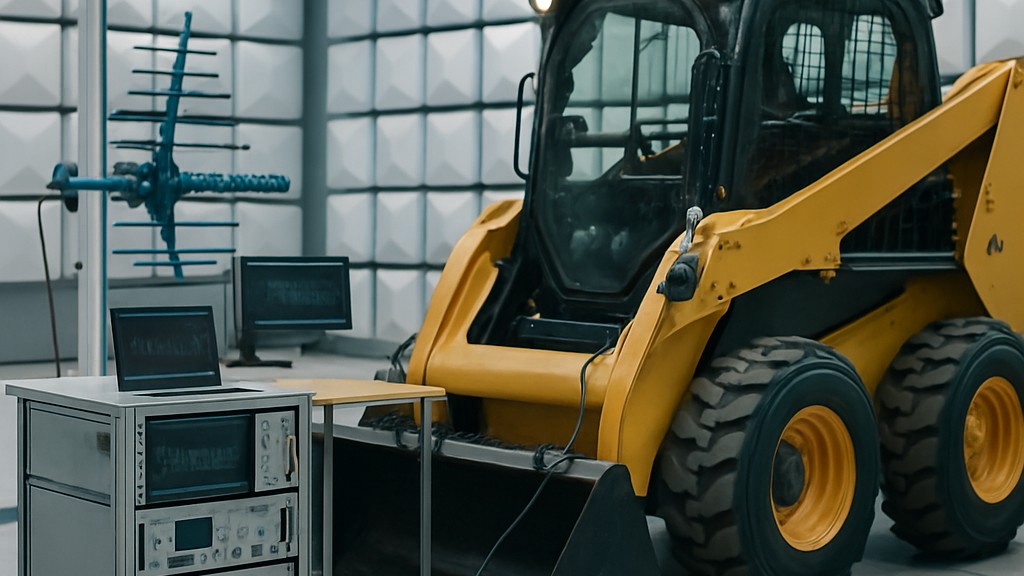
This standard addresses general EMC requirements under typical electromagnetic environmental conditions (ISO 13766-2 specifically addresses EMC requirements related to functional safety).
Electrical/electronic subassemblies intended to be installed in machinery , as well as separate electrical/electronic subassemblies, are also within the scope of this standard. This standard evaluates the following electromagnetic disturbance events:
The machine may have DC or AC, or a combination of both, as its internal electrical power supply system. This standard does not apply to machines designed to be powered from an external mains supply or to incidents arising from military applications. Mains-connected machines are covered by IEC 61000. Hybrid machines are covered by UN ECE R10.
This standard addresses EMC requirements relating to the functional safety of machines, electrical/electronic subassemblies , and individual electrical/electronic subassemblies.
This standard relates only to safety-related parts of control systems using electrical/electronic components defined in ISO 13849-1 that meet design requirements equal to or higher than safety-related performance level PL b (medium risk control) as defined in ISO 13849-1. It also relates to electrical and electronic components, or separate electrical/electronic subassemblies, intended for installation in machines under the restriction of PL b.
In this standard, the following electromagnetic disturbance phenomena are evaluated:
The machine may have DC or AC, or a combination of both, as its internal electrical power supply system. This standard does not apply to machines designed to be powered by an external mains supply or to events arising from military applications. Mains-connected machines are covered by IEC 61000.
In the world of heavy construction and earthmoving equipment, reliability is paramount. These machines operate in harsh, dynamic environments where electrical systems must withstand vibrations, dust, and extreme temperatures. But there's another invisible challenge: electromagnetic interference (EMI). Radios, welding equipment, and even nearby power lines can disrupt electronic controls, leading to malfunctions or safety hazards. This is where ISO 13766 standards come into play.
The ISO 13766 standards provide a framework for testing and ensuring that earthmoving and construction machinery can operate without causing or being subject to undue electromagnetic disturbances. Since its initial publication, these standards have been updated to meet the increasing complexity of modern equipment, which requires increasingly sophisticated electronic devices for automation and safety features. This standard is vital for manufacturers, operators, and regulators aiming to minimize downtime and improve workplace safety.
The ISO 13766 standards address machines with internal electrical power supplies. These standards apply to:
These standards evaluate EMC under typical electromagnetic environmental conditions—that is, everyday construction site scenarios rather than extreme laboratory simulations. The first part addresses general interference, while the second addresses safety-critical issues, ensuring EMI doesn't cause dangerous malfunctions in systems like automatic braking or stability controls. Notably, its support for both DC and AC internal power systems, or hybrids, makes it versatile for a variety of equipment fleets.
The ISO 13766 standards essentially evaluate two-way EMC: emission (how much interference the machine generates) and immunity (how well it resists external interference):
Acceptance criteria are pass/fail based on performance degradation. No outages are permitted for critical functions, while only minor outages are permitted for non-essential features. Testing is conducted in controlled environments that mimic real-world use, such as anechoic chambers for radiation emissions.
Our organization, with its competent and experienced team, has been understanding the needs of its customers for years, providing them with the advanced testing services they need, and assisting them in establishing, implementing, and improving management systems. In this context, we also provide testing services in accordance with the ISO 13766 "Grounding and construction machinery - Compatibility of machines with internal electrical power supplies (EMC)" standard.
To get an appointment, to get more detailed information or to request an evaluation, you can ask us to fill in our form and reach you.

