

The standard “IEC/CISPR 25 Vehicles, boats and internal combustion engines - Radio interference characteristics - Limits and measurement methods for the protection of on-board receivers” published by the Special International Committee on Radio Disturbances (CISPR), which is part of the International Electrotechnical Commission (IEC), describes the limits and measurement methods for the measurement of radio disturbances in the frequency range 150 kHz to 5925 MHz.
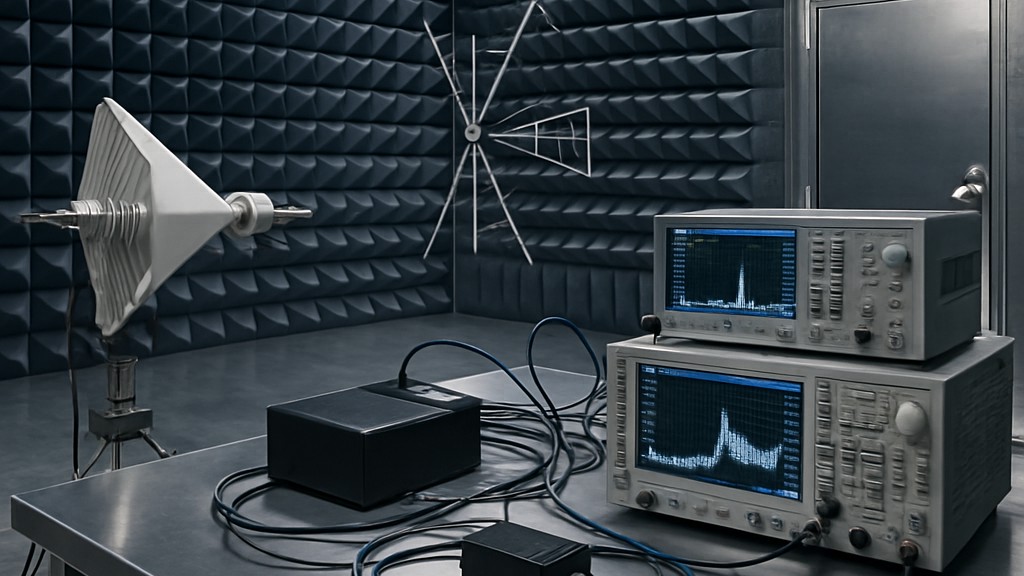
This standard applies to vehicles, boats, internal combustion engines, trailers, appliances and all electronic and electrical components designed for use in vehicles, boats, trailers and appliances.
The limits are intended to protect onboard receivers installed in a vehicle in accordance with the manufacturer's instructions against interference generated by components/modules within the same vehicle. The types of receivers to be protected include, for example, broadcast receivers such as audio and television, land mobile radio, cordless telephone, amateur and public radio, satellite navigation such as GPS, Wi-Fi, and Bluetooth.
The IEC/CISPR 25 standard does not cover the protection of electronic control systems from radio frequency emissions or transient or impulse voltage surges. These aspects are covered in other ISO standards.
The limits specified in this standard are recommendations and are subject to change as agreed upon between the vehicle manufacturer and the component supplier. This standard is also intended to be applied by the vehicle manufacturer or component supplier for equipment that will be added to and connected to the vehicle wiring harness or an onboard power connector after delivery of the vehicle.
This standard specifies test methods to be used by vehicle manufacturers and suppliers to assist in the design of vehicles and components and to ensure that on-board radio frequency emissions are at controlled levels. The requirements in this standard do not apply to intentional transmissions (including spurious emissions) from a radio transmitter as defined by the International Telecommunication Union.
This exception is limited to transmitter emissions that are radiated emissions from the equipment under test and are intended to be coupled to the cable line in the measurement installation. This exception does not apply to transmissions on frequencies intentionally generated by the radio portion of a piece of equipment under test.
Vehicle manufacturers and component suppliers use radio regulatory standards to manage the impact of spurious emissions from a radio transmitter, unless spurious emission limits are agreed upon in the test plan.
The fifth edition of this standard constitutes a technical revision and includes the following significant technical changes compared to the previous edition:
In today's increasingly connected and electronically dense vehicles, ensuring that electronic components can operate without causing or being affected by electromagnetic interference (EMI) is critical. The IEC/CISPR 25 standard plays a key role in defining and regulating these electromagnetic emissions in automotive environments.
The IEC/CISPR 25 standard applies to electromagnetic emissions (both conducted and radiated) from:
The primary objective is to ensure that EMI levels from these components are low enough to not interfere with the vehicle's internal radio receivers. This standard is not designed to guarantee immunity (how resistant a device is to interference), as addressed by standards such as ISO 11452 Road vehicles - Component test methods for electrical disturbances due to narrow-band radiated electromagnetic energy. Instead, it focuses on the emission limits of IEC/CISPR 25.
IEC/CISPR 25 contains test procedures and limits for:
The IEC/CISPR 25 standard is important because it helps ensure electromagnetic compatibility (EMC) of electronic systems in vehicles. The key reasons for this standard's importance are:
CISPR 25 helps prevent these issues early in the development process, saving money and time later.
Ultimately, the IEC/CISPR 25 standard is important because it protects radio signal reception, ensures reliable operation of in-vehicle electronics, and meets industry and regulatory requirements. As modern vehicles integrate more technologies, such as advanced driver assistance systems, infotainment, wireless charging, and electric vehicle powertrains, the potential for electromagnetic interference increases significantly.
The IEC/CISPR 25 standard is a cornerstone of automotive electromagnetic compatibility design and testing. By providing clear emission limits and test procedures, it ensures that all electronic components in a vehicle operate harmoniously without mutual interference or degradation of radio performance. As vehicles continue to evolve towards more complex, connected, and electrical systems, compliance with the IEC/CISPR 25 standard becomes even more crucial.
Our organization, which has been supporting businesses across all sectors for years through a wide range of testing, measurement, analysis, and evaluation activities, has a strong team of employees who closely follow global developments in science and technology and are constantly improving themselves. In this context, we also provide testing services in accordance with the standard "IEC/CISPR 25 Vehicles, boats and internal combustion engines - Radio interference characteristics - Limits and measurement methods for the protection of on-board receivers."
To get an appointment, to get more detailed information or to request an evaluation, you can ask us to fill in our form and reach you.

