Microwave Exposure Resistance Tests
As microwave technology becomes increasingly integrated into modern life, from household appliances to communications systems and industrial equipment, understanding and reducing the effects of microwave exposure has become a pressing concern.
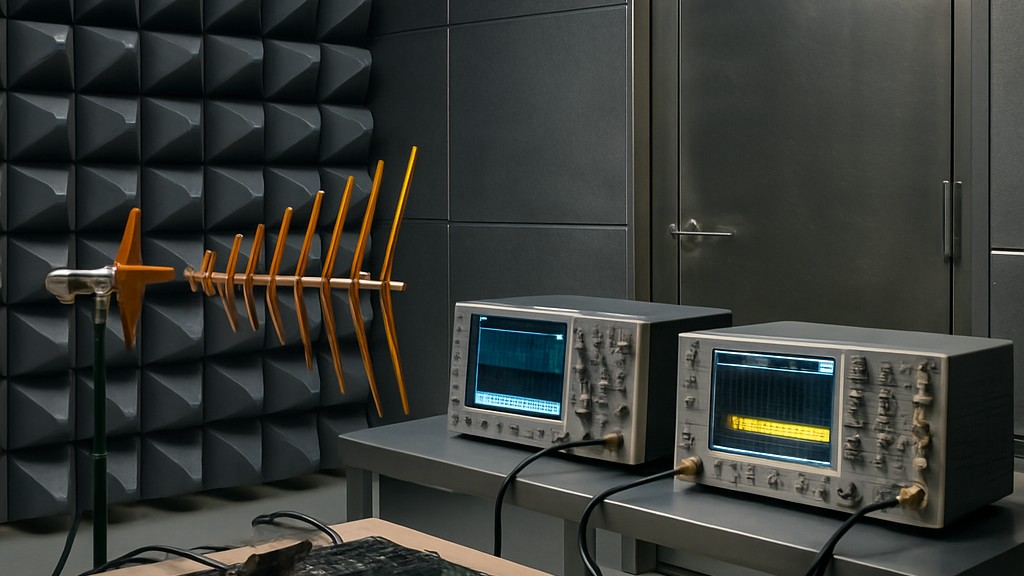
Microwave exposure resistance refers to the capacity of materials, electronic components, and biological systems to withstand or reduce the effects of electromagnetic radiation in the microwave spectrum (generally 300 MHz to 300 GHz).
Microwaves are a type of non-ionizing electromagnetic radiation. Unlike ionizing radiation (e.g., X-rays), microwaves do not remove tightly bound electrons from atoms. However, they can cause dielectric heating, where polar molecules like water absorb energy and convert it into heat. This principle powers microwave ovens, but it also carries risks in other contexts.
Sources of microwave radiation include:
- Microwave ovens (2,45 GHz)
- Radar systems
- Cell phones and Wi-Fi routers
- Satellite communication
- Industrial heating applications
Prolonged or high-intensity exposure to microwave radiation can lead to thermal and non-thermal effects:
- Thermal effects:
- Tissue heating (especially in water-rich organs such as the eyes and brain)
- Burns from industrial equipment or leaks from microwave ovens
- Non-thermal effects (controversial and still being studied):
- Potential cellular stress
- Changes in brain activity patterns
- Effects on reproduction and genetic material (based on some animal studies)
Although regulatory agencies such as the World Health Organization (WHO) and the Federal Communications Commission (FCC) maintain that low-level exposure is safe, increasing research calls for cautious approaches and protective measures.
The resistance of materials to microwave exposure is generally as follows:
- High resistance materials:
- Ceramics: Used in privacy and protection applications.
- Conductive polymers and composites: Absorb and scatter electromagnetic waves.
- Metal mesh and foils: Reflect microwaves and prevent their penetration.
- Radar absorbing materials: Widely used in the aviation and space industry.
- Applications:
- Military: Stealth technology and equipment protection.
- Telecommunications: Protecting sensitive components from signal interference.
- Consumer electronics: Preventing overheating and signal loss.
Biological tissues are not inherently microwave-resistant, but steps can be taken to minimize risks. Key preventative strategies include:
- Electromagnetic clothing made of protective fabrics: woven with silver or copper fibers.
- Design standards for devices: Ensuring minimum leakage and exposure.
- Public health guidelines: Limiting specific absorption rate (SAR) levels in mobile devices.
- Faraday cages: Enclosures used to block electromagnetic fields in laboratories and industries.
Recent advances in microwave shielding technologies include:
- Graphene-based shields: Offer lightweight and high conductivity properties.
- Metamaterials: Engineered structures that can absorb specific microwave frequencies.
- Smart textiles: Clothing that can dynamically adjust its electromagnetic shielding properties.
- Nanomaterials: Increase the absorption and distribution of microwave energy.
Prolonged or intense exposure to microwaves can cause:
- Thermal effects: Heating of materials or tissues
- Non-thermal effects: Molecular changes or electrical interference
- Mechanical or structural deterioration of materials
Microwave exposure resistance tests are specialized procedures used to evaluate the resistance of materials, components, or devices to exposure to microwave radiation. As microwave technology becomes increasingly integrated into consumer electronics, telecommunications, aerospace, defense, and industrial applications, understanding the resistance of materials to microwave energy has become critical. These tests help ensure safety, performance reliability, and compliance with regulatory standards.
Microwave exposure resistance testing evaluates how well a material or device withstands microwave radiation. The primary objectives of this testing are to:
- Evaluation of thermal stability
- Determination of structural and chemical changes
- Ensuring electromagnetic compatibility (EMC)
- Evaluation of performance or insulation deterioration
- Verification of product safety under expected exposure levels
These tests are especially important in sensitive applications such as:
- Military and aviation electronics
- Medical devices (e.g., pacemakers)
- Consumer electronics
- Microwaveable food packaging
Microwave resistance tests can vary depending on the material and industry. However, the general steps are:
- Sample preparation: Selecting the material or component to be tested and controlling the sample size and environmental conditions.
- Exposure adjustment: Using microwave chambers or waveguides and calibrating the power output and frequency (typically 2,45 GHz for consumer devices).
- Duration and intensity control: Test times can range from seconds to hours. Intensity can be varied to simulate real-world or extreme conditions.
- Measurement and evaluation: Changes are determined as follows:
- Physical structure (melting, deformation)
- Electrical properties (resistance, capacitance)
- Chemical composition
- mechanical strength
- Post-exposure analysis:
- Microscopic or spectroscopic analysis for microstructural changes
- Functionality testing for devices
The main equipment used in these tests are:
- Microwave ovens or industrial microwave sources
- Vector network analyzers to evaluate electromagnetic behavior
- Thermal imaging cameras to monitor heat distribution
- Spectrometers and microscopes for post-test analysis
Examples of real-world applications:
- Aerospace and defense:
- Protection of avionics from radar and communication microwave frequencies
- Resistance of materials used in high altitude, high radiation environments
- Consumer electronics:
- Ensuring that phone cases, batteries, and circuit boards are not affected by microwave leakage
- Packaging:
- Testing the materials used in microwaveable containers for heat resistance and safety
- Medical devices:
- Ensuring that implants and electronic devices are not affected by ambient microwaves
Difficulties encountered in these tests and points to be considered:
- Uneven heating: Microwaves can create hot spots that make analysis difficult.
- Material variability: Different materials absorb microwaves differently.
- Frequency sensitivity: Resistance can vary across the microwave spectrum.
- Regulatory changes: Different countries or industries may apply unique standards.
Consequently, microwave exposure resistance testing is a vital element of quality assurance and product development in a world increasingly reliant on microwave technologies. Whether ensuring the safety of a medical device or verifying the structural integrity of aerospace materials, these tests help engineers and manufacturers deliver reliable and safe products in microwave-rich environments.
As technological advances continue to increase the use of microwaves, testing methodologies and standards are also evolving to ensure safety, compatibility, and performance in a variety of applications.
Our organization, which has been supporting businesses across all sectors for years through a wide range of testing, measurement, analysis, and evaluation activities, has a strong team of employees who closely follow global developments in science and technology and are constantly improving themselves. In this context, we also provide microwave exposure resistance testing services to businesses.



