SAE AS8879 Screw Threads - UNJ Profile, Inches
The “SAE AS8879 Screw Threads - UNJ Profile, Inch” standard, an aerospace standard developed by the Society of Automotive Engineers (SAE), describes the specifications of UNJ profile inch series screw threads. These specifications include a mandatory controlled radius of between 0,18042P and 0,15011P at the root of the external thread, and an increase in the small diameter of both external and internal threads to accommodate the maximum root radius of the external thread, providing a base thread height of 0,5625H. This standard also includes the following detailed requirements:
- UNJ basic profile and design profiles.
- A series of standard diameter-pitch combinations for nominal thread diameters between 0,060 and 6,000 inches.
- Standard tooth grades and shape tolerances.
- Formulas for tooth dimensions and tolerances.
- Method of determining UNJ teeth.
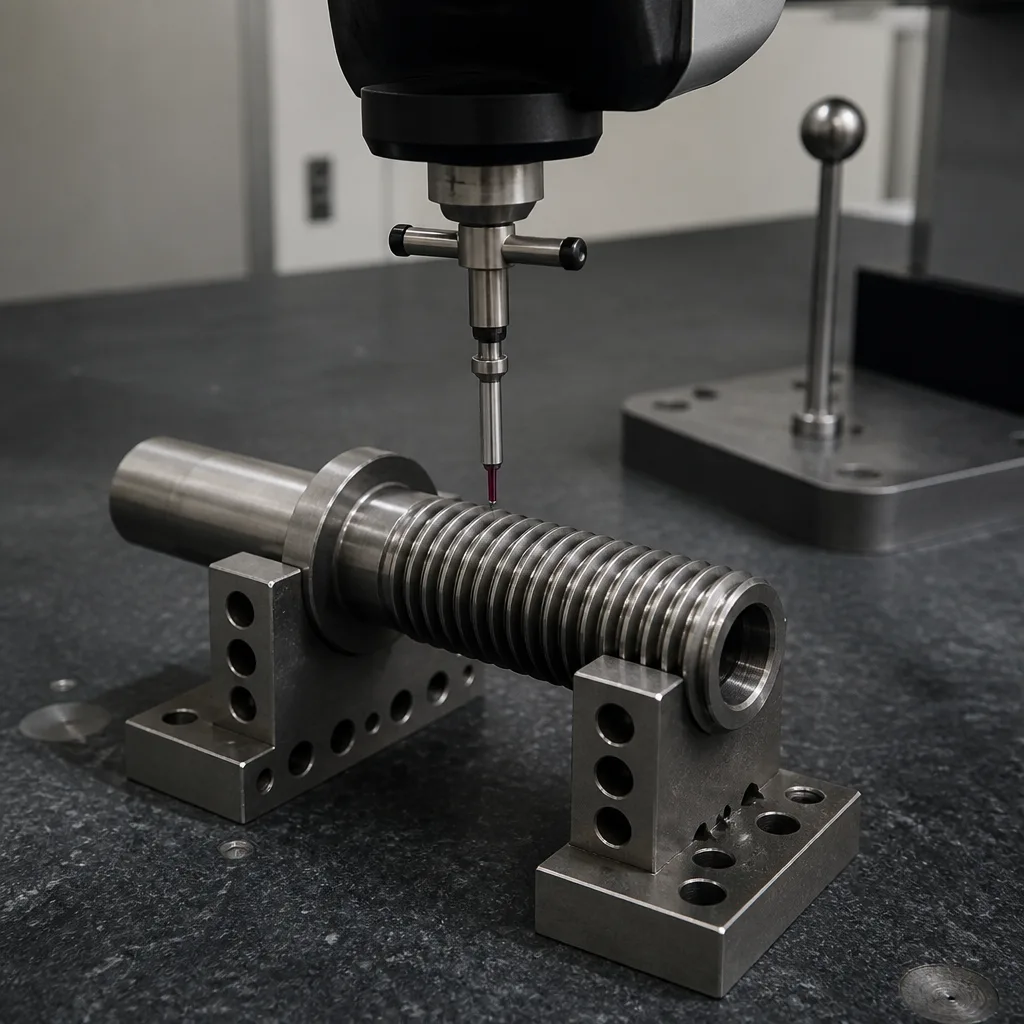
- Inspection and verification requirements.
- Tables of selected diameter-pitch combinations for aviation screws, bolts, nuts, shaft and bearing retaining threads, fluid fittings, and other component thread sizes.
- Tables showing the limiting dimensions and tolerances for UNJ screw threads.
- UNJ symbols for thread dimensions and tolerances.
The UNJ profile is a proprietary inch-based screw thread standard designed for high-stress, fatigue-critical aerospace applications. It features a mandatory, controlled radius at the root of the external thread to minimize stress concentration, and to accommodate this radius, it has an increased small diameter on both the internal and external threads.
The key characteristics of the UNJ profile are as follows:
- Objective: Developed to increase the tensile stress range of fasteners and provide maximum fatigue resistance in aerospace and high-performance applications.
- Design difference: Unlike standard UN teeth, which can have irregular, sharp roots, UNJ teeth generally require a more precise, larger root radius, as defined by the SAE AS8879 standard.
- Internal threads: Internal threads (nuts) have a smaller diameter that is increased to provide space for the larger, rounded root of the external screw.
- Compatibility: Due to the larger root radius, the external UNJ thread cannot fit a standard UN nut.
- Identification: UNJ products are identified by the letter “J” in dental designation.
In short, the SAE AS8879 standard defines the characteristics of UNJ profile inch series screw threads. This standard specifies threads with a mandatory controlled root radius on external threads and an increased small diameter on both external and internal threads. This design provides higher fatigue strength and better resistance to stress concentrations compared to standard UN threads, making it ideal for demanding aerospace and high-reliability applications.
The distinctive features of the UNJ profile include:
- Controlled root radius: External teeth require a smooth, continuous radius at the root (typically between 0,15011P and 0,18142P, where P is the pitch). This eliminates sharp corners that could lead to cracks.
- Increased diameter: Both external and internal teeth have a baseline tooth height of 0,5625H to accommodate the larger root radius.
- Not interchangeable with standard UN threads: Although UNJ threads maintain compatibility in many mating scenarios under controlled conditions, they are not fully interchangeable with normal UN (combined) or metric MJ profiles.
- Thread grades: Primarily used for aviation fasteners, with high precision grades such as 3A/3B.
The SAE AS8879 standard was developed as a direct successor to the U.S. military specification “MIL-S-8879 Enhanced small bore controlled radius root screw threads”. When the military specification was discontinued, SAE took over to maintain and update the standard for both commercial and defense use.
This standard meets the requirements of both the Federal Aviation Administration (FAA) and the Department of Defense (DoD).
UNJ teeth are preferred in the following cases:
- Aircraft and spacecraft structural components
- High vibration environments
- Parts subjected to critical fatigue load (bolts, screws, fasteners)
- Applications requiring rolled teeth for superior grain flow and strength.
The controlled root radius significantly improves fatigue life, which is critical in cyclic loading typical of aviation operations.
The practical aspects related to this standard are as follows:
- Production: External UNJ teeth are typically produced using the tooth rounding method to achieve controlled root radius and beneficial compressive stresses.
- Inspection: Requires specific measurements (including root radius verification). Category 1 and other inspection levels are defined in the standard.
- Internal threaded guides: Standard UN guides can generally produce acceptable UNJ internal threads, but verification according to SAE AS8879 standard limits is required.
The SAE AS8879 standard continues to be the go-to standard for high-performance inch-series threaded fasteners in the aerospace industry, ensuring reliability where failure is unacceptable.
The SAE AS8879 standard is considered necessary for the following reasons:
- Prevents thread failure in critical assemblies: Aircraft and spacecraft structures often use lightweight materials such as aluminum, titanium, and composites, which can have weaker internal threads. This standard helps define reliable threaded insert systems that strengthen these materials and reduce the following risks:
- Tooth stripping
- Relaxation from vibration
- Fatigue-related malfunction
In aviation, a faulty fastener can turn into a very costly problem, or much worse.
- It ensures interchangeability: Manufacturers, suppliers, and maintenance teams across the industry require parts to fit consistently. This standard provides common size and performance requirements to ensure inserts and threaded components from different suppliers are compatible.
- Supports maintenance and repair: Thread damage is common during repeated assembly/disassembly. This standard supports repairability by defining an additional system that restores damaged threads to their original or improved strength. This extends component life and reduces replacement costs.
- Improves vibration resistance: Aviation environments involve intense vibration, thermal cycling, and mechanical loads. This standard helps ensure that geared assemblies maintain preload and structural integrity under these conditions.
- Quality and certification compliance: Aviation programs require traceable, verified components. The use of hardware compliant with this standard supports the following:
- Quality test
- Supplier approval
- Regulatory and customer requirements
This is especially important for programs that are compatible with organizations such as military procurement systems.
For many years, our organization, with its competent and experienced team, has been understanding the needs of its clients, providing the advanced testing services they require, and assisting them in the establishment, implementation, and improvement of management systems. Within this framework, we also provide testing services compliant with the SAE AS8879 standard.