
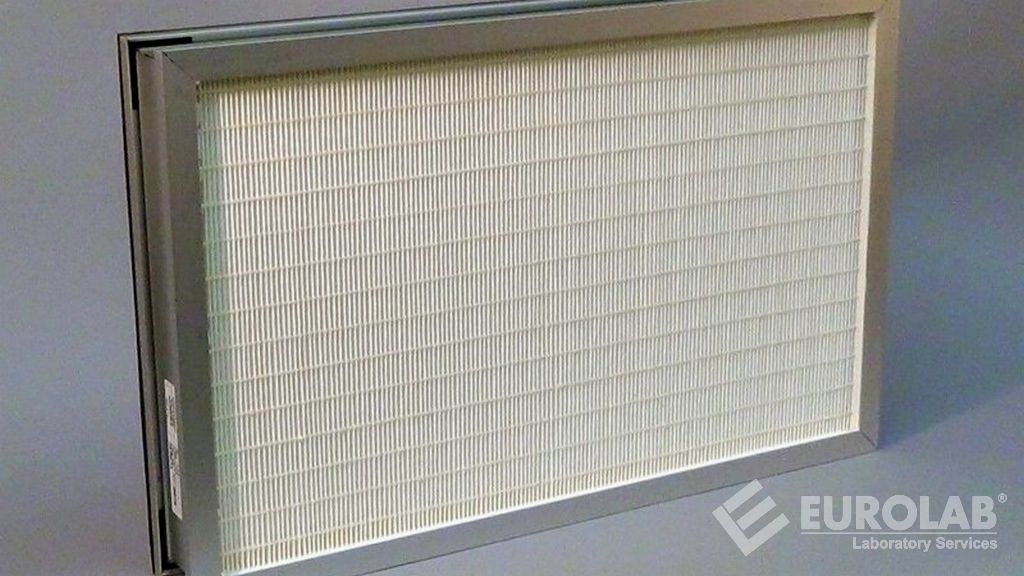
The EN 1822 standard, a European standard, describes the classification, performance testing and marking criteria for ultra-low penetration (EPA, HEPA and ULPA) high and very high efficiency air filters used in the field of ventilation and air conditioning, as well as in technological processes such as clean room technology or pharmaceuticals.
Tests performed according to this standard use a test liquid aerosol or alternatively a solid aerosol, and a process for determining efficiency is established for the tests based on a method that counts particles. In this way, these filters are classified in a normalized manner based on their efficiency.
Sections 1822-2 of the EN 5 standard, which consists of five parts, were later repealed and replaced by the EN ISO 29463 standard.
The following test methods are offered in the EN 1822 standard:
EPA (efficient air filters), HEPA (high efficiency air filters) and ULPA (ultra low penetration air filters) are filter types used in ventilation and air conditioning and technical processes. These filters are classified and tested according to the EN 1822 standard, for example for applications in clean room technology or the pharmaceutical industry.
Our organization also provides high efficiency air filters (EPA, HEPA and ULPA) testing services within the scope of EN 1822 standard, with its trained and expert staff and advanced technological equipment, among the numerous test, measurement, analysis and evaluation studies it provides for businesses in various sectors.
To get an appointment, to get more detailed information or to request an evaluation, you can ask us to fill in our form and reach you.

