
In the ISO 9227 standard developed by the International Standards Organization (ISO), the apparatus and reagents used in the tests performed for the evaluation of the corrosion resistance of metallic materials with or without permanent or temporary corrosion protection are explained and test methods are defined. This standard mainly provides three test methods:
It also describes a method used to evaluate the corrosivity of the test cabinet environment. However, this standard does not include the sizes or types of test specimens, the exposure time to be used for a particular product, or the interpretation of results.
These tests are particularly useful for detecting discontinuities such as pores and other defects in certain metallic, organic, anodic oxide and conversion coatings.
Neutral salt spray tests are particularly applicable to:
The acetic acid salt spray test is particularly applied for testing decorative coatings consisting of copper, nickel and chromium or nickel and chromium. This method is also suitable for testing anodic and organic coatings on aluminum.
The copper accelerated acetic acid salt spray test is applied to test decorative coatings made of copper, nickel, and chromium, or nickel and chromium. This method is also considered suitable for testing anodic and organic coatings on aluminum.
Salt spray test methods are all considered suitable for checking that the quality of a metallic material with or without corrosion protection is maintained. They are not intended to be used for comparative testing as a means of ranking different materials against each other by corrosion resistance, or as a means of predicting the long-term corrosion resistance of the material under test.
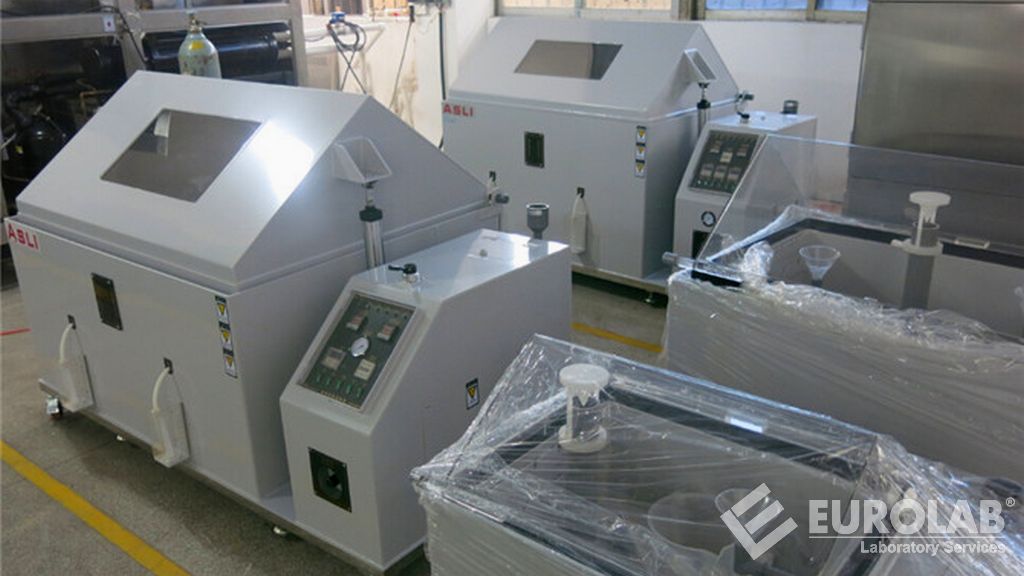
Among the numerous test, measurement, analysis and evaluation studies it provides for businesses in various sectors, our organization also provides salt spray testing services between corrosion tests in artificial atmospheres within the scope of ISO 9227 standard, with its trained and expert staff and advanced technological equipment.
To get an appointment, to get more detailed information or to request an evaluation, you can ask us to fill in our form and reach you.

