
The standard “ASTM D7678-17 Standard test method for total oil and grease (TOG) and total petroleum hydrocarbons (TPH) in water and wastewater by solvent extraction using medium IR laser spectroscopy,” developed by the American Society for Testing and Materials (ASTM), describes a test method for determining total oil and grease (TOG) and total petroleum hydrocarbons (TPH) in water and wastewater, which can be extracted from an acidified sample (e.g., cyclohexane, cyclopentane) with cyclic aliphatic hydrocarbons (e.g., cyclohexane, cyclopentane) using this test method and measured by IR absorption using a medium IR laser spectrometer in the range of 1370 cm⁻¹ to 1380 cm⁻¹ ( 7,25 µm to 7,30 µm). Polar substances are removed by cleaning with fluorisil.
This test method also takes into account the volatile fraction of petroleum hydrocarbons lost by gravimetric methods that require evaporation of the solvent before weighing and by solventless IR methods that require drying of the solid phase material used before measurement. Similarly, a more complete fraction of the extracted petroleum hydrocarbons can be accessed by this test method compared to GC methods that use a time window for quantification, because petroleum hydrocarbons eluting outside these windows are also quantified.
This test method covers the range of 0,1 mg/L to 1000 mg/L and can be extended to a lower or higher level by subtracting a larger or smaller sample volume collected separately.
For the purposes of this standard, in addition to the terms and definitions described in “ASTM D1129-13 Standard Terminology for Water” and “ASTM E168-16 Standard Practices for General Techniques for Infrared Quantitative Analysis”, the following definitions apply:
When performing the test, hydrocarbons are extracted from a 900 mL acidified water or wastewater sample with 50 mL of solvent. The substance measured immediately after extraction by mid-infrared laser spectroscopy is called total oil and grease (TOG). After the extract is treated with sodium sulfate and florisil to remove traces of water as well as polar substances, thus producing a solution containing non-polar substances, the substance measured is called total petroleum hydrocarbons (TPH) measured by mid-infrared laser spectroscopy. The difference between TOG and TPH gives the amount of grease removed from the sample.
The presence and concentration of total oil and grease and total petroleum hydrocarbons in domestic and industrial wastewater are of concern to the public because of their harmful aesthetic impact and their impact on aquatic life. Regulations and standards have been established requiring the monitoring of total oil and grease and total petroleum hydrocarbons in water and wastewater.
Soaps, detergents, surfactants, and other materials can form emulsions that can reduce the amount of TOG and TPH removed from a sample. This test method includes procedures that can assist the analyst in breaking down such emulsions. Organic compounds and other materials that are not considered oil and grease or petroleum hydrocarbons based on chemical structure (e.g., halogenated hydrocarbons) can be removed and measured by this test method.
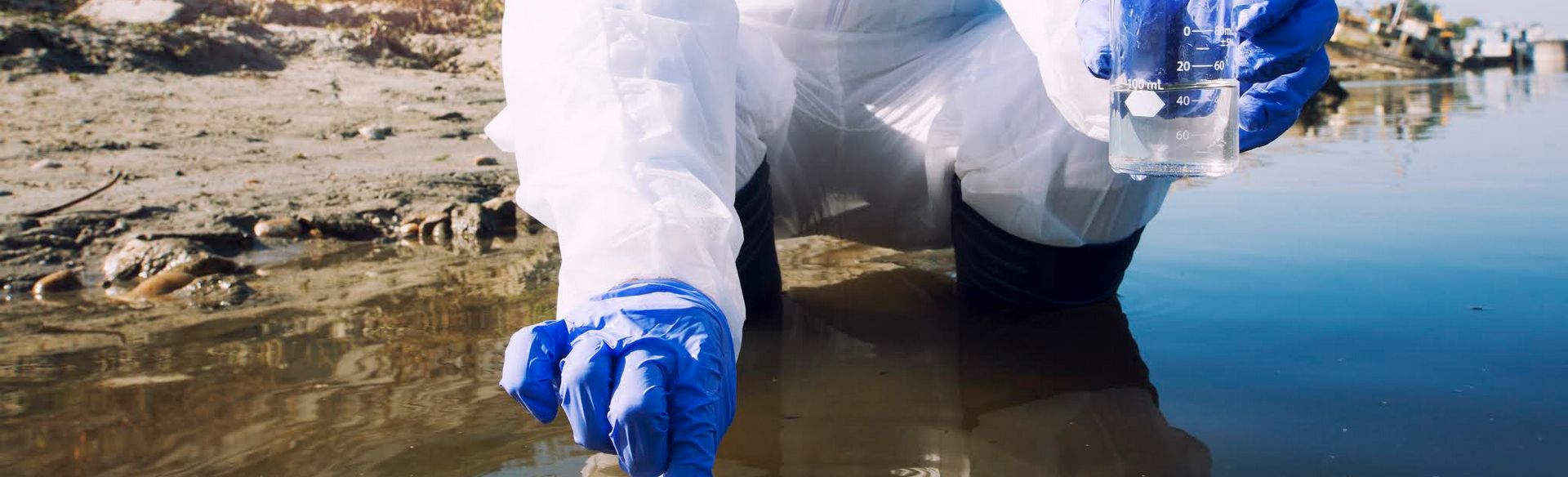
Samples are collected in accordance with ASTM D3370-10. The sample bottle and cap are pre-rinsed with solvent and the dried bottle is weighed before sample collection. The sample bottle is not rinsed with the sample to be analyzed. The sample is not allowed to overflow from the bottle during collection. It may not be possible to prevent overflow in all sampling situations, but precautions should always be taken to minimize overflow. A sample volume of approximately 900 mL is required for this test.
Our organization has a strong staff that closely follows the developments in the world in the field of science and technology and constantly improves itself. Among the numerous test, measurement, analysis and evaluation studies provided for businesses in various sectors, there are also testing services in accordance with the standard “ASTM D7678-17 Standard test method for total oil and grease (TOG) and total petroleum hydrocarbons (TPH) in water and wastewater by solvent extraction using mid-IR laser spectroscopy”.
To get an appointment, to get more detailed information or to request an evaluation, you can ask us to fill in our form and reach you.

