

The American Pharmacopoeia (USP) standard, “USP 788 Particulate Matter in Injections,” describes standard test methods and acceptable limits for particulate matter in injectable pharmaceutical products.
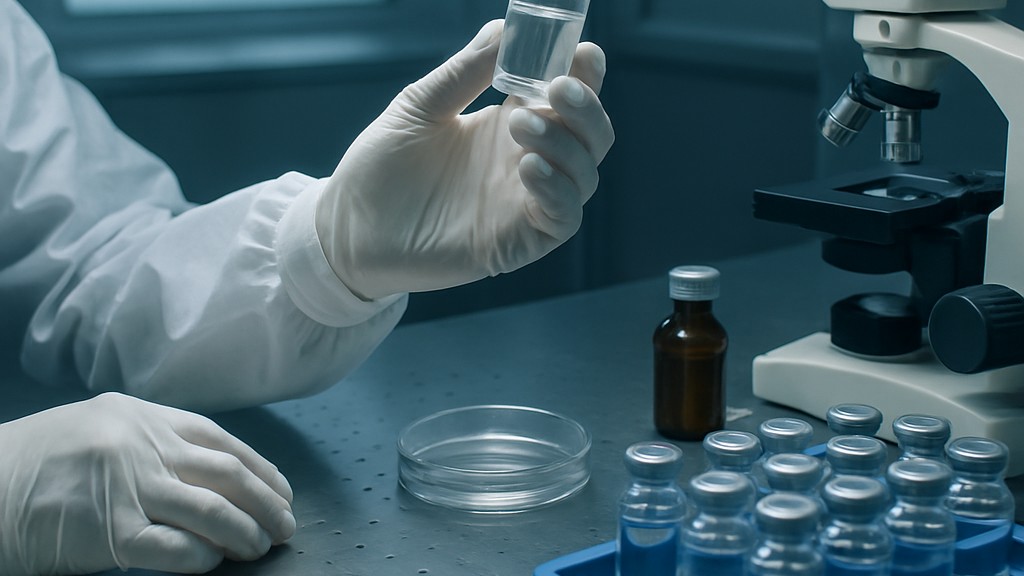
In injections, particulate matter consists of mobile, undissolved particles, other than gas bubbles, that are inadvertently present in solutions. This standard defines two methods for determining particulate matter:
When examining injections for invisible particles, light obscuration particle count testing is the preferred method. However, some preparations may require light obscuration particle count testing followed by microscopic particle count testing to determine compliance with the requirements.
Not all parenteral preparations can be examined for subvisible particles by one or both of these methods. When Method 1 is not applicable, for example, in the case of preparations with decreased clarity or increased viscosity, testing should be performed according to Method 2. Similarly, products that produce air or gas bubbles when drawn into the sensor may also require microscopic particle count testing. If the viscosity of the preparation to be tested is so high that it cannot be examined by either test method, a quantitative dilution with a suitable diluent can be made to reduce the viscosity as necessary to allow analysis.
Results obtained when examining an individual unit or group of units for particulate matter cannot be extrapolated with certainty to other untested units. Therefore, if valid inferences are to be drawn from observed data to characterize the level of particulate matter in a large group of units, statistically sound sampling plans must be developed.
The USP 788 standard focuses on invisible particles and specifies two test methods:
This method uses a suitable instrument based on the principle of light obstruction to automatically determine particle size and particle count based on size. The definition of particle-free water is provided in the reagent specifications in the reagents, indicators, and solutions section. The instrument is calibrated using dispersions of spherical particles of known sizes between 10 µm and 25 µm. The test is performed under conditions that limit particulate matter, preferably in a laminar flow cabinet.
This method of microscopic particle count testing utilizes a suitable binocular microscope, a filter assembly to retain particulate matter, and a membrane filter for examination. The microscope is equipped with an ocular micrometer calibrated with an objective micrometer, a mechanical stage capable of retaining and passing through the entire filtration area of the membrane filter, two suitable illuminators to provide episcopic illumination in addition to oblique illumination, and is set to a magnification of 100 plus/minus 10. The test is conducted under conditions that limit particulate matter, preferably in a laminar flow cabinet.
In short, the standard “USP 788 Particulate matter in injections” defines procedures and limits for non-visible particles (typically 10 µm to 25 µm) in injectable drugs such as solutions, suspensions, and emulsions.
Because injectable medications enter the bloodstream or tissues directly, particles can cause embolism, inflammation, or organ damage. Maintaining low particulate matter levels is vital for patient safety and regulatory compliance.
In this standard, the acceptable limits (per container) are determined as follows:
The main organizations that follow this standard are:
The USP <788> standard is important because it directly impacts patient safety, product quality, and regulatory compliance. The primary reasons for this standard are:
In short, this standard is important to protect patient health by minimizing the risks posed by particulate matter, to ensure high-quality injectable products and maintain consistent manufacturing practices, and to meet regulatory requirements for safety and efficacy in injectable medicines.
Our organization, which has been supporting businesses across all sectors for years through a wide range of testing, measurement, analysis, and evaluation activities, has a strong team of employees who closely follow global developments in science and technology and are constantly improving themselves. In this context, we also provide testing services in accordance with the USP 788 "Particulate Matter in Injections" standard.
To get an appointment, to get more detailed information or to request an evaluation, you can ask us to fill in our form and reach you.

