

Orally Inhaled or Nasal Drug Products (OINDP) represent the highest risk drug products with regard to the potential introduction of impurities through the contact of closure of containers.
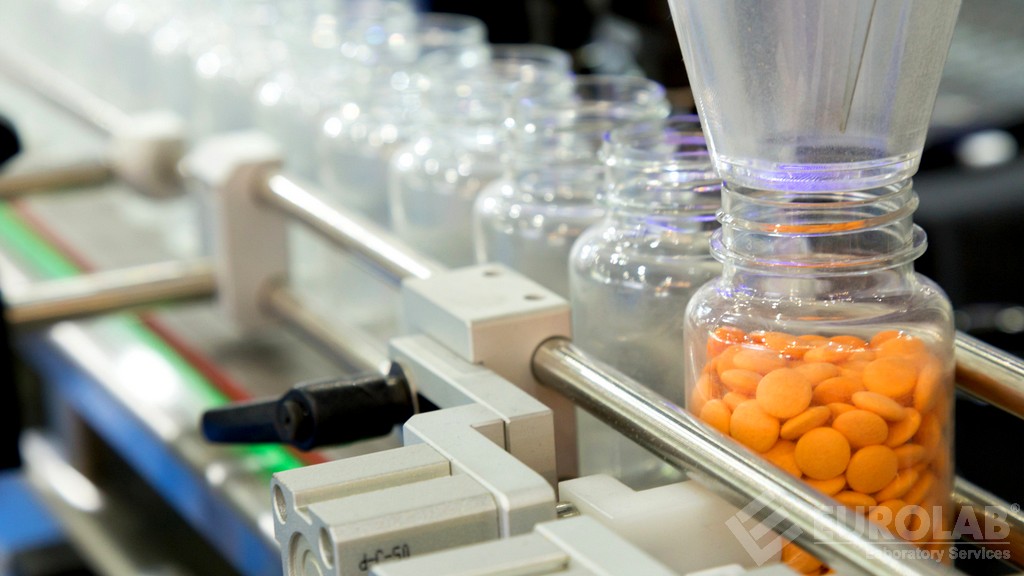
Some of the inhaled drug products are the most pharmacologically effective substances administered to humans. This means that the therapeutic effect will occur at very low doses. This effect is particularly true in the non-systemic treatment of lung diseases where inhaled drug administration can be considered as direct topical application to the target organ. However, this also means that undesirable impurities present in the drug product as a result of cap-closure contact may also exhibit side effects (eg irritation) at lower doses than in other routes of administration. In addition, these inhaled leaks can be quickly and almost completely absorbed into the patient's circulation, causing systemic toxicity.
Container closure systems for inhalable application usually consist of a number of different parts (eg canisters, valves, actuators, spacers, nozzles, gaskets), each with its own functions to guarantee the performance characteristics of the total device. These pieces can be made from a list of different materials selected for their physical properties. For Metered Dose Inhalers (MDI), rubbers are typically used for the manufacture of seals located in the valve. It is known that rubbers - compared to all other polymeric materials - are the most complex materials in their composition (eg, elastomers, fillers, antioxidants, curing agents, activators, accelerators, pigments, stabilizers, plasticizers). During rubber curing, many chemical reactions are initiated to obtain the final rubber form and physical properties. These chemical reactions can sometimes lead to the presence of unwanted / unexpected reaction products. Because of this complexity in composition and chemistry, rubbers are more prone to leakage compared to many other plastic materials.
In addition, inhalation aerosol formulations typically contain organic liquids as propellants (chlorofluorocarbons, hydrofluorocarbons) or carrier (alcohols). These organic fluids interact strongly with most of the rubber and polymeric materials used in the manufacture of the valve. Therefore, potential leakage from these rubber components and all other polymeric materials to the drug formulation is considered a very serious concern to be addressed.
Mainly due to the above considerations, in Table 1 of the FDA Guidelines "Container Closure Systems for Packaging Human Medicines and Biologies" "Inhalation Aerosols and Solutions" is classified to the highest degree associated with the route of administration. In addition, the likelihood of interaction between the packaging and the dosage form is considered to be high, while for dry powders for inhalation, the likelihood of interaction is considered to be moderate.
General “Safety” Considerations in the FDA Guidelines that inhalation aerosols and solutions and nasal sprays will be categorized under “case 1s” requiring toxicological assessment, limits on extractables, and batch-to-batch monitoring of extractables, with standard USP biological reactivity tests. Inhalation powders are categorized under "condition 5s". The 1998 "Metered Dose Inhaler (MDI) and Dry Powder Inhaler (DPI) Drug Products") and 2002's "Nasal Spray and Inhalation Solution, Suspension and Spray Drug Products" Manual - also - component per inhaler or inhaler device (eg. canister, valve components, actuator, mouthpiece, other components) - what kind of removable and leaking data should be included (e.g. control extraction studies,
In addition, section G.5 of the "Nasal Spray and Inhalation Solution, Suspension and Spray Pharmaceutical Products" section of the FDA Guidelines indicates that leakage levels for semi-permeable container / cap systems indirectly caused by exposure to labels or related materials are also appropriate for potential leaks. It is determined by a valid methodology with quantification limits.
Paragraph 2006 of the recent (4.2.1.3) EMEA Guidelines “Guidelines on the Pharmaceutical Quality of Inhalation and Nasal Products” specifies in more detail what types of extractable and leak data should be provided, such as determining the extractable profile, verifying its presence. Identifying these identifiable extracts as impermeable compounds during or at the end of their shelf life, conducting safety assessments, establishing safety thresholds and - in some cases - ensuring routine monitoring of ingredients or raw materials if a correlation between extractables and leaks has been demonstrated. Table 4.2.1 and Table 4.2.2 of this manual stipulate which inhalation product or nasal product is of which type, extractable and leak data should be provided.
The FDA Guidelines and EMEA Guidelines mentioned above are very useful from a regulatory point of view, but there are still many questions about how to carry out these extractable and leaky studies. To further complicate the picture, regulatory concerns about removable and leachate in OINDPs are directly related to the specific type of OINDP such as Metered Dose Inhalers (MDI), Dry Powder Inhalers (DPI), Inhalation Solutions and Nasal Sprays. To eliminate many removable and leaking problems from the gray zone, the Product Quality Research Institute (PQRI) has published a comprehensive guidance document: “Safety Thresholds and Best Practices for Extractable and Leachate Water in Oral and Nasal Drug Products” (September 2006). This document includes recommended exposure thresholds (SCT,
A decision tree is also provided for identifying and quantifying leaks. These "safety thresholds" then "How low do you go?" It ties to the proposed Analytical Assessment Threshold (EEC) that answers the question. In addition to these threshold recommendations, the PQRI document recommends “best practices” in areas such as OINDP ingredient selection, controlled extraction studies, leaky studies, and routine quality control methods.
Materials used in the manufacture of container closure systems for breathable application are typically rubber, LDPE, HDPE, PP, PBT, POM, ABS, multilayer films, etc. It Contains. potential confusion of the medicinal product. Also, if the container is made of a relatively permeable material, label passage will be considered an additional concern.
In order to set the correct test conditions for E&L studies, it is imperative to have a good knowledge of the composition of these materials (for example, the manufacturing process, the solvents used, potential impurities, polymer additives to improve or maintain the end-use performance, as well as the polymer leaching mechanism and pharmaceutical formulations of these materials. To know well what can trigger the interaction.
EUROLABspecializes in container closure systems for all respirable applications, from typical mandatory EP and USP testing to highly extractable and leaky work. EUROLABwas one of the first contract laboratories to apply PQRI recommendations to our removable and leaky services for inhalation applications. Therefore, we developed and optimized PQRI protocols that include the SCT, QT and AET concepts specified in the PQRI documentation. Additionally, these testing programs require a combination of the latest analytical techniques such as Headspace GC/MS, PTV-GC/MS, GC/MS, LC/MS, LC/MS/MS, ICP. DRINK. EUROLAB can also help elucidate structural information for critical compounds using GC-ToF, LC-ToF, FT-MS, or NMR.
EUROLABworks with a broad base of container closure manufacturers and pharmaceutical companies to develop and qualify their products, providing guidance in developing a strategy to comply with regulatory requirements and assist with their regulatory compliance worldwide.
EUROLAB, with its highly expert team and internationally accredited laboratories, OINDP Tests It performs all test, analysis, measurement, evaluation and report generation services completely and reliably.
To get an appointment, to get more detailed information or to request an evaluation, you can ask us to fill in our form and reach you.

