

Skin corrosion, as defined by the Globally Harmonized System (GHS) for Classification and Labelling of Chemical Substances and Mixtures, means the production of irreversible tissue damage to the skin following application of a test material.
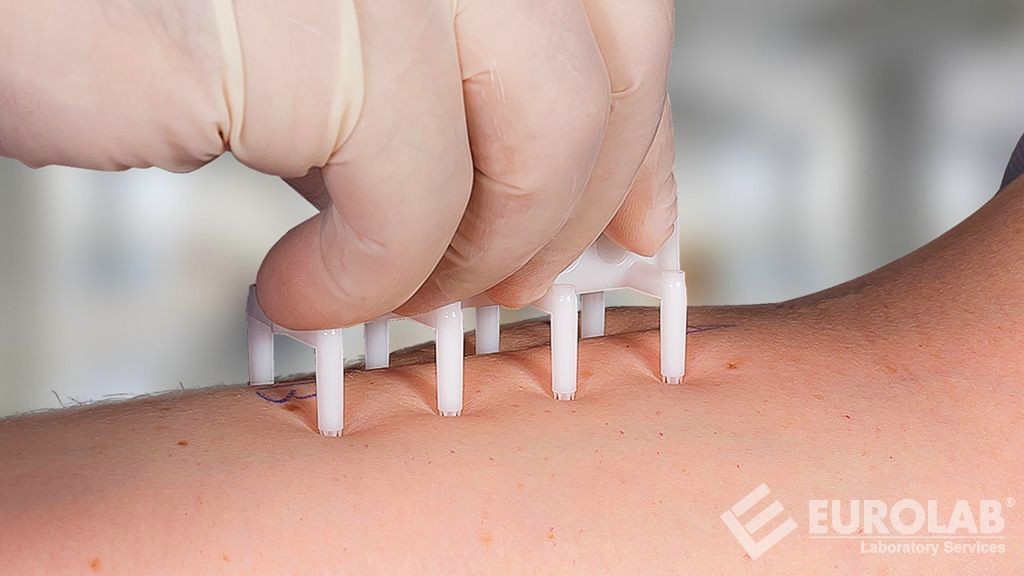
The potential for chemical skin corrosion is an important consideration in establishing procedures for the safe handling, packaging and transport of chemicals. Various systems for classifying corrosive potential are incorporated into international regulatory requirements.
The EPI-200-SCT Skin Corrosion test method is based on experience that corrosive chemicals are cytotoxic after short-term exposure to the stratum corneum of the epidermis if cytotoxicity is observed immediately after chemical exposure. It is designed to predict and classify the skin corrosive potential of a chemical using a three-dimensional human epidermis model.
The test method described can reliably distinguish chemicals that are corrosive to the skin from those that are not and can therefore be used for the classification of skin corrosion hazards according to the GHS system adopted by the OECD. This test allows corrosive substances and mixtures to be classified into subcategories in accordance with the GHS. This test method does not distinguish between subcategories and is not designed to estimate skin irritation potential.
A limitation of this test method is the possible interference of the test substance with the endpoint MTT. A test substance may directly reduce the MTT and thus mimic the dehydrogenase activity of cellular mitochondria. This property of the test substance is only a problem if sufficient amounts of test substance are still present in or within the tissues at the time of the MTT test (after chemical washout). In this case, metabolic MTT reduction and direct MTT reduction can be distinguished and quantified by a procedure described in this standard.
The method is not designed to be compatible with highly volatile test substances. However, possible toxic interaction between plate wells can be prevented by covering the wells with an adhesive cover slip or by testing volatile chemicals on separate plates.
Skin corrosion generally refers to the full-thickness destruction of skin tissue induced by a chemical. In some other cases, skin corrosion may also refer to irreversible changes in skin tissue caused by a chemical. This contrasts with skin irritation, where the damage is usually reversible. The potential for a chemical to cause skin corrosion is an important part of establishing procedures for the safe handling, packaging, and transportation of chemicals.
The basis of skin corrosion testing (SCT) is the determination of cytotoxicity after exposure to a chemical. This method is a three-dimensional human skin model consisting of a reconstructed epidermis and a functional stratum corneum (this is the outer layer of skin cells that primarily acts as a barrier). In addition, the epidermis layer is further divided into a series of basal, spinous and granular layers.
The testing method consists of topically exposing the model to a chemical for varying periods of time and then determining cell viability.
The decrease in viability of treated cells is expressed in comparison with negative controls, i.e. water-treated cells. A positive control is also included in the method. The percentage viability is used to estimate and classify the skin corrosion potential (following a defined prediction model). The method can be used with solids, liquids, semi-solids and water-soluble and water-insoluble substances. It is not possible to evaluate the effects of gases or aerosols with this method.
Among the numerous tests, measurements, analyses and evaluation studies carried out for businesses in various sectors, our organization also provides testing services defined in the “EPI-200-SCT Skin Corrosion Test” standard with its trained and expert staff and advanced technological equipment.
To get an appointment, to get more detailed information or to request an evaluation, you can ask us to fill in our form and reach you.

