

The American Pharmacopoeia (USP) standard, “USP 61 Microbiological examination of non-sterile products – Microbial counting tests,” describes standardized procedures for the quantitative determination of viable microorganisms in non-sterile pharmaceutical products and other materials to which the section may be applicable. This standard includes a method for enumerating mesophilic bacteria and fungi that can grow under aerobic conditions.
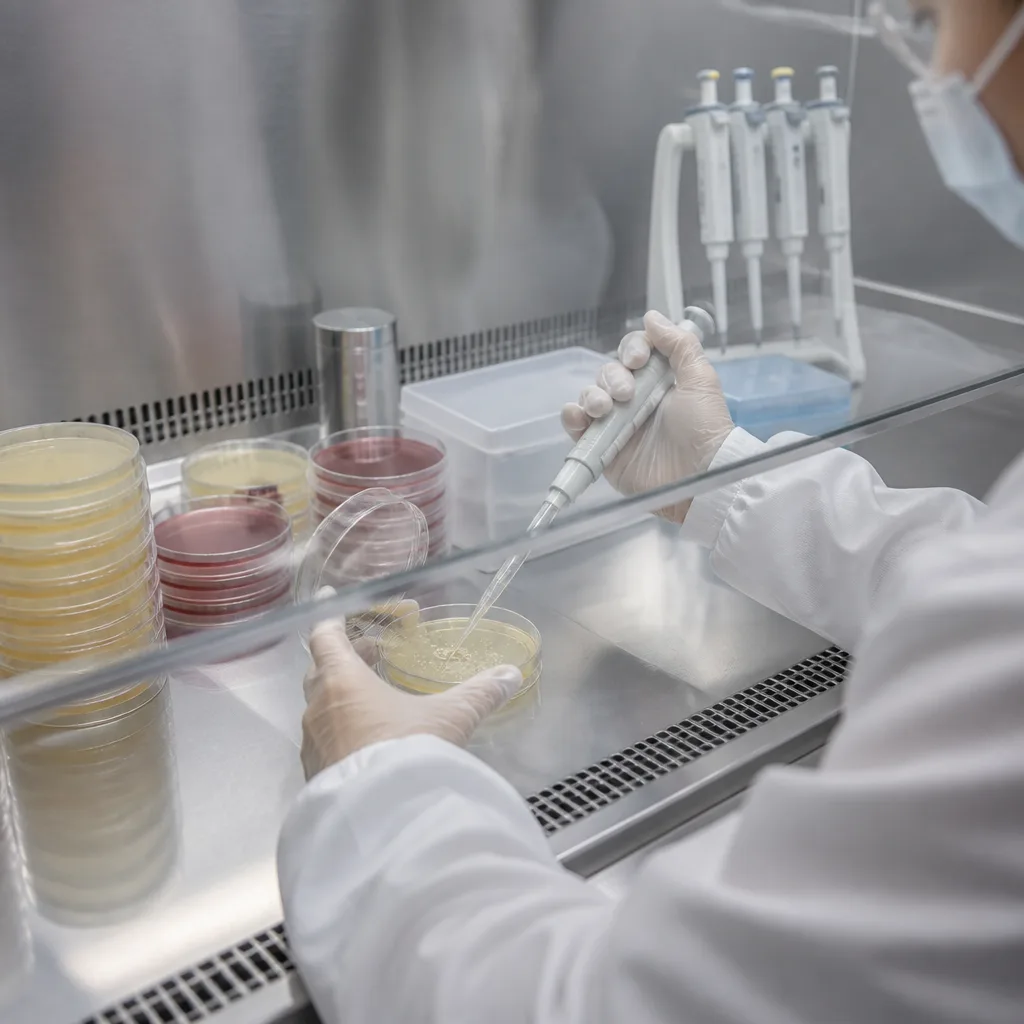
The purpose of the USP 61 standard is not simply to determine the presence or absence of microorganisms. Instead, it provides a controlled and reproducible approach to determining microbial counts and evaluating whether a product meets a defined microbiological quality specification.
This standard covers the testing of pharmaceutical products to determine their antimicrobial activity. The aim of the test is to demonstrate that the medium used for counting microorganisms is suitable.
Non-sterile pharmaceutical products do not need to be completely free of microorganisms, but their microbial levels must be properly controlled. Excessive microbial contamination can lead to product deterioration, affect performance, and potentially pose risks to patients.
Therefore, the USP 61 standard provides a standardized microbiological counting procedure that can be used during quality control, finished product testing, production investigations, and microbiological quality assessment.
This standard is particularly important because microbiological results can be greatly influenced by sample preparation technique, culture conditions, microorganism recovery, and counting method. Standardizing these factors increases the reliability and comparability of test results.
The USP 61 standard primarily specifies the quantity of live aerobic mesophilic microorganisms, including:
The tests are quantitative, meaning the result is expressed as a microbial count, not simply as "detected" or "not detected." Therefore, the USP 61 standard differs from the USP 62 standard. While the USP 62 standard deals with the detection of specified microorganisms, the USP 61 standard focuses on counting.
The basic principle is to properly prepare the product sample, place an appropriate amount of the prepared sample into or onto a suitable microbiological medium, incubate under specified conditions, and then count the developing colonies. Depending on the nature of the product, different counting techniques may be appropriate. Common approaches include:
The chosen method must be appropriate for the product. Some pharmaceutical products can inhibit microbial growth, making direct counting unreliable unless the product is properly diluted, neutralized, or otherwise treated.
One of the most important aspects of the USP 61 standard is demonstrating that the chosen test procedure can actually recover microorganisms from the product. A product may contain antimicrobial agents, preservatives, excessively high pH levels, high salt concentrations, or other properties that inhibit microbial growth. If these effects are not addressed, the test may produce an artificially low microbial count.
In conclusion, the suitability of the counting method is evaluated using appropriate test microorganisms and controls. The aim is to demonstrate that microorganisms can be recovered from the product under the selected test conditions. This is a critical quality control concept: Low microbial counts are only meaningful if the test method shows adequate recovery.
The culture medium used in the test must be able to support the growth of the microorganisms for which the test is intended. Therefore, the USP 61 standard includes a growth-promoting test as part of microbiological control. This helps demonstrate that the culture medium is suitable for the recovery of microorganisms. Appropriate reference microorganisms are used to test the medium, and their growth capabilities under specified conditions are evaluated. This helps distinguish a truly low microbial population from a poor result resulting from an unsuitable or defective culture medium.
Negative controls are also an important part of the procedure. A negative control is used to demonstrate that the test system, environment, equipment, and process procedures are not contaminated. If microorganisms grow in an appropriate negative control, the validity of the test may need to be investigated. Therefore, the USP 61 standard is not just a colony counting procedure. It includes controls designed to demonstrate that the microbiological result is technically meaningful.
Sample preparation depends largely on the physical and chemical properties of the product. Examples include:
The aim is to obtain a representative sample while avoiding conditions that artificially increase or decrease microbial recovery.
After incubation, microbial colonies are counted, and the result is calculated based on the amount of product tested and the applicable dilution or filtration conditions. The results can be expressed as microbial counts as follows:
The result is then compared with the microbiological acceptance criteria applicable to that specific product.
An important point is that the USP 61 standard itself is primarily a test method. The acceptable microbial limit is determined by the relevant monograph, specification, regulatory requirement, or other appropriate quality standard, rather than automatically being the same for every product.
The USP 61 standard primarily relates to non-sterile pharmaceutical products, including suitable finished products, raw materials, and other pharmaceutical supplies for which the section is applicable. It may also apply to other regulated products and applications. For example, the FDA lists this standard as a recognized consensus standard for medical devices. However, applicability should always be determined in accordance with the relevant product specification, monograph, regulatory requirements, and intended use.
The USP 61 standard is necessary because microbial contamination cannot always be reliably assessed through visual inspection or general laboratory observation. This standard provides the following:
In conclusion, the USP 61 standard is a crucial pharmaceutical microbiology standard for determining the level of viable microorganisms in viable non-sterile products. Its primary focus is the quantitative enumeration of aerobic microorganisms. This standard also emphasizes method suitability, growth-promoting assays, appropriate controls, sample preparation, and reliable enumeration.
For manufacturers, the correct application of the USP 61 standard is crucial, as the reliability of the microbial count result depends not only on the colony count itself, but also on demonstrating that the entire analytical method is capable of recovering microorganisms from the product being examined.
For many years, our organization, with its competent and experienced team, has been understanding the needs of its clients, providing the advanced testing services they require, and assisting them in the establishment, implementation, and improvement of management systems. Within this framework, we also provide testing services compliant with the USP 61 standard.
To get an appointment, to get more detailed information or to request an evaluation, you can ask us to fill in our form and reach you.

