

The ASTM D4576 Standard Test Method for Mold Resistance of Wet Blue and Wet White Dyes, developed by the American Society for Testing and Materials (ASTM), describes a test method for determining the mold resistance of wet blue and wet white leathers intended for use in leather production, subject to storage and transportation requirements. This test method may not be suitable for evaluating fungicides that are inactivated by proteins. This includes alkyldimethylbenzyl ammonium chlorides.
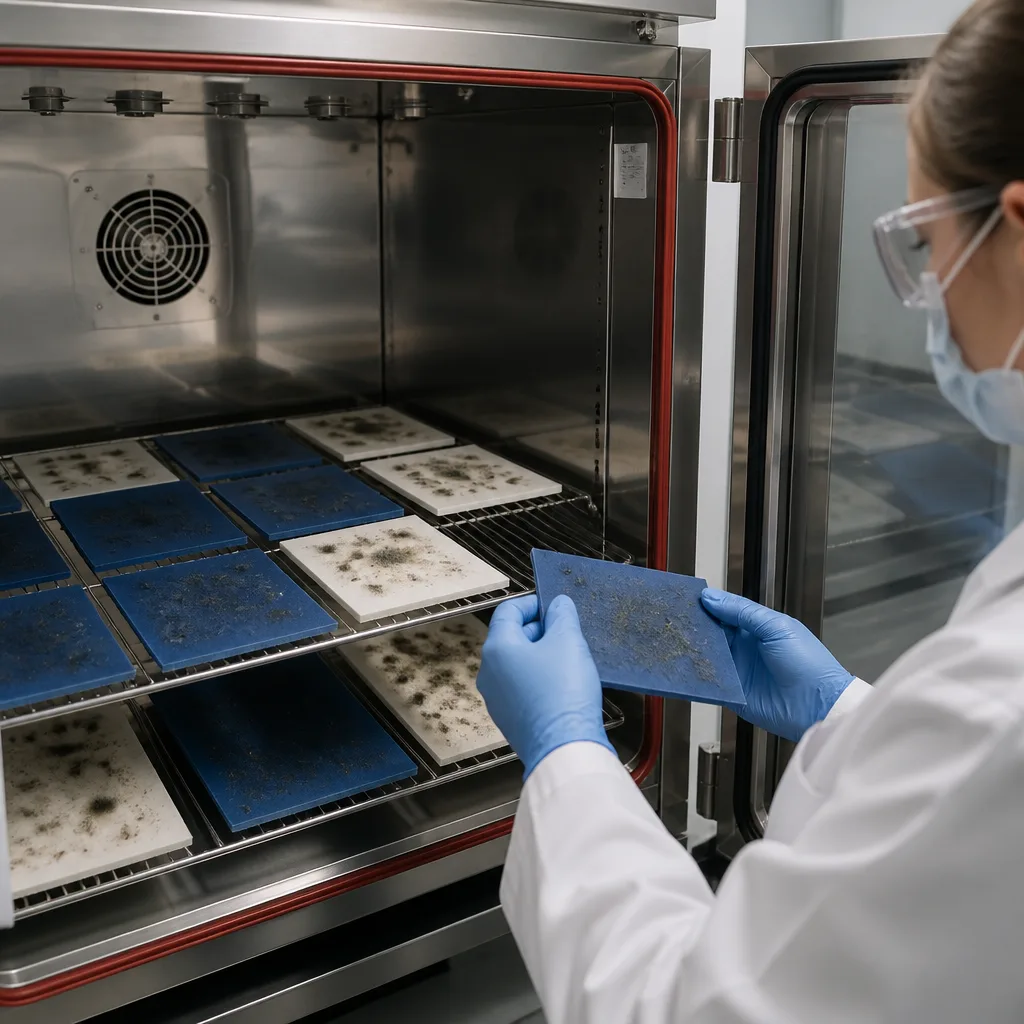
Results regarding resistance to mold growth are obtained by comparing the test to a simultaneously conducted control with known resistance. Success or failure is determined by the amount of mold growth relative to the control.
To enable any laboratory to use this test method, flexibility is provided regarding incubation times, temperature and humidity, vaccine, skin sampling area, and control selection. These can be adjusted to suit local conditions, but they must be standardized.
This test method provides a technique for evaluating the resistance properties of wet blue and wet white leathers to mold formation and should help predict the storage time before mold formation. The degree of correlation between wet blue and wet white in commercial quantities at different storage or shipping conditions, or both, has not been fully determined by this test.
ASTM D4576 is an international standard developed to evaluate the resistance of leather intermediates to mold formation during storage and transport. This standard is primarily used by tanneries, leather suppliers, chemical manufacturers, and quality control laboratories to determine whether wet-tanned leather has adequate protection against fungal contamination before being processed into final leather products.
Wet blue and wet white leathers contain approximately 50 percent moisture, which creates conditions that can encourage mold growth if not properly protected. Mold contamination can lead to:
ASTM D4576 provides a standardized laboratory procedure for evaluating the effectiveness of fungicide treatments under controlled environmental conditions and for estimating the mold resistance of materials. This standard applies to:
The described test method is designed for materials that will be stored or transported before subsequent leather production processes. ASTM notes that some fungicides, whose efficacy is reduced by proteins, may not be suitable for evaluation using this procedure.
The ASTM D4576 standard evaluates mold resistance by exposing leather samples to fungal spores under carefully controlled laboratory conditions. Generally, this procedure follows these steps:
Instead of generating a numerical value, this method determines whether the material exhibits acceptable resistance relative to a control sample.
Typical laboratory equipment used during testing includes:
Laboratories are allowed some flexibility in incubation conditions, vaccine preparation, and sampling, as long as these variables are standardized within the laboratory.
After incubation, the skin is visually inspected for the following aspects:
Performance is determined by comparing the test sample to a reference control, not against a universally accepted numerical limit.
The ASTM D4576 standard is widely used in the following areas:
The method described is particularly valuable for leather that may be transported from hot and humid climates where mold formation is more likely.
The ASTM D4576 standard offers several advantages:
However, this standard also includes some limitations:
The ASTM D4576 standard is generally applied in the following areas:
Consequently, mold growth can significantly reduce the commercial value of leather before it even reaches the manufacturing stage. Wet blue and wet white leathers are particularly sensitive due to their high moisture content and long storage periods.
The ASTM D4576 standard allows manufacturers to verify that protective treatments effectively protect leather against fungal attack during transport and storage. By identifying inadequate mold resistance prior to production, this standard helps reduce waste, prevent customer complaints, improve product reliability, and maintain consistent quality throughout the leather supply chain. While the method does not accurately predict real-world storage life, it provides an effective and widely accepted comparative assessment of mold resistance for quality control and product development.
For many years, our organization, with its competent and experienced team, has been understanding the needs of its clients, providing the advanced testing services they require, and assisting them in the establishment, implementation, and improvement of management systems. Within this framework, we also provide testing services in accordance with the ASTM D4576 standard.
To get an appointment, to get more detailed information or to request an evaluation, you can ask us to fill in our form and reach you.

