ASTM E645-18 Standard Practice for Evaluation of Microbicides Used in Cooling Water Systems
The standard “ASTM E645-18 Standard practice for evaluating microbicides used in cooling water systems” developed by the American Society for Testing and Materials (ASTM) describes a procedure for evaluating the effectiveness of microbicides (algicides, bactericides, and fungicides) to be used to control microbial growth in cooling water systems.
Microbicides are applied using simulated or real cooling tower water.
- Microbes coming from cooling water,
- Microbes in microbiological deposits (biofilms) from operating cooling systems or
- Evaluated against microorganisms or a combination of these known to contaminate cooling water systems.
This application should be performed by persons familiar with microbiological techniques.
For the purposes of this standard, in addition to the terms and definitions given in the "ASTM E2756-19 Standard Terminology for Antimicrobial and Antiviral Agents" standard, the following definitions apply:
- Algicide is a chemical substance that kills algae; single-celled or filamentous plants containing chlorophyll.
- A bactericide is a physical or chemical agent that kills bacteria, but not necessarily bacterial spores.
- Biofilm is a dynamic, self-organized accumulation of microorganisms and environmental byproducts immobilized on a substrate and embedded in an organic polymer matrix.
- A cooling system is a piece of equipment and a refrigerant used to remove heat from processes, equipment, or both. The most common medium used to remove or transfer heat is water. The heated water can then be discharged to a receiver (passing through the cooling system once) or cooled and reused (recirculating cooling system).
- A cooling tower is a structure used to dissipate heat in open recirculating cooling systems.
- Coolant is any water-based solution that absorbs and transfers heat in a heat exchange system.
- Fungicides are a physical or chemical agent that kills fungi, that is, vegetative mycelium or budding yeasts, including spores or conidia.
- Microbial biofouling is the accumulation of unwanted bacterial, fungal or algae cells, or any combination thereof and their products, on surfaces. This accumulation is usually accompanied by the accumulation of organic and inorganic substances.
- Microbicides are physical or chemical agents that kill microorganisms.
Microbicides are evaluated against microbes under conditions simulating a cooling water system. Microbicides are added to the cooling water at concentrations expected to control microbes. At selected time intervals, the microbial count or measurable component of microbes is determined and compared to values at the beginning of the experiment. Bacteria (aerobic and anaerobic), fungi, and algae can be detected by various methods such as plate counting, most likely number, chlorophyll content, and adenosine-5ʹ - triphosphate. The researcher determines the range of microbicide concentrations for acceptable efficacy based on laboratory tests that can be used to meet record-keeping or client needs.
This application identifies potentially effective microbicides for use in cooling water systems using cooling water and field-derived sediments and biofilms. The inclusion of sediments and biofilms addresses the need to include the primary source of microorganisms in cooling water systems. Even with this inclusion, laboratory results may not be fully predictive of microbiicide effectiveness in the field. This is because field conditions that affect microbiicide effectiveness are difficult to replicate in the laboratory. These conditions that affect microbiicide effectiveness include blowing speed, make-up water addition, water hardness, hydrocarbon leachates, pH, sediment loading, dissolved solids, microbes in slime (biofilms), and surface deposits (salts, iron minerals, organic matter). Another factor is that it is difficult to count all microbes present in water due to the lack of adequate recovery media. Guidelines for the formation and testing of surface-adherent microbes (biofilms) are provided in ASTM E1427-00, and guidance for the unusual measurement of microbes is provided in ASTM E1326-13.
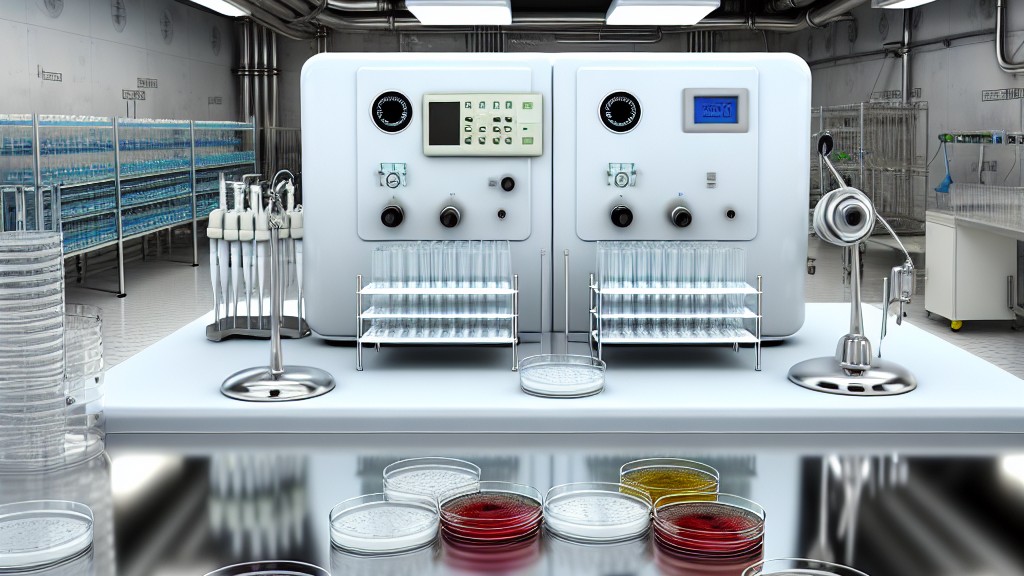
The main equipment used in these tests includes:
- Balance: Analytical balance calibrated to 0,1 mg for weighing candidate microbicides for preparation of stock solutions.
- Containers: Shake-safe bottles, vials or test tubes must be sterile for use.
- Colony counters: A manual or proven colony image analyzer (electronic/scanner type) is suitable for counting plates after incubation.
- Spiral plate (alternative).
- Constant temperature shaker: A reliable constant temperature shaker to provide mixing and aeration and to maintain the temperature at a setting within the selected temperature range of 10.2 plus/minus 2 degrees (water bath or incubator shaker) throughout the contact period.
- Petri dishes: Sterile, 100 x 15 mm plastic or borosilicate glass.
- Pipettes: Standard pipettes, sterile, with appropriate calibrations or other suitable delivery systems such as micropipettes.
- Sterilizers: Pressure steam sterilizer (for media, containers, etc.), hot air oven for containers, and filter apparatus for filter sterilization (disposable filter units, 250 mL, 0,22-µm pore size).
- Stirrer: Required to mix the cooling water sample as it is distributed into the test vessels. This may be a magnetic stirrer, propeller stirrer or any other suitable device.
- Volumetric bottles: 100 mL are suitable for preparing microbicide stock solutions. Smaller volume bottles may be used where appropriate.
- Blender: A blender, stomacher, sonic bath, or vortex mixer to homogenize the microbial sediment before mixing it with the cooling water.
- Microscope providing a magnification range of 400 to 1000X with a suitable light source. Phase contrast or darkfield capability may be required.
- Filter apparatus with 0,2 µm filter.
Our organization has a strong staff that closely follows the developments in the world in the field of science and technology and constantly improves itself. Among the numerous test, measurement, analysis and evaluation studies provided for businesses in various sectors, there are also testing services within the scope of the "ASTM E645-18 Standard application for the evaluation of microbicides used in cooling water systems" standard.