
The ASTM D5590 standard, developed by the American Society for Testing and Materials (ASTM), describes an accelerated test method for determining the relative resistance of paint films and related coatings to fungal damage by accelerated four-week agar plate test.
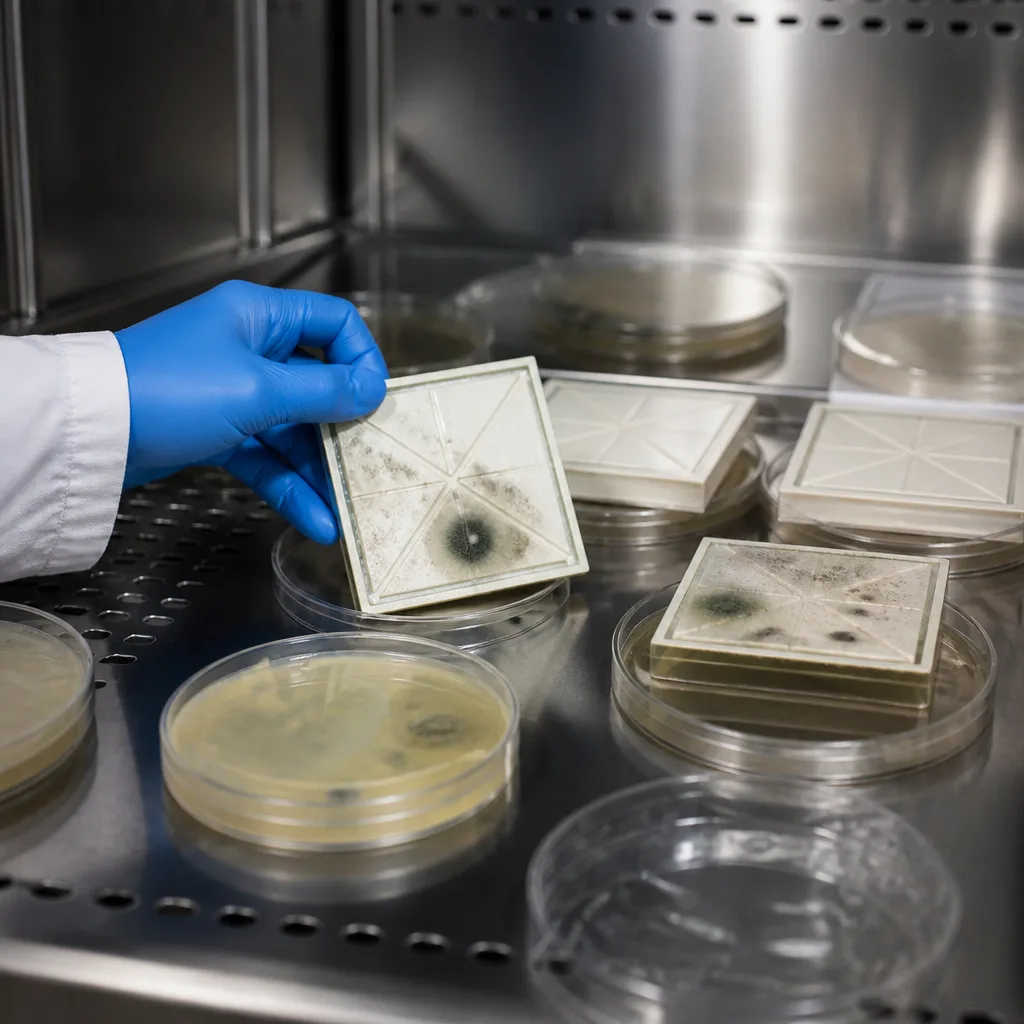
This testing method provides an accelerated laboratory approach to assessing how resistant paints, coatings, and similar films are to fungal (mold and mildew) growth. This test is primarily used by:
This testing method helps compare the relative performance of different coating formulations under controlled fungal challenge conditions.
Paints and coatings are susceptible to fungal degradation in high-humidity environments (such as bathrooms, kitchens, basements, and tropical climates). Fungal growth not only looks unsightly but can also degrade the coating and contribute to indoor air quality problems. The ASTM D5590 standard allows manufacturers to verify the effectiveness of fungicides or naturally resistant formulations.
In general, this method follows these steps:
The main characteristics of this method are as follows:
The relevant standards are as follows:
In short, the ASTM D5590 standard provides an accelerated laboratory procedure for comparing the resistance of different paint systems to mold, mildew, and fungal contamination under controlled environmental conditions.
Painted surfaces exposed to hot and humid conditions often become susceptible to fungal attack. Fungi can grow on the organic matter present in coatings, causing:
The ASTM D5590 standard was developed to assist manufacturers and laboratories in the following areas:
This standard emphasizes comparative performance rather than predicting exact field life. This standard applies to:
The test is designed to determine the relative resistance of two or more coating systems to fungal growth, particularly under accelerated laboratory conditions. This standard uses an agar plate assay technique in which coated samples are exposed to fungal organisms in a nutrient-containing agar medium.
The basic principle includes the following:
This test accelerates fungal exposure conditions to quickly compare coating resistance.
ASTM D5590 is important because fungal contamination is a significant durability and appearance issue for coatings used in humid environments. This standard helps manufacturers develop coatings for the following areas:
It is particularly useful for coatings containing antimicrobial or fungicidal additives.
The main benefits of the ASTM D5590 standard are as follows:
The test also supports research and development of low-mold and mildew resistant paints. However, it has some limitations. This standard is not intended to fully simulate real outdoor conditions. The standard itself states that there are many environmental factors that influence mold growth. For example,
Therefore, laboratory results should generally be supported by natural weathering or outdoor exposure tests.
The following industries frequently reference the ASTM D5590 standard:
In conclusion, the ASTM D5590 standard is an important fungal resistance testing standard for evaluating the susceptibility of paints and coating films to mold and mildew growth. Using an accelerated four-week agar plate assay, this method allows coating manufacturers to compare formulations, improve antimicrobial performance, and enhance coating durability in humid environments.
For many years, our organization, with its competent and experienced team, has been understanding the needs of its clients, providing the advanced testing services they require, and assisting them in the establishment, implementation, and improvement of management systems. Within this framework, we also provide testing services in accordance with the ASTM D5590 standard.
To get an appointment, to get more detailed information or to request an evaluation, you can ask us to fill in our form and reach you.

