Fungus Free Tests
The term "fungus-free test" refers to laboratory techniques used to determine whether a sample contains fungi. In medical settings, these tests diagnose infections caused by fungi such as yeast or mold, which can range from superficial skin conditions to life-threatening systemic infections. In non-medical contexts, such as product manufacturing or environmental monitoring, these tests are performed to ensure that materials or surfaces are not contaminated with fungi that could affect quality or safety.
Fungus-free generally refers to a negative test result. This indicates that there is no detectable fungus, or that the fungi present are non-pathogenic or within acceptable limits. Achieving this status is vital for confirming the absence of infection in healthcare settings and for meeting regulatory standards for products such as medical devices and food packaging in industries.
A variety of laboratory methods are used to test fungi, each suited to specific sample types and diagnostic needs. Key techniques used in these tests include:
- Microscopic examination: This examination involves examining samples under a microscope to identify fungal elements such as hyphae (a threadlike fungus), spores, or yeast cells. Common preparations include:
- Potassium hydroxide preparation: Dissolves non-fungal substances to highlight fungal structures.
- Calcofluor white dye: Binds to fungal cell walls, causing them to fluoresce under ultraviolet light for easier detection.
- Wood's lamp: Uses long-wavelength UV light to detect certain fungal infections, in which infected hairs emit green fluorescent light.
Microscopic examination is a rapid method and is usually sufficient for superficial infections, but may not detect certain types of fungi.
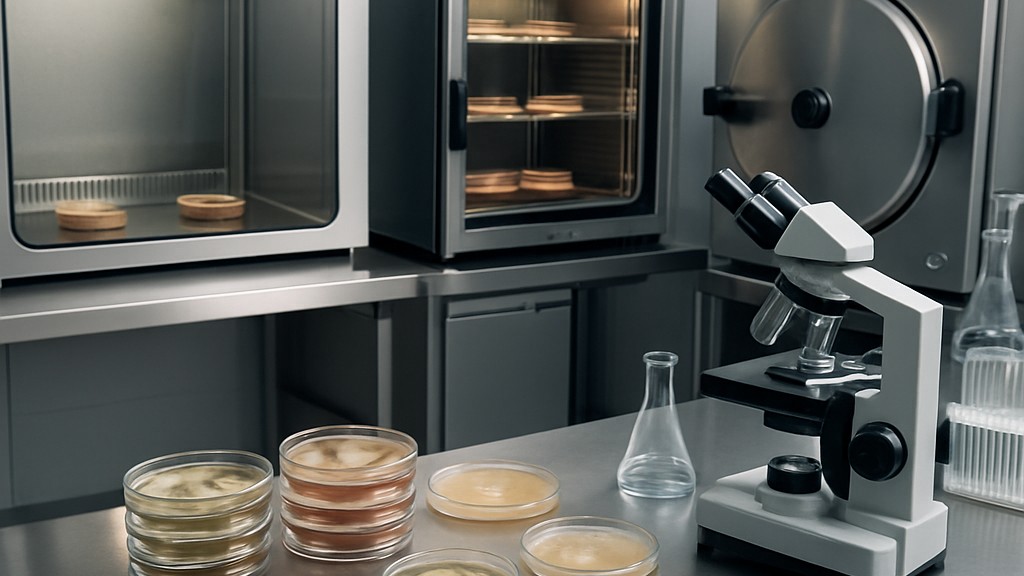
- Fungal culture: Fungal culture involves placing the sample in a growth medium to stimulate fungal growth. Because some fungi are slow-growing, the sample is incubated at 25-30 degrees Celsius for several weeks. If no growth occurs, the sample can be considered fungus-free, but false-negative results may occur due to improper collection, previous antifungal use, or slow-growing organisms. Cultures can also identify specific fungi, aiding in targeted therapy.
In the environmental and industrial field, fungus-free testing ensures that products or environments are free from fungal contamination. For example:
- Medical devices: Testing ensures that devices are sterile and free of fungi that could cause infection.
- Food and agriculture: Verifies that products such as grain or packaging materials are not contaminated with molds.
- Building materials: Fungus resistance tests conducted by advanced laboratories confirm that materials are resistant to fungal growth in humid climates.
There are several factors that make fungus-free testing difficult:
- False negative results: Improper specimen collection, previous antifungal use, or slow-growing fungi may result in cultures remaining free of growth despite infection.
- False positive results: Environmental contamination may indicate the presence of fungi when they are not.
- Slow results: Cultures can take weeks and delay diagnosis. Molecular tests are faster but not universally available.
Fungus-free testing in industrial environments ensures that products, materials, or environments are free of fungal contamination that could compromise quality, safety, or performance. These tests are critical to meeting regulatory standards and preventing economic losses or health risks in industries such as manufacturing, construction, aviation, food production, and pharmaceuticals.
Fungi, such as mold and yeast, thrive in warm, moist environments and can spoil materials, contaminate products, or pose health risks. In industrial environments, fungus-free testing confirms that products or materials:
- It is particularly safe for use in medical devices or food-related applications.
- Meets regulatory requirements such as FDA or MIL-STD standards.
- It provides durability and reliability by resisting fungal growth in harsh environments.
- It protects consumer health and brand reputation by preventing spoilage or contamination.
Failure to verify fungus-free status can lead to product recalls, structural failures, or health hazards, making rigorous testing essential.
Industrial fungus-free testing typically involves exposing materials or products to conditions that encourage fungal growth to assess resistance or confirm the absence of contamination. Common methods include:
- Fungal resistance testing: This method tests a material's ability to resist fungal growth under controlled conditions. A sample is exposed to a mixture of fungal spores (e.g., Aspergillus niger, Penicillium funiculosum, Chaetomium globosum) in a moist, warm environment, typically for 28 days, according to MIL-STD-810 or ASTM G21 standards. Samples are inoculated with the spores, incubated at 25-30 degrees Celsius and high humidity (85-95 percent), and examined for fungal growth by visual or microscopic examination. A fungus-free result indicates no visible growth or minimal growth that does not affect the material's integrity.
- Fungal culture testing: To verify that a product or surface is free of fungal contamination, samples (e.g., swabs, scrapings, or air samples) are collected and cultured on a suitable medium. The samples are incubated for days or weeks. The absence of fungal growth indicates a fungus-free condition. This method is used to ensure sterility in sterile room environments, food packaging, or pharmaceutical manufacturing.
- Environmental monitoring: Air, surface, or water samples from industrial facilities are tested for the presence of fungi to ensure a fungus-free environment. Methods include pulsed air sampling, swab testing, or sedimentation plates to detect fungi present in the air or on surfaces. A fungus-free result confirms that the environment meets cleanliness standards, such as the ISO 14644 standard for cleanrooms.
- Molecular testing: Polymerase chain reaction (PCR) or other DNA-based methods offer high sensitivity and specificity by detecting fungal DNA in samples. This method is used in the pharmaceutical or food industries to confirm the absence of specific fungal contaminants such as Aspergillus or Fusarium. It is faster than cultures and typically provides results within hours.
- Chemical analysis: Some industries test for fungal metabolites, such as mycotoxins, in products such as food or textiles using techniques such as high-performance liquid chromatography (HPLC). The absence of mycotoxins supports the fungus-free claim, which is critical for food safety.
Consequently, fungus-free testing is a cornerstone of medical diagnostics and industrial quality control. Laboratories can accurately detect or rule out the presence of fungi using a combination of microscopic examination, cultures, and molecular techniques. Despite challenges such as inaccurate results or slow turnaround times, these tests are essential for ensuring product safety. Advances in molecular diagnostics and standardized testing protocols continue to improve the reliability and speed of achieving fungus-free results, benefiting the industry.
Our organization, which has been serving for many years and meticulously follows global developments in science and technology, conducts testing, measurement, and analysis in a wide range of areas with a skilled team and extensive infrastructure for businesses in every sector. In this context, we also provide fungus-free testing services.