

The standard "ASTM C1305/C1305M-16 Standard test method for crack bridging ability of liquid-applied waterproofing membrane" published by the American Society for Testing and Materials (ASTM) describes a laboratory procedure for determining the ability of a waterproofing membrane to bridge a crack in the substrate. There is no ISO standard similar or equivalent to this ASTM standard.
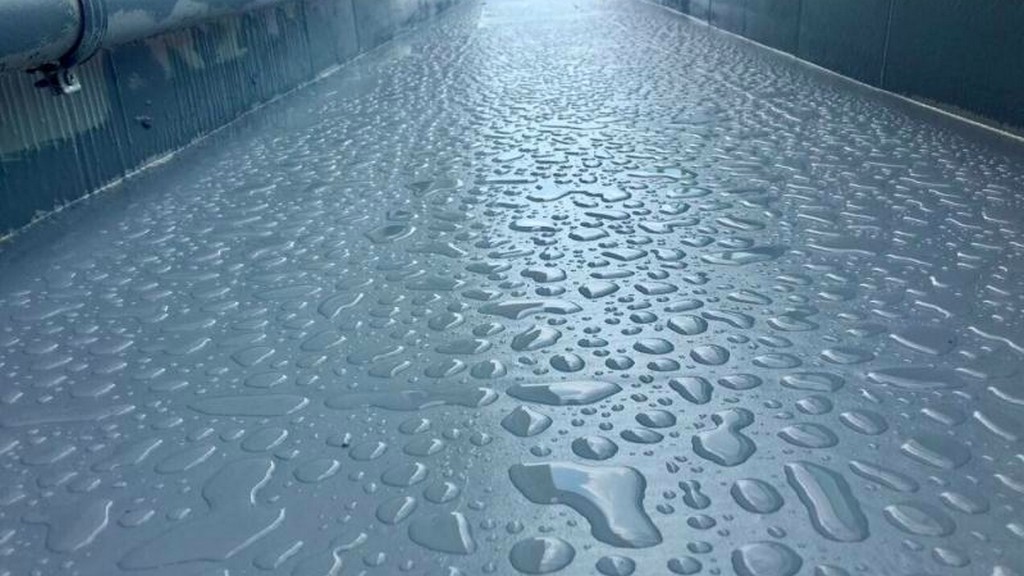
The ability of the material to bridge cracks and maintain waterproof performance is known as crack bridging ability.
The technical terms and definitions used in the test method described in this standard are governed by the “ASTM C717-24 Standard Terminology for Building Sealants and Sealants” standard.
This test method consists of casting five membrane samples onto previously cracked mortar substrates and holding them for 14 days under standard conditions, followed by seven days in an air-circulated oven at 70 degrees, placing them in a testing machine and subjecting the assembly to ten cycles of movement.
This test method is used to demonstrate the ability of a waterproofing membrane to maintain its integrity while sealing a pre-existing crack in the substrate at low ambient temperatures where the membrane is least likely to be flexible.
The equipment and materials used in these tests include:
According to this standard, the preparation of substrates should be as follows:
All materials to be tested must be stored under standard conditions of 24 degrees plus/minus 23 degrees and 2 percent plus/minus 50 percent relative humidity for at least 5 hours before any test samples are prepared.
The manufacturer's instructions are followed for mixing and preparing membrane materials for testing. Single-component samples are mixed thoroughly before use. Two-component compounds are mixed in the proportions and manner recommended by the manufacturer.
Five montages are used in the tests.
To prepare the test assembly, two blocks are placed on a bed of sand with their edges touching each other, as shown in the figure given in the standard. The test surface (top) is leveled and the blocks are connected using masking tape. The test compound is spread over the top area divided in half by the joint between the blocks to a uniform thickness of 1,50 mm plus/minus 0,10 mm. The membrane may be applied in more than one layer if recommended by the manufacturer.
The test assembly is cured for 14 days at room temperature, then in a hot air oven circulating at 70 degrees plus7minus 2 degrees for seven days. The test specimen is allowed to cool to room temperature for at least 1 hour. A strip of membrane is cut along the joint on each side at a distance of 6 mm from the edge. This eliminates edge effects. If necessary, aluminum angles can be glued to the edges of the assembly after the room temperature curing period.
The tape is removed from the blocks and placed in a test machine pre-conditioned to minus 24 degrees for at least 26 hours. While maintaining this temperature, the assembly is subjected to ten movement cycles. In each cycle, the blocks are pulled at a speed of 3,2 mm/hour until the gap between them is 3,2 mm, and then the gap is closed at the same speed.
After ten cycles are completed, the membrane is stretched to 3,2 mm while still in the machine and the membrane is inspected for cracks, separation, pinholes or any other condition at the mating area of the substrates.
Among the numerous testing, measurement, analysis and evaluation studies that our organization has provided for businesses in various sectors, it also provides testing services defined in the standard “ASTM C1305/C1305M-16 Standard test method for crack bridging ability of liquid applied waterproofing membrane” with its trained and expert staff and advanced technological equipment.
To get an appointment, to get more detailed information or to request an evaluation, you can ask us to fill in our form and reach you.

