

Particle (particle) size analyzes are generally technical procedures for determining the size of particles in a powder or liquid sample. These analyzes are part of particle science. The measurements are based on different analysis methods.
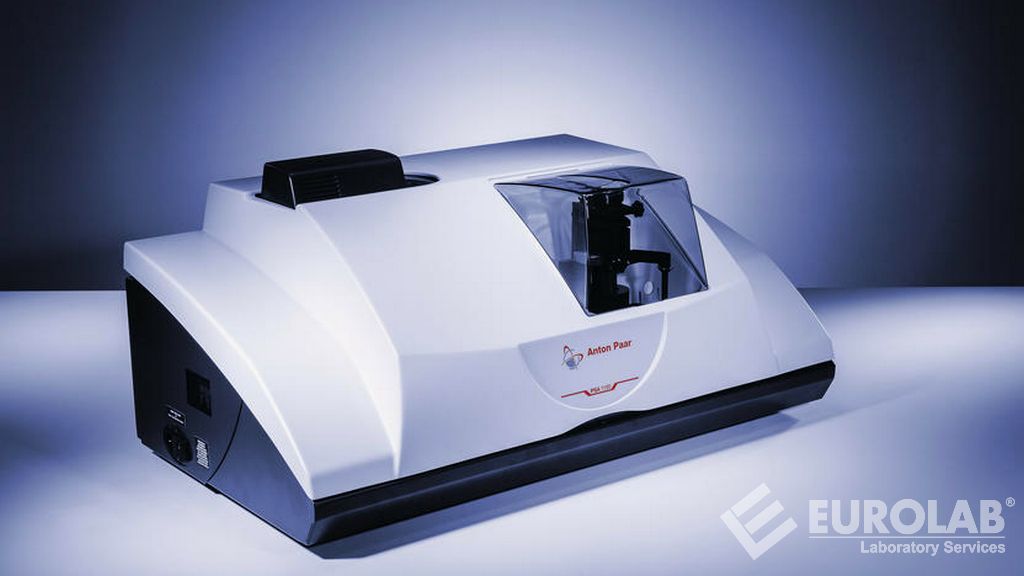
Particle size analyzes are important in many sectors such as food, nutrition, chemistry, agriculture, forestry, mining, pharmaceuticals, energy and aggregate sectors.
Today, sieve analysis is still the traditional and most widely used method for particle size analysis. A sieve setup consists of several sieves with increasing aperture sizes stacked on top of each other, and the sample is placed on the top sieve. This sieve setup is then vibrated for 5-10 minutes. As a result, the samples are distributed across the sieves according to their particle sizes. In this method, particles with the smallest surface area pass through the smallest possible sieve aperture.
In the dynamic image analysis method, a large number of particles are passed through a camera system and analyzed in real time. Modern systems today achieve several hundred frames per second and can detect the sizes of millions of individual particles in a matter of minutes. Fast cameras, bright light sources, short exposure times and powerful software are the prerequisites for this method.
Another particle size analysis method is dynamic image analysis and laser diffraction. With this static laser light scattering analysis, the particle size is indirectly measured by detecting the intensity distributions of the laser light scattered by the particles at different angles. This technique is based on the fact that light is scattered by particles and the correlation between density distribution and particle size is well known. Large particles scatter light at small angles, while small particles produce wide-angle scattering patterns.
Laser diffraction and dynamic light scattering are based on the Brownian motion of particles in suspensions. Smaller particles move faster, larger particles move slower. The light scattered by these particles contains information about the propagation speed and hence the size distribution. The specified particle size is a hydrodynamic diameter.
Our organization also provides particle size analysis services with its trained and expert staff and advanced technological equipment, among the numerous test, measurement, analysis and evaluation studies it provides for businesses in various sectors.
To get an appointment, to get more detailed information or to request an evaluation, you can ask us to fill in our form and reach you.

