

In the IPC-TM-650 2.3.28 standard published by the Printed Circuits Institute (IPC), a trade association established to standardize the assembly and production requirements of electronic equipment and assemblies, it is aimed to determine the level of ion-removable ionic contamination on the surface of printed plates and printed plate assemblies. A test method is defined for
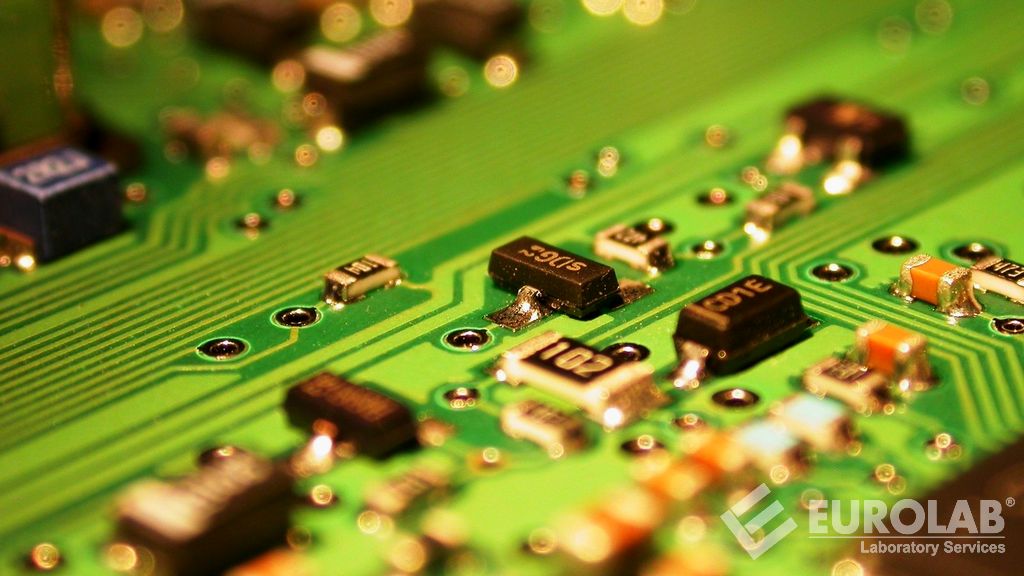
The increasing use of printed circuit boards (PCBs) in harsh environments, especially in safety critical applications, requires sufficient electrochemical reliability to control ionic contamination. The manufacture of circuit boards involves at least 20 chemical processes, most of which require heavy use of ionic matter. Contaminants can be ionic and nonionic residues. Non-ionic residues are oils, resin and grease. Pollutants that will remain on the surface of printed circuit boards after the assembly of printed circuit boards do not have conductive properties. On the other hand, ionic contaminants can be salts, organic/inorganic acids, flux activators and coating chemicals. Identifying and controlling them is essential to maintaining a quality production process.
Ion chromatography is a technique that qualifies and quantifies specific process residues by separating ionic and organic compounds suspended in a liquid solution. Separation is achieved by a precisely balanced system consisting of a liquid phase element and a charged resin column. Each different species moves in the column at different speeds depending on the mass and load of the species. Species exit the column individually and their conductivity is measured with a conductivity meter.
Ion chromatography devices are used to separate, isolate and identify components of various ionic species in water. The instruments measure the concentration of major anions and cations down to parts per billion (ppb). Combined with a suitable extraction technique, the ionic content on surfaces or within a material can be analyzed. Advanced laboratories provide ion chromatography testing services (cations and anions) to the environmental, chemical, petrochemical and electronics industries.
Among the numerous test, measurement, analysis and evaluation studies it provides for businesses in various sectors, our company provides ionic analysis of circuit boards, ion chromatography method testing services within the scope of IPC-TM-650 2.3.28 standard, with its trained and expert staff and advanced technological equipment. also gives.
To get an appointment, to get more detailed information or to request an evaluation, you can ask us to fill in our form and reach you.

