

The boiling point is the temperature at which a pure organic substance changes from the liquid phase to the gas phase. The boiling point is the temperature at which the vapor pressure of a liquid equals the external pressure surrounding the liquid. Therefore, the boiling point of a liquid depends on atmospheric pressure. As the external pressure decreases, the boiling point decreases. For example, the boiling point of water at sea level is 100 degrees, but at an altitude of 2000 meters, the boiling point is 93 degrees.
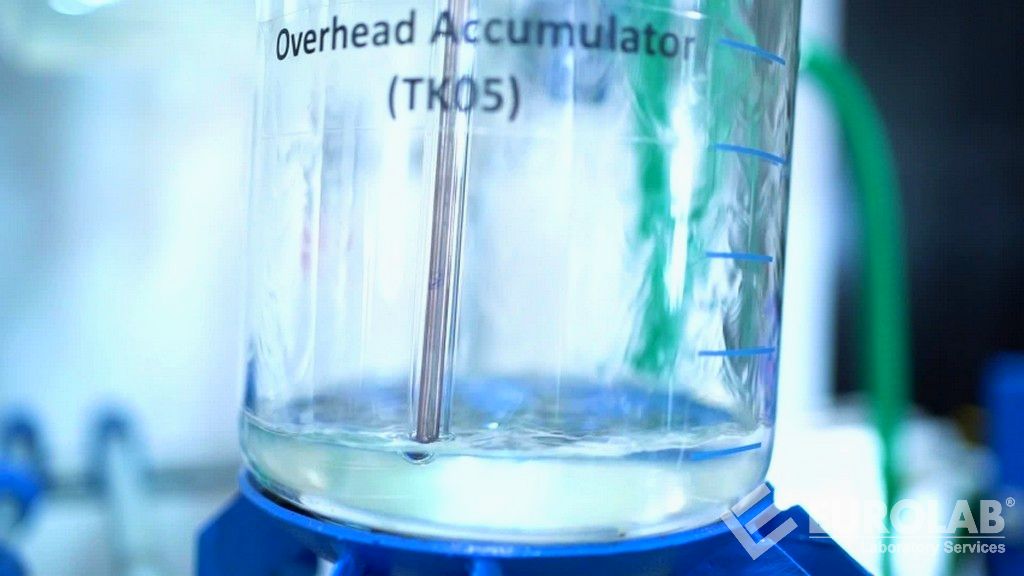
Boiling is different from evaporation. Evaporation is a surface phenomenon that occurs at any temperature where molecules on the surface of a liquid escape as vapor because there isn't enough liquid pressure to hold them in place. In contrast, boiling affects all molecules in the liquid, not just those on the surface. Bubbles form as the molecules in the liquid turn into vapor. Bubbles in water contain the vapor phase of water. Bubbles expand as they approach the surface because less pressure acts on them.
The boiling point is also known as the saturation temperature. Sometimes the boiling point is defined by the pressure at which the measurement is made. The standard boiling point is defined as the boiling temperature at 1 bar pressure. The normal boiling point or atmospheric boiling point is the temperature at which the vapor pressure of the liquid equals the vapor pressure of the liquid.
In other words, boiling is defined as the phase transition from liquid to gas, which usually occurs when a liquid is heated to its boiling point. At the boiling point, the vapor pressure of the liquid is the same as the external pressure acting on its surface.
As a liquid is heated, the average kinetic energy of its particles increases. The rate of evaporation increases as more and more molecules escape from the surface of the liquid into the vapor phase. Eventually, a point is reached where all the molecules in the liquid have enough kinetic energy to evaporate. At this point , the liquid begins to boil. The boiling point is the temperature at which the vapor pressure of the liquid equals the standard pressure. Below the boiling point, some of the liquid evaporates. However, when water begins to boil, bubbles begin to form in the body of the liquid. When the vapor pressure inside the bubbles equals the external atmospheric pressure, the bubbles rise to the surface of the liquid and burst. The temperature at which this process occurs is the boiling point of the liquid.
Our organization also provides boiling point test services with its trained and expert staff and advanced technological equipment, among the numerous test, measurement, analysis and evaluation studies it provides for businesses in various sectors.
To get an appointment, to get more detailed information or to request an evaluation, you can ask us to fill in our form and reach you.

