

Vapor pressure is the pressure caused by the evaporation of liquids. Three common factors that affect vapor pressure are surface area, intermolecular forces, and temperature. The vapor pressure of a molecule differs at different temperatures.
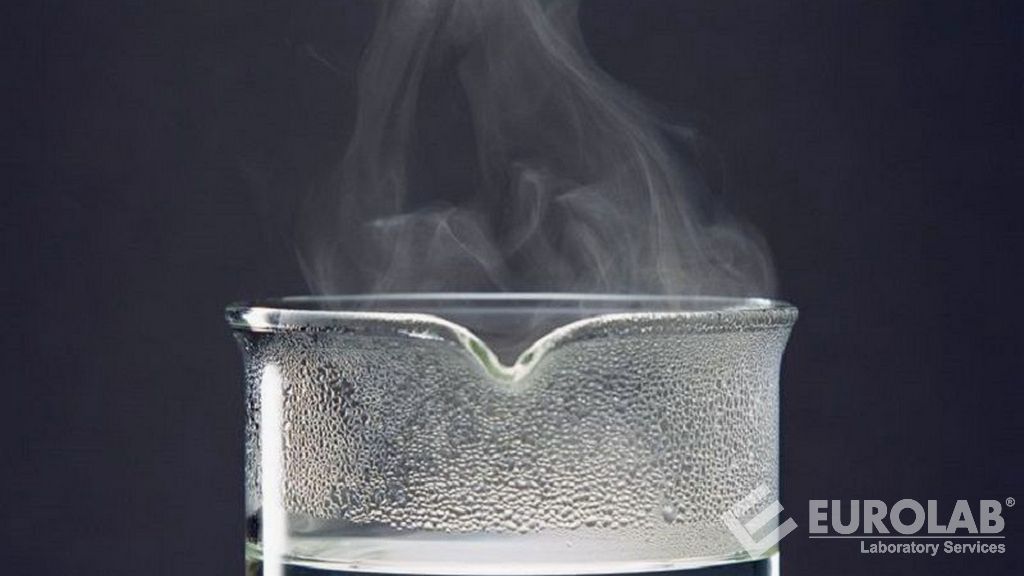
Pressure is the average force exerted by a gas, liquid or solid material on a surface. Vapor pressure is the pressure of a vapor in thermodynamic equilibrium with the condensed phases in a closed container. All liquids and solids tend to evaporate or sublimate into a gaseous state. When a liquid is in a closed container, there is an equilibrium between the liquid and gas phase. This equilibrium exists regardless of the temperature inside the container and the temperature of the liquid.
The vapor pressure of a substance is the pressure exerted by the gaseous part of the substance on the container it is in. The fact that the vapor pressure equals the external pressure is important when talking about boiling temperatures at various heights. At higher altitudes the pressure is lower than at sea level and therefore liquids boil at lower temperatures.
Vapor pressures depend only on temperature and nothing else. The vapor pressure of a liquid does not depend on the amount of liquid in the container. At the same temperature, both samples have the same vapor pressure. Vapor pressures have an exponential relationship with temperature and always increase as temperature increases. When a liquid is boiling, its vapor pressure is equal to the external pressure.
Evaporation and boiling are two terms used to express the phase change of a liquid or solid. Evaporation is the vapor phase change of a liquid or solid. Boiling causes a vapor phase change of a liquid. Evaporation raises the vapor pressure of a closed system. The boiling point is the temperature at which a liquid evaporates. Although these two terms are related, there are differences between them. The key difference between vapor pressure and boiling point is that vapor pressure is a measurement of pressure whereas boiling point is a measurement of temperature.
Substances with high vapor pressure at normal temperature are considered volatile. As long as the temperature remains constant, the vapor pressure also remains constant. But when the temperature increases, the kinetic energy of the liquid molecules increases and more and more molecules are released from the liquid. Thus, the vapor pressure also increases.
Our organization also provides steam pressure testing services with its trained and expert staff and advanced technological equipment, among the numerous test, measurement, analysis and evaluation studies it provides for businesses in various sectors.
To get an appointment, to get more detailed information or to request an evaluation, you can ask us to fill in our form and reach you.

