Flammability Tests
Any process hazard analysis aimed at keeping people, society and company assets safe should partially focus on flammability issues. Gases and vapors are particularly important as they mix easily with air, potentially causing pool fires, flash fires, jet fires, vapor cloud explosions, boiling liquid expanding vapor bursts (BLEVE) and perhaps explosions. The consequences of these events can be far-reaching and devastating if allowed to happen.
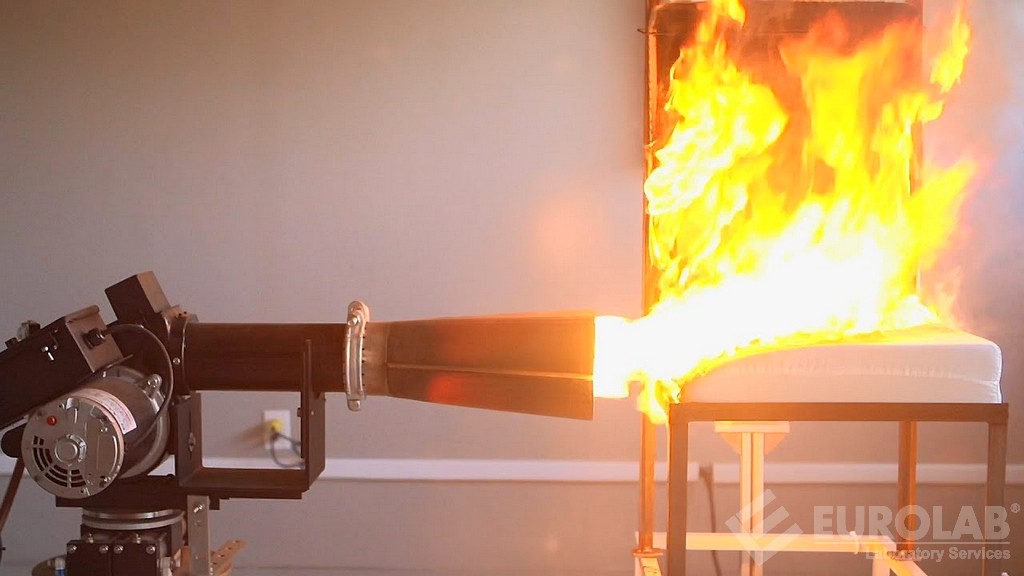
We understand the critical role of applicable flammability data in understanding, assessing and managing fire and explosion hazards. From defining the upper and lower flammability limits of substances (UFL and LFL respectively), to determining flash points and estimating explosion intensity, and much more, we offer full flammability tests based on recognized standards and industry best practices.
In Flammability Tests EUROLAB advantage
- Advice and support in assessing your fire and explosion risks
- Risk assessment in ambient and process conditions
- Simulation of flammability properties
Our Approach
It is necessary to have all valid data required to assess the risk in the storage, works or processes of flammable / combustible materials, ambient, atmosphere and process conditions. The flammability properties of gas or vapor media are generally affected by working and processing conditions such as chemical properties, temperature, pressure, composition of the fuel gas or vapor mixture, concentration of inert gaseous components, concentration of gaseous oxidants, volume and building material.
Comprehensive Flammability Tests
Some testing processes safety leaders can use to assess risk and ensure the safety of persons and operations containing flammable gases or liquids include:
- Steam Pressure The pressure exhibited by vapor on a liquid surface is known as vapor pressure. Vapor pressure is an indicator of the rate of evaporation of a liquid. A substance with high vapor pressure at normal temperatures is often called volatile.
- Limited Oxygen Concentration (LOC) - This is the minimum concentration of oxidant that can support combustion. These data can be used to study explosion prevention (elimination of flammable environments by oxidant depletion or reduction of ignition sensitivity of flammable atmospheres) or reduction of explosion severity involving the use of inert gases.
- Flash Point - The flash point of a liquid is the lowest temperature at which enough vapor is formed to form a flammable mixture in air at standard atmospheric pressure. The flash point provides a simple and useful index for evaluating the flammability of a wide variety of materials.
- Autoignition Temperature - This is the lowest temperature at which a material will self-ignite when there is no external ignition source such as spark or flame. The autoignition temperature can be used to indicate operating, storage, and transport procedures for materials.
- Explosion Intensity / (Maximum Explosion Pressure, Pmax and maximum pressure increase rate, Kg) - Pmax and Kg are explosive properties measured in the laboratory to measure the severity of a gas / vapor cloud explosion. The Pmax and Kg data can then be used to design explosion protection measures for process equipment and buildings.
- Flammability Diagram - Under various temperature and pressure conditions, liquids will develop a certain amount of vapor. For pure substances, vapors developing in air at atmospheric pressure can be flammable in a certain concentration range defined by the upper and lower flammability limits. If the oxygen concentration in the air decreases, the flammability range usually decreases. The effect of oxygen concentration on flammability properties is best represented by drawing a three-component flammability diagram showing the effect of oxygen concentration and inert gas (N2) on the flammability of vapors or gases in atmospheric conditions.
- Minimum Ignition Energy (MIE) Test - Determines the lowest energy spark that can ignite a sample under test conditions. The test is primarily used to assess the potential vulnerability of vapors to electrostatic discharges, but it is also concerned with friction sparks.
- Flammability Limits - UFL and LFL define the flammable concentration range for a substance in air at atmospheric pressure. They can be used to specify operating, storage and material handling procedures. They are particularly useful in determining ventilation requirements for processes involving flammable liquids and gases. We determine flammability limits according to the American Society for Testing and Materials (ASTM) Method E681-94.
- Open Flammability Test (liquids) - This test is done to visually (qualitatively) characterize the behavior and properties of a burning liquid.
- Continuous Flammability Test - Used to determine whether a substance continues to burn when heated under test conditions and exposed to flame. We carry out the continuous flammability test according to the United Nations Recommendations on the Transport of Dangerous Goods, second revised edition, 1995.
Causes EUROLAB?
- We have accredited state-of-the-art large-scale flammability testing laboratories.
- We can provide testing for all process conditions and scales.
- We conduct our tests according to the United Nations Department of Transportation, American Testing and Materials Association (ASTM) guidelines.
EUROLAB, with its highly expert team and internationally accredited laboratories, Flammability Tests It performs all test, analysis, measurement, evaluation and report generation services completely and reliably.



