
The standard "ISO 12846 Water quality - Determination of mercury - Method using atomic absorption spectrometry (AAS) with and without enrichment" developed by the International Organization for Standardization (ISO) describes two methods for the determination of mercury in drinking, surface, soil, rain and wastewater after appropriate pre-digestion. For the first method, a pre-enrichment process is applied, for example by incorporating Hg on a gold/platinum adsorber. For the other method (non-enrichment method), the pre-enrichment step is omitted.
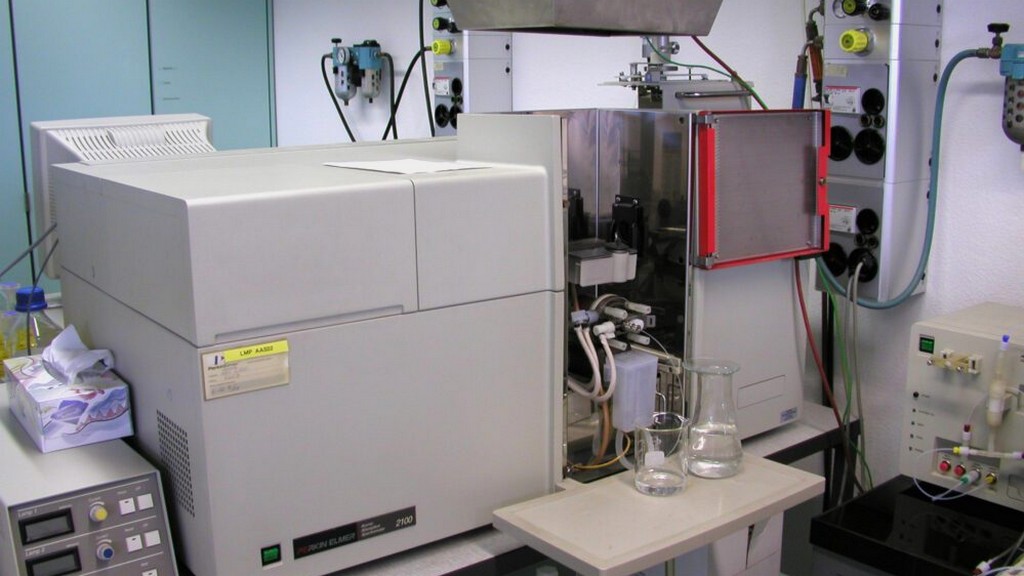
The choice of method depends on the available equipment, matrix, and the concentration range of interest. Both methods are suitable for determining mercury in water. The enrichment method generally has a practical working range of between 0,01 µg/l and 1 µg/l. The average quantification limit reported by the participants in the validation trial is 0,008 µg/l. This information about the average quantification limit provides guidance to the user of this international standard and does not alter the estimation of performance data based on laboratory-specific data. It is possible to achieve lower average quantification limits with specific instrumentation (e.g., single mercury analyzers).
The method without fortification usually has a practical working range starting at 0,05 µg/l. The mean limit of quantification reported by participants in the validation trial was 0,024 µg/l. Whether higher concentrations are determined by skipping the fortification step or by diluting the sample is up to the user to decide, depending on the specific application. The sensitivity of both methods depends on the selected operating conditions.
Another possibility for determining extremely low Hg concentrations down to 0,002 µg/l without preconcentration is the application of atomic fluorescence spectrometry (this method is described in the ISO 17852 standard). Specific atomic absorption mercury analyzers allow determinations down to 0,010 µg/l without preconcentration.
In general, determination of trace mercury concentrations by atomic absorption spectrometry depends on clean working conditions in the laboratory and the use of high purity chemicals with negligible low mercury vacancies.
This standard is applicable to industrial and municipal wastewater after an additional digestion step under appropriate conditions and appropriate method validation. A possible sample stability issue (loss of mercury) for anaerobic degrading industrial wastewater should be addressed thoroughly.
Monovalent or divalent mercury and organo-mercury compounds are also converted to divalent mercury by oxidation with potassium bromate/potassium bromide and then reduced to elemental form with tin chloride in an acidic environment. Elemental mercury is then scraped from the solution with the aid of an inert gas or mercury-free air stream. Alternatively, samples can be preserved with dichromate/nitric acid and digested under appropriate conditions (e.g., using potassium permanganate/potassium peroxodisulfate). This technique is not part of this standard and therefore must be properly verified by the user.
If the enrichment step is applied, mercury (in the form of atomic vapour) is transported in a stream of inert gas with negligible mercury content into a quartz tube where the mercury is adsorbed by a suitable heating and adsorbent (e.g. gold-platinum gauze). Other adsorbents based on the principle of aggregation are permitted if the user demonstrates suitability for the purpose.
Then mercury is released by rapid heating of the adsorbent (desorption at least 600 degrees) and is transported in the carrier gas flow to the absorption cell, where the absorbance is measured at 253,7 nm in the radiation beam of the atomic absorption spectrometer. Concentrations are calculated using a calibration curve or the standard addition method.
If the enrichment step is omitted, the mercury is transferred directly to a cuvette. Absorbances are also measured at a wavelength of 253,7 nm.
Mercury vapor can be emitted from various plastics. This fact should be taken into account when selecting the pipe material. Glass or special plastic pipes should be used. For example, silicone pipes are not suitable.
Easily reduced elements such as gold, silver, and platinum can combine with elemental mercury to cause suppression. Iodide is also a significant interferent, causing severe suppression of the mercury signal.
Volatile organics can absorb in the UV range and although automatic background correction is used to compensate for this, it still results in a degraded signal-to-noise ratio. All solutions should be brought to the same temperature (ab no more than 25 degrees) prior to reduction and stripping of mercury vapor.
Sampling must be carried out in accordance with this standard and must be carried out using the sampling containers specified in this standard. It is necessary to ensure that the sampling container does not contain mercury and does not cause loss of mercury by adsorption or diffusion.
Among the numerous testing, measurement, analysis and evaluation studies that our organization has carried out for businesses in various sectors, it also provides testing services defined in the standard “ISO 12846 Water quality - Determination of mercury - Method using atomic absorption spectrometry (AAS) with and without enhancement” with an educated and expert staff and advanced technological equipment.
To get an appointment, to get more detailed information or to request an evaluation, you can ask us to fill in our form and reach you.

