

The standard "ISO 9562 Water quality - Determination of adsorbable organically bound halogens (AOX)" published by the International Organization for Standardization (ISO) describes a method for the direct determination of the amount of organically bound chlorine, bromine and iodine (expressed as chloride) adsorbable on activated carbon, typically to the extent of 10 µg/l in water. This method is applicable to test samples having inorganic chloride ion concentrations less than 1 g/l. Samples with higher concentrations are diluted before analysis.
This method can also be applied to samples containing suspended solids where the halogens are adsorbed to the solid (such as insoluble halides). Filtering the sample before analysis allows the separate determination of dissolved and particulate adsorbable organically bound halogens (AOX).
Filtered samples with high inorganic chloride content can be analyzed by a modified method (dissolved adsorbable organically bound halogens after solid phase extraction in waters with high salt content). However, the results obtained by this modified method may differ significantly from the results obtained by the desired method.
For the purposes of this standard, the following terms and definitions apply:
In this standard, initiatives are described as follows:
This standard is based on the following principles:
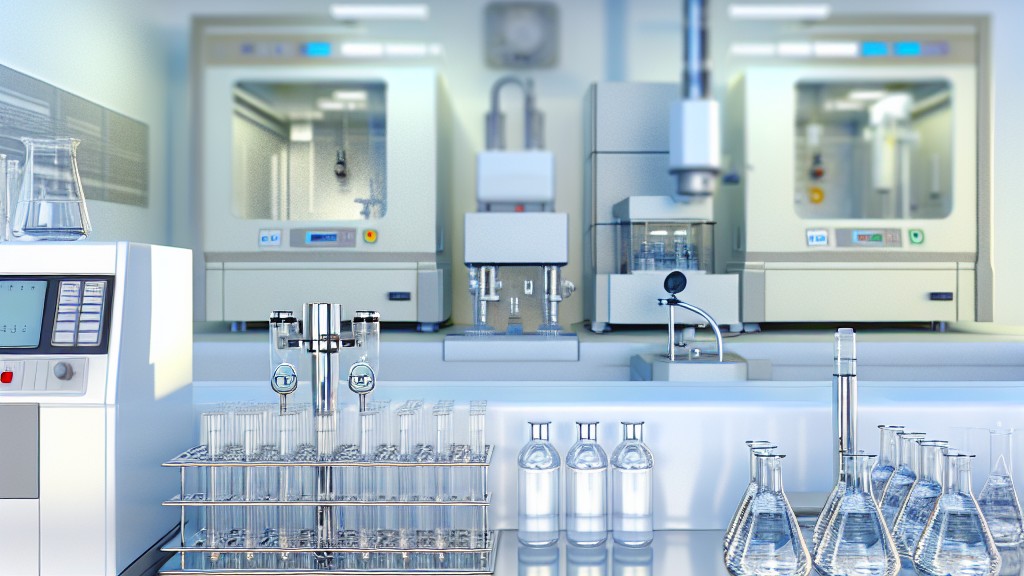
The activated carbon adsorption device used in these tests has the following apparatus for the shaking procedure: filtration apparatus, polycarbonate membrane filter, conical flask and mechanical shaking device for flasks.
The activated carbon adsorption device has the following apparatus for mixing method: conical flask, connecting apparatus for activated carbon felt, activated carbon felt and rinsing device.
Activated carbon adsorption device has the following apparatus for column procedure: ceramic wool.
These tests also use a combustion and detection device. This device has the following apparatus: combustion apparatus, quartz vessel, argentometric measuring device, absorber and syringe.
Measuring flasks and flat-bottomed sample bottles are also used in the tests.
Our organization has a strong staff that closely follows the developments in the world in the field of science and technology and constantly improves itself. Among the numerous test, measurement, analysis and evaluation studies provided for businesses in various sectors, there are also testing services in accordance with the standard “ISO 9562 Water quality - Determination of adsorbable organically bound halogens (AOX)”.
To get an appointment, to get more detailed information or to request an evaluation, you can ask us to fill in our form and reach you.

