
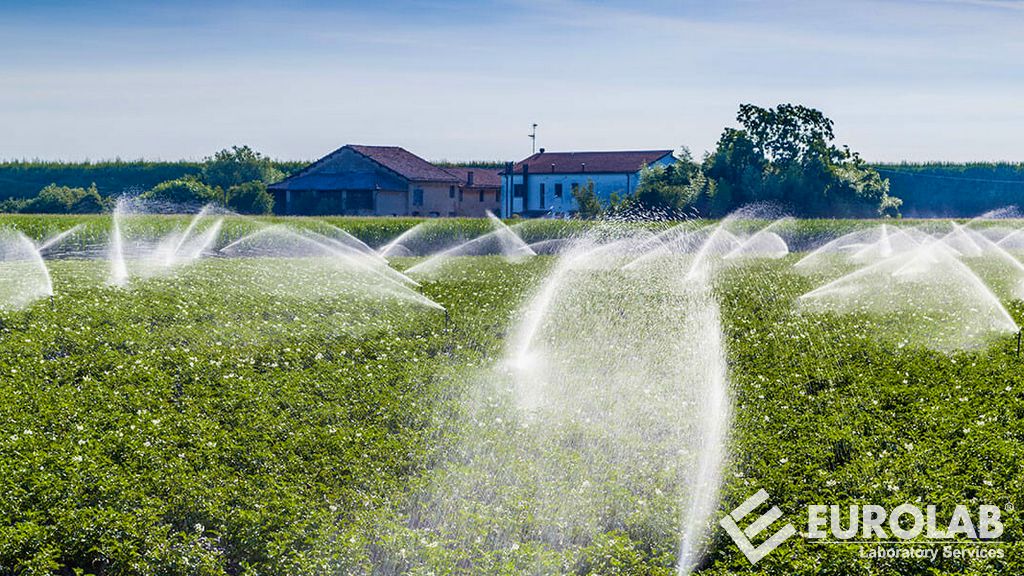
Studies have shown that nitrate-nitrogen concentrations accumulate in groundwater below areas where irrigation is intense and soil is permeable, allowing nitrogen fertilizer to leach out. This effect is greater in surface irrigation systems used to irrigate sandy soils.
To prevent further deterioration of water quality or to improve water quality, both appropriate fertilizer management and proper irrigation management are required. In terms of nitrate-nitrogen concentration, the safe drinking water standard for public water sources is 10 ppm (or 10 mg/L) nitrate-nitrogen.
Agricultural irrigation water quality is determined by the total salt content and the salt types in the water. A salt is a combination of two elements or ions. One has a positive charge (sodium) and the other a negative charge (chloride). Water may contain various salts such as sodium chloride (table salt), sodium sulfate, calcium chloride, calcium sulfate (gypsum), magnesium chloride. The types and amounts of salts in the water and therefore the salinity of that water depend on the source.
The quality of well water depends on the composition of the underground formations from which the water is pumped, and the quality of surface water largely depends on the source of the runoff. Drainage water from irrigated lands, brine seeps, oil fields, and urban and industrial wastewater often has higher salt levels.
To assess a salt hazard, the water sample is analyzed for three main factors: total soluble salts, sodium hazard, and toxic ions. Total soluble salts measures the salinity hazard by estimating the combined effects of all the different salts present in the water. The sodium hazard is based on the calculation of the sodium adsorption rate. Toxic ions include elements such as chloride, sulfate, sodium and boron.
Agricultural crops vary widely in their ability to tolerate salts. Some crops have special methods that manage the high salt levels within the plant and allow them to continue to grow and produce. In most cases, critical levels have been set for each product and each salt test.
Meanwhile, in general, the pH value of irrigation water should be between 5.0 and 7.0. Water with a pH value below 7.0 is called acidic, and water above 7.0 is called basic.
Our organization also provides agricultural irrigation water quality analysis services with its trained and expert staff and advanced technological equipment, among the numerous test, measurement, analysis and evaluation studies it provides for businesses in various sectors.
To get an appointment, to get more detailed information or to request an evaluation, you can ask us to fill in our form and reach you.

