

Developed by the American Society for Testing and Materials (ASTM), the standard "ASTM C147 Standard Test Methods for Internal Compressive Strength of Glass Containers" describes test methods for determining the fracture strength of glass containers when subjected to internal pressure. These test methods are intended to determine the compressive strength of manufactured containers that are expected to develop a sustained pressure of 138 kPa (20 psi) or greater after processing.
This standard covers the following two test methods:
This standard is important for industries such as food and beverage, pharmaceutical, and cosmetics, where glass containers are commonly used to store pressurized liquids or products that may develop internal pressure. Ensuring that these containers can withstand the pressure without breaking is critical to ensuring product safety, preventing leaks, and preventing contamination or injury. This testing is an important quality control measure in the production and use of glass containers.
The internal compressive strength of glass containers refers to their ability to resist the forces exerted by pressurized contents, such as carbonated beverages, pressurized chemicals, or other expanding liquids. If a container cannot withstand this internal pressure, it risks bursting or rupturing, which can lead to product loss, contamination, or safety hazards from broken glass. Testing the internal compressive strength is crucial to ensuring the container can safely withstand the conditions it will encounter during production, distribution, and consumer use.
Industries that use glass packaging, particularly the food, pharmaceutical, and beverage sectors, require containers strong enough to withstand internal pressure without failure. For example, in the case of carbonated beverages, the buildup of gas pressure inside the bottle requires the container to remain intact until consumed. ASTM C147 provides a standardized method for evaluating these properties and ensuring that glass containers meet performance and safety standards.
By following the ASTM C147 testing protocol, manufacturers ensure glass containers are strong enough to withstand internal pressure, reducing the risk of breakage and ensuring products remain safe and secure during use.
The soda bottle burst test is a common and vital quality control test in the bottle packaging industry. The pressurized gas inside the bottle exerts a high amount of pressure on the container walls. A poor quality or low-resistance bottle cannot withstand this pressure and will burst. Therefore, it is important to conduct a testing process to ensure the bottle material is strong enough to withstand the required pressure.
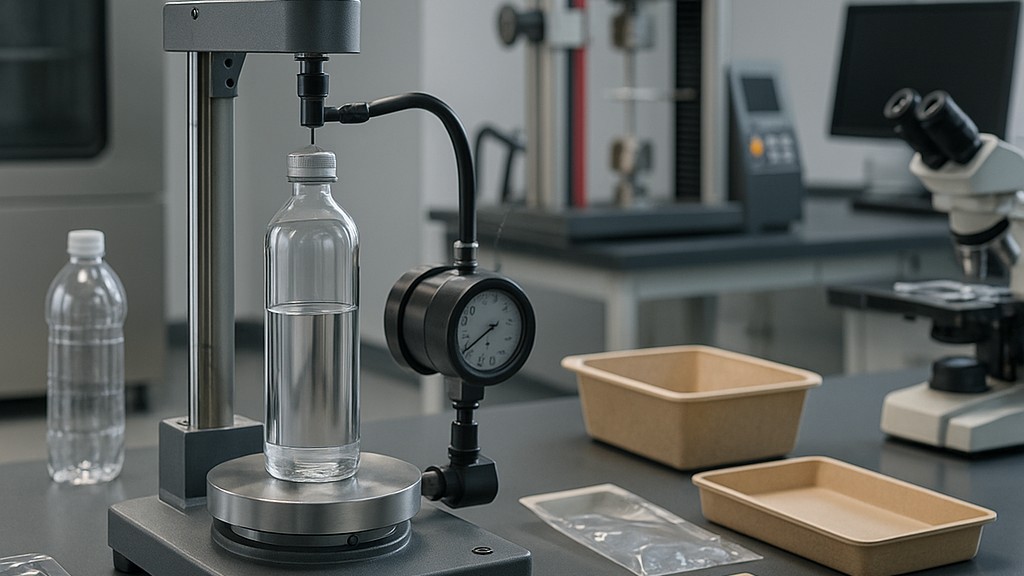
The bottle burst tester is a highly advanced, next-generation model for real-time pressure testing of bottles or containers. It evaluates the rate at which a bottle's volume expands under a specific amount of pressure. The tester is designed in accordance with global testing standards for burst testing, such as ASTM C147. The bottle sample is exposed to increasing air pressure within the chamber, measuring its capacity to resist burst pressure.
Glass packaging is widely used in the packaging industries, particularly for beverage, pharmaceutical, cosmetic, and food products. Ensuring the structural integrity and safety of these packages under pressure is vital to preventing product loss, injury, or contamination. To address this need, ASTM C147 provides a detailed methodology for evaluating the internal pressure resistance of glass packaging. This standard includes methods for assessing the internal pressure a glass container can withstand before failure (breakage or leakage) occurs. This standard is applicable to a wide range of container types and sizes used in commercial applications.
The main objectives of the ASTM C147 standard are:
Using this standard, manufacturers can identify vessels that do not meet pressure requirements and improve their design or manufacturing processes.
The test procedures defined in the ASTM C147 standard are:
Each test is performed using specialized equipment, including pressure chambers and high-pressure pumps, to ensure safety and accuracy.
The parameters taken into account in these tests are as follows:
The ASTM C147 standard is crucial for:
Consequently, the ASTM C147 standard plays a vital role in ensuring the reliability and safety of glass containers used in pressurized applications. By standardizing the assessment of internal pressure strength, this method helps manufacturers deliver high-quality, safe, and durable glass packaging solutions. As packaging technologies and consumer safety expectations evolve, compliance with such standards becomes even more critical.
Our organization, which has been supporting businesses across all sectors for years through a wide range of testing, measurement, analysis, and evaluation activities, has a strong team of employees who closely follow global developments in science and technology and are constantly improving themselves. In this context, we also provide testing services in accordance with ASTM C147 Standard Test Methods for Internal Compressive Strength of Glass Containers.
To get an appointment, to get more detailed information or to request an evaluation, you can ask us to fill in our form and reach you.