
DIN 55473 Auxiliary Packaging Agents - Moisture Absorber in Bags - Technical Delivery Conditions

DIN 55473 Auxiliary Packaging Agents - Moisture Absorber in Bags - Technical Delivery Conditions

The standard “DIN 55473 Packaging aids - Moisture absorbent in bags - Technical delivery conditions”, published by the German Institute for Standardization (DIN), describes the technical delivery conditions for moisture absorber bags used in packaging.
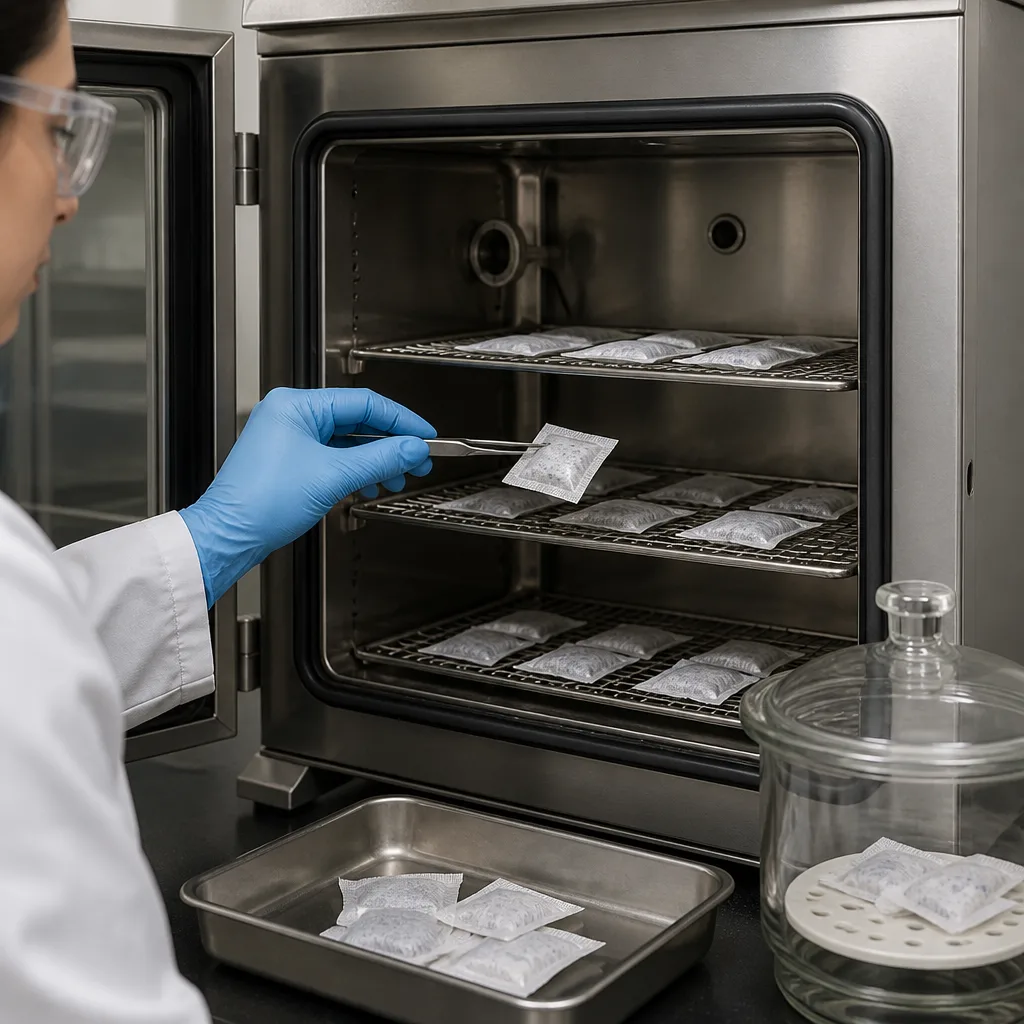
DIN 55473 Auxiliary Packaging Agents - Moisture Absorber in Bags - Technical Delivery Conditions

This standard specifies uniform quality, performance, testing methods, labeling, and acceptance requirements for desiccant bags used to protect moisture-sensitive products during transport and storage.

Humidity is one of the most common causes of damage to packaged goods. Changes in humidity can lead to:

  • Corrosion of metal components
  • Mold and mildew formation
  • Drug spoilage
  • Damage to electronic equipment.
  • Shortening the shelf life of food and chemicals.
  • Deterioration of optical instruments and precision equipment

The DIN 55473 standard ensures that desiccant bags continuously absorb moisture within their specified capacities and maintain their integrity throughout storage, transport, and use.

This standard applies to absorbent desiccant materials packaged in vapor-permeable bags, designed for use inside packaging with low vapor permeability. It defines the technical requirements for evaluating the efficiency and quality of desiccant bags used to protect packaged goods from excessive moisture during transport and storage.

Typical desiccant agents covered by this standard include:

  • Silica gel
  • Bentonite clay
  • Molecular sieves
  • Active alumina
  • Other approved moisture-absorbing materials

The DIN 55473 standard specifies requirements in several key areas:

  • Dehumidifier: This standard defines the following requirements:
    • Moisture absorption performance
    • Particle size distribution
    • Chemical purity
    • Free from harmful pollutants
    • Consistent suction capacity

The desiccant must maintain its stated performance throughout its service life.

  • Bag material: The desiccant bag should provide the following:
    • High water vapor permeability.
    • Sufficient mechanical strength
    • Tear resistance
    • Puncture resistance
    • Secure sealing.

The bag should allow moisture to enter while preventing moisture-absorbing particles from leaking out.

  • Dust permeability: The DIN 55473 standard classifies dehumidifier bags according to their dust permeability. Tests confirm the following:
    • Dust emissions remain within acceptable limits.
    • Fine particles do not contaminate packaged products.
    • Clean handling is ensured during installation and transportation.

This requirement is particularly important for electronic, optical, and pharmaceutical packaging.

  • Moisture absorption performance: One of the most critical aspects of this standard is verifying that the desiccant bags achieve their declared absorption capacity. Tests evaluate the following:
    • Moisture absorption
    • Suction efficiency
    • Repeatability
    • Performance under controlled environmental conditions

This ensures users receive predictable humidity protection.

  • Mechanical integrity: This standard requires the following to be tested:
    • seam strength
    • Bag durability
    • Resistance to transport damage
    • Resistance to vibration during shipment.

The bag must remain intact throughout the logistics operations.

  • Labeling requirements: This standard specifies labeling requirements for desiccant bags and packaging. Typical labeling includes:
    • Producer identity
    • Type of desiccant
    • Quantity or units of desiccant
    • Party identity
    • Dust permeability classification
    • Certification marks (where applicable)

Proper labeling ensures traceability and simplifies quality control.

  • Quality control tests: Manufacturers typically perform the following tests:
    • Moisture absorption capacity
    • Particle size analysis
    • Dust permeability
    • Mechanical durability
    • Bag permeability
    • Seal integrity
    • Visual inspection
    • Packaging inspection

These tests verify the products' suitability before they are released to the market.

Dehumidifier bags conforming to the DIN 55473 standard are widely used in the following areas:

  • Electronics: Protects against:
    • condensation
    • Corrosion
    • Electrical malfunctions caused by humidity.
  • Automotive industry: Areas of application include:
    • Electronic control units (ECU)
    • Spare parts
    • Sensors
    • Precise assemblies
    • Export packaging
  • Medications: Provide protection against the following:
    • Medical devices
    • Diagnostic kits
    • Moisture-sensitive medicines
  • Industrial machinery: Provides protection for:
    • bearings
    • Hydraulic components
    • Machine tools
    • Spare parts
  • Military and aerospace: Applications for packaging include:
    • Optical systems
    • Electronic equipment
    • Communication devices
    • Weapon components
    • Long-term stored equipment
  • Food industry: Used where moisture control is required.
    • product quality
    • Shelf life
    • Packaging stability

The DIN 55473 standard is often used in conjunction with the “DIN 55474 Packaging aids - Dehumidifier bags - Application, calculation of the required number of dehumidifier units” standard. These two standards serve different purposes:

  • The DIN 55473 standard focuses on the technical requirements and quality characteristics for desiccant bags.
  • The DIN 55474 standard is a guideline for selecting and calculating the number of dehumidification units required for a package.

Together, they help manufacturers select suitable desiccant agents and ensure that these desiccant agents meet defined performance criteria.

Organizations that implement the DIN 55473 standard benefit from the following:

  • Reliable moisture protection.
  • Improved product quality
  • Reduced corrosion risk.
  • Longer storage life
  • Lower transport losses
  • Consistent dryer performance.
  • Better customer trust.
  • International recognition of packaging quality.

The DIN 55473 standard is primarily applied in the following sectors:

  • Electronics manufacturing
  • Automotive production
  • Aerospace industry
  • Defense industry
  • Medical devices
  • Pharmaceutical industry
  • Industrial equipment
  • Export logistics
  • Precision engineering
  • Chemical production

The DIN 55473 standard has undergone numerous revisions since its publication. The latest version of this standard incorporates updated technical requirements and compliant presentation, while maintaining the objective of ensuring reliable performance and quality of desiccant bags used in protective packaging.

In conclusion, the DIN 55473 standard is a crucial packaging standard for ensuring the quality and performance of desiccant bags used to protect moisture-sensitive products. By defining requirements for desiccant materials, bag construction, testing, labeling, and quality assurance, it provides manufacturers and end-users with confidence that packaged goods will be protected from moisture-related damage during storage and transport. The widespread adoption of this standard in sectors such as electronics, automotive, pharmaceuticals, and aerospace underscores its importance in modern packaging and logistics.

For many years, our organization, with its competent and experienced staff, has been understanding the needs of its clients, providing the advanced testing services they require, and assisting them in the establishment, implementation, and improvement of management systems. Within this framework, we also provide testing services in accordance with the DIN 55473 standard.

WhatsApp

