

The Cobb test is applied to determine the amount of water absorbed by a sample of paper, paperboard and corrugated board of certain dimensions (non-absorbent) in a specified time period, usually 60 or 180 seconds (Cobb60 or Cobb180). In short, the Cobb value of such a material expresses its water absorption capacity.
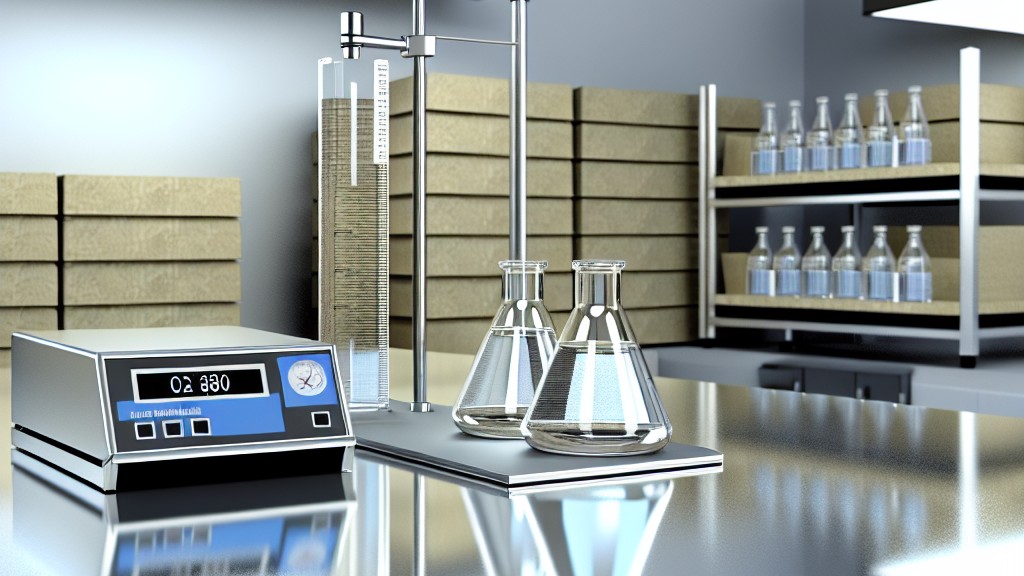
The “COBB 1800 Water absorption of corrugated cardboard” test is performed to determine the water absorption value of a corrugated cardboard sample according to Cobb after 1800 seconds.
The following steps are taken when performing this test:
The Cobb test is important because it tests the ability of paper to absorb water and the amount of water absorbed by the surface of the paper. If the paperboard absorbs too much water, it can have difficulty maintaining the strength and integrity of the box. The Cobb test helps determine the amount of water that can be absorbed by the surface of the paper or paperboard in a given period of time. In this case, the less water absorbed, the better. In most cases, this test is a necessity.
Materials like paper and cardboard tend to attract and hold water molecules from the surrounding environment. The key for box manufacturers is to produce boxes using corrugated cardboard that can resist excess water seeping into the box’s internal structure.
For the purposes of the Cobb standards, water absorbency (Cobb value) refers to the calculated mass of water absorbed by 1 m2 of paper or board in a specified time under specified conditions. The test area is normally 100 cm2.
In these tests, a test piece is weighed before and after a surface is exposed to water for a certain period of time. The result of the increase in mass is expressed in grams per square metre (g/m2). At the end of the test, the test piece should not show any signs of penetration or leakage from the inside of the test ring.
The water used during the test should be distilled or deionized, at laboratory conditioning temperature, i.e. 23 degrees plus/minus 1 degree or 27 degrees plus/minus 1 degree in tropical countries, and should meet the requirements of the “ISO 14487 Paper pulp - Standard water for physical testing” standard. In addition, blotting paper with a grammage of 250 g/m2 plus/minus 25 g/m2 is used in the tests. The blotting paper should be circular or rectangular with a minimum dimension of 140 mm × 140 mm.
An absorbency tester is used to determine water absorbency. This device is
The test apparatus in its simplest form consists of a rigid base with a smooth, flat surface and a rigid metal cylinder with an inside diameter of 112,8 mm plus/minus 0,2 mm and a means for holding it firmly to the base plate. The edge of the cylinder in contact with the test piece should be flat and smoothly machined to a thickness sufficient to prevent the cylinder from cutting the test piece. The height of the cylinder is not important provided it is sufficient to contain a depth of water of 10 mm.
Our organization has a strong staff that closely follows the developments in the world in the field of science and technology and constantly improves itself. Among the numerous test, measurement, analysis and evaluation studies provided for businesses in various sectors, there is also the “COBB 1800 Water absorption of corrugated cardboard” test service.
To get an appointment, to get more detailed information or to request an evaluation, you can ask us to fill in our form and reach you.