

The standard “ISO 536 Paper and paperboard - Determination of grammage” published by the International Organization for Standardization (ISO) describes a method for determining the grammage of paper and paperboard.
For the purposes of this standard, grammage (mass per unit area) refers to the mass per unit area of paper or paperboard as determined by a specified test method. Grammage is expressed in grams per square metre.
The methods described determine the area and mass of the test pieces and calculate the grammage. Details on the test method precision are included in the standard annex (Annex B).
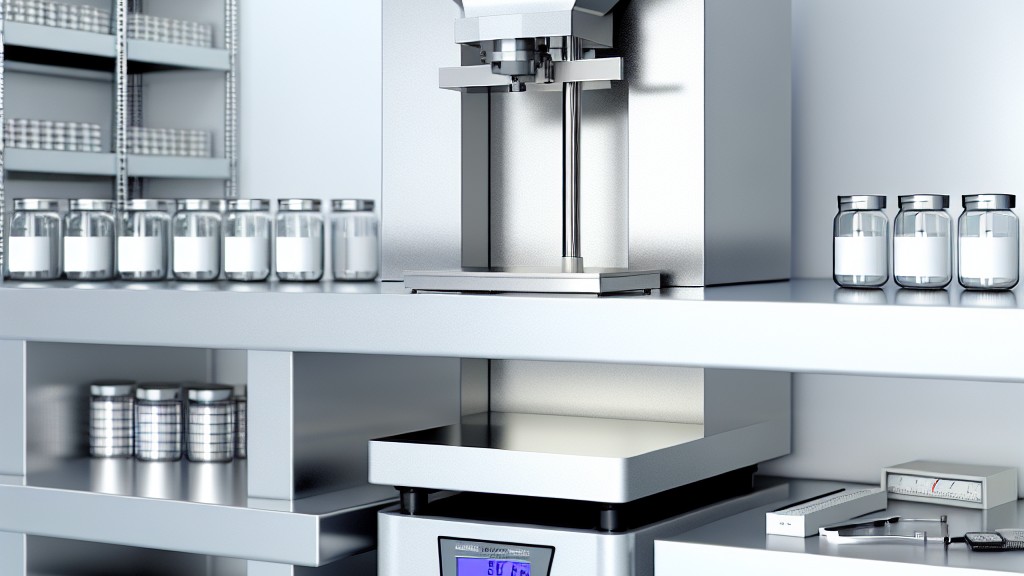
The equipment used in these tests includes:
The selection of units and sheets and the taking of samples should be in accordance with the ISO 186 standard. If tests are carried out on another type of sample, it is necessary to ensure that the samples taken are representative of the sample taken. If possible, at least five samples should be taken and sufficient space should be taken for at least 20 test pieces. If the as-taken grammage is to be determined, the effect of the ambient atmosphere on the moisture content of the samples should be minimised.
To determine the conditioned grammage and “oven dry” grammage, samples are conditioned in accordance with the ISO 18 standard.
To determine the conditioned grammage, test pieces are prepared and weighed under the same atmospheric conditions as those used to condition the samples. To determine the conditioned grammage and the oven-dried grammage, test pieces are cut from the conditioned samples using a cutting device. If possible, at least 20 test pieces are cut from at least five samples, taking the same number from each sample. The same procedure is followed for determining the conditioned grammage, minimizing the effect of the ambient atmosphere on the moisture content of the test pieces. Whenever possible, each test piece should have an area of at least 50.000 mm2 (preferably 200 mm × 250 mm) and not more than 100.000 mm2. If necessary, it may be made up of several smaller pieces. Where only limited sample space is available and it is not possible to make a test piece from several smaller pieces, a test area of at least 100 cm2 may be used. This should be reported as a deviation from the preferred range of 500 cm2 to 1.000 cm2 specified in this standard. If the change in area of test pieces of the type of paper or board tested exceeds the limits specified herein at the moisture content at which the grammage is determined, or is unknown, the dimensions of each test piece shall be adjusted to the nearest 0,5 mm and the area of each shall be calculated. Each test piece shall be weighed on the balance and its mass or, if a special plate weighing scale is used, its stated grammage shall be expressed to three significant figures. It is advisable to avoid contact with the test piece with bare hands, especially when handling small parts.
If the value obtained from the balance is the test piece mass, the grammage of each test piece is calculated in grams per square meter using the formula given here to three significant figures. If a special plate weighing scale is used, the grammage of each test piece is calculated in grams per square meter using the formula given here to three significant figures. The mean and standard deviation of the results are calculated and expressed to three significant figures.
Most paper is bought and sold according to its mass per unit area, and therefore grammage is of great importance in determining price for both the consumer and the producer. Values for many physical properties, such as bursting strength, thickness and volume, are interpreted and stated in terms of grammage.
Our organization has a strong staff that closely follows the developments in the world in the field of science and technology and constantly improves itself. Among the numerous test, measurement, analysis and evaluation studies provided for businesses in various sectors, there are also testing services in accordance with the "ISO 536 Paper and cardboard - Determination of grammage" standard.
To get an appointment, to get more detailed information or to request an evaluation, you can ask us to fill in our form and reach you.