

The American Society for Testing and Materials (ASTM) standard, "ASTM D6988 Standard Guide for Determining the Thickness of Plastic Film Test Specimens," describes a procedure for determining the thickness of plastic films, where the thickness is directly used to determine the results of tests for various properties. This method is preferred unless otherwise specified in material specifications or applicable test standards. Film is defined in ASTM D883 as an optional term for sheets having a nominal thickness of not more than 0,25 mm. Alternative methods are acceptable if they meet the measurement accuracy requirements specified in this guide. This guide is not intended to address sampling techniques or the measurement of film thickness for commercial product classification or quality control purposes.
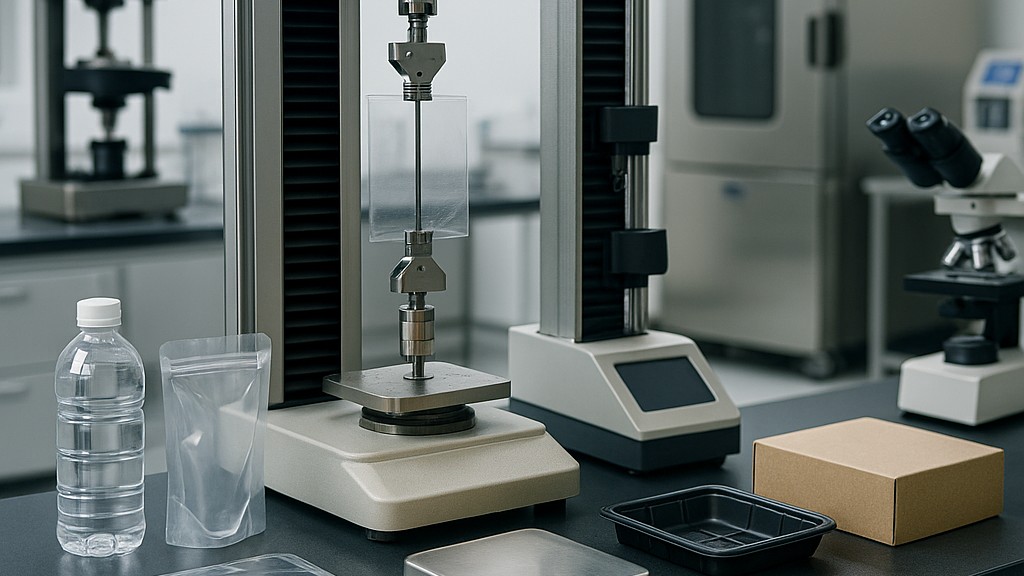
This guide is intended to provide recommendations and good practices for determining precise dimensions when necessary for calculating properties expressed in physical units. It is not intended to replace practical thickness measurements based on commercial portable instruments, and it is not intended to imply that thickness measurements made using these procedures will be exactly the same.
ASTM D6988 provides a global method for determining plastic film thickness testing. It is a comprehensive set of plastic film thickness testing standards that provide industry uniformity, guide the manufacturing process, and improve the final product. Using a reliable digital micrometer allows these types of plastic film tests to be performed in the laboratory.
Plastic films that meet the ASTM D6988 standard test are plastic sheets with a nominal thickness of no more than 0,25 mm. A number of plastic films can be examined with this test. These include:
The main equipment used in these tests are:
In the world of materials testing, precision is crucial, especially when dealing with thin, flexible materials like plastic films. These films are common in packaging, agriculture, medical devices, and countless other industries where even small changes in thickness can impact performance, durability, and cost. This is where ASTM D6988, a standardized guide developed to ensure accurate and consistent measurement of plastic film thickness, comes in. This standard provides best practices for obtaining reliable data, helping manufacturers meet quality criteria and regulatory requirements.
This standard is particularly applicable to films thicker than approximately 50 micrometers, where rapid spot checks or average thickness assessments are required. The method described is not a rigid test method, but rather a flexible framework that allows users to adapt the techniques to their equipment and needs.
ASTM D6988 contains recommended procedures for measuring the thickness of plastic film specimens, typically prepared for other mechanical or physical property tests. This standard emphasizes the importance of precise dimensions in calculating properties such as tensile strength, elongation, or barrier performance, as thickness directly affects these metrics.
This standard is applicable to uniform plastic films and sheets, excluding highly irregular or composite materials. It reduces variability in test results between laboratories or operators by ensuring repeatability and reproducibility of measurements. It does not make any statements of precision or bias. Due to various influencing factors (e.g., film composition, environmental conditions), users should validate their own methods for accuracy.
This guide is part of a broader ecosystem of ASTM standards for plastics, complementing methods such as ASTM D374 for thinner films or ASTM D8136 for advanced profiling.
Plastic films are designed for specific applications, such as moisture-resistant food packaging or UV-resistant greenhouse coverings. Inaccurate thickness data can lead to:
Therefore, it is necessary to measure plastic film thickness. The ASTM D6988 standard addresses these challenges by promoting good measurement practices and ensuring that thickness data support informed decision-making in quality control and research.
This standard does not recommend a single technique, but suggests options based on the film's characteristics and the required sensitivity. Common approaches covered in this standard include:
The process typically includes these steps:
For coated films, the guideline expands to include non-destructive methods such as magnetic measurement devices, emphasizing multiple point measurements to capture application variations.
Industries such as packaging (e.g. PET bottles, polyolefin packaging) and converting rely on ASTM D6988 standard-compliant tools.
Some difficulties in measuring thin films are:
To overcome these:
Ultimately, the ASTM D6988 standard serves as a cornerstone for reliable plastic film thickness testing, bridging the gap between fundamental measurements and industrial demands. By following this guide, professionals can improve product quality, facilitate compliance, and foster innovation in materials science. As plastic films evolve, such as with sustainable bioplastics or smart packaging, such standards remain relevant.
Our organization, which has been serving businesses for many years and meticulously following global developments in science and technology, employs a skilled team and extensive infrastructure to conduct testing, measurement, and analysis in a wide range of areas for businesses across all sectors. In this context, we also provide testing services in accordance with ASTM D6988 Standard Guide for Determining the Thickness of Plastic Film Test Specimens.
To get an appointment, to get more detailed information or to request an evaluation, you can ask us to fill in our form and reach you.