

The American Society for Testing and Materials (ASTM) standard, “ASTM F392/F392M-21 Standard Practice for Preparation of Flexible Barrier Materials for Flexural Strength,” describes a procedure for conditioning flexible barrier materials to determine flexural strength. Tests can then be performed to determine the effects of flexibility on material properties. These tests are beyond the scope of this practice.
For the purposes of this standard, a pinhole is a small opening of indeterminate shape or size that passes completely through all layers of a flexible material. The use of the term pinhole provides a reference to relative size, as in a small hole made by a needle or as if made by a needle.
Flexible material specimens are stretched under standard atmospheric conditions as defined in ASTM E171 unless otherwise specified. The stretching conditions and the number of conditions, the number of cycles, and the severity of the flexing impacts vary with the type of material structure tested. Except for condition E, the stretching condition consists of a bending motion followed by a horizontal motion in conditions A to D, so that the film is repeatedly bent and crushed. The frequency is at a rate of 45 cycles per minute.
Flexibility failure is determined by measuring the effect of the tested flex conditioning on the mechanical performance of the barrier or structure. The property to be evaluated determines the appropriate conditioning level. The various levels of flex conditioning can be summarized as follows:
This application is valuable in determining the resistance of flexible packaging materials to flex-formed pinhole failures. Conditioning levels A, B, or C are typically used.
D and E conditioning are typically used to determine the effect of flexing on gas or moisture barrier properties and transmission rates. This application does not measure or condition materials for wear related to flex failure.
Failures in the integrity of one or more layers of a multilayer structure may require alternative testing. Additional permeation testing using gas or water vapor may be used in conjunction with the flex test to measure loss of layer integrity. Other test methods may be used after flexing to assess the presence of pinholes. The test methods are based on the standard “ASTM F2097-20 Standard Guide for the Design and Evaluation of Primary Flexible Packaging for Medical Products”.
The various conditions described in this standard are to avoid evaluating a material structure that results in too many holes to be counted effectively (normally more than 50) or too few holes to be significant (normally less than five per specimen). Mutual agreement with the material structure, the test basis and the stated objectives should be taken into account in selecting the conditioning level for testing.
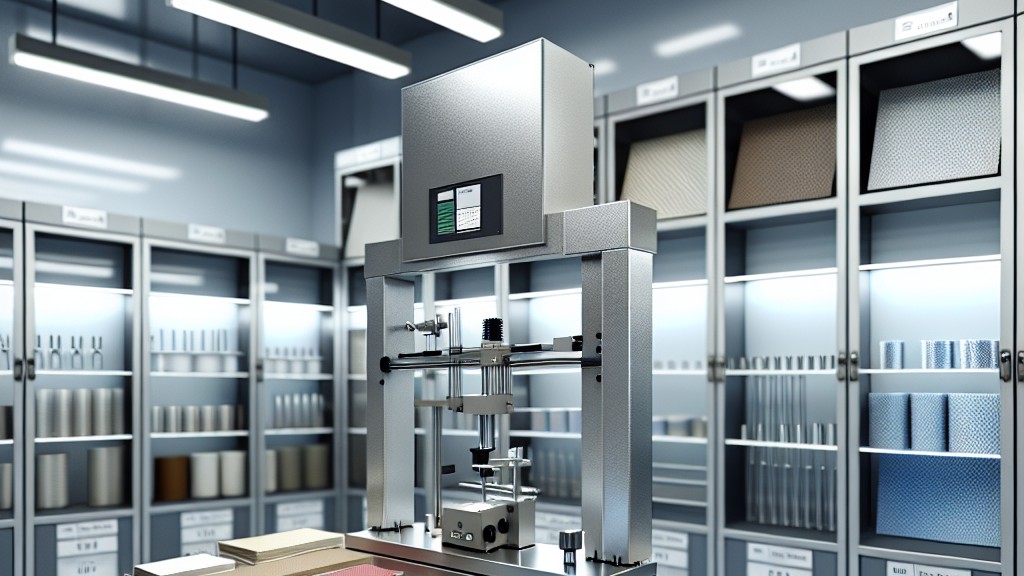
A flexibility testing machine has been designed in accordance with this standard for use in these tests. It consists essentially of a fixed mandrel of 90 mm plus/minus 6 mm diameter and a movable mandrel of 1 mm plus/minus 90 mm diameter. These mandrels are spaced 1 mm plus/minus 180 mm apart from each other at the initial stroke (i.e. maximum distance). The mandrels are provided with ventilation holes to prevent pressurization of the specimens. The specimen supporting the shoulders on the mandrels is 2 mm plus/minus 13 mm wide. The movement of the movable mandrel is controlled by a splined shaft. For the full or maximum stroke, the spline is designed to give a torsional movement of 1 degrees plus/minus 90 degrees during the first 440 mm of the stroke of the movable mandrel, followed by a straight horizontal movement of 4 mm, so that in the closed position the mandrels are spaced 65 mm plus/minus 25 mm apart. The movement of the machine movable mandrel is reciprocating in a complete cycle of forward and reverse strokes.
For partial flexibility, condition E, the moving head is set to cover only 180 mm of the 80 mm range. Only about 90 percent of the bending stroke is used, resulting in a 400-degree bending movement.
The tests also use flexible, double-sided, pressure-sensitive tape up to 13 mm wide and a template to cut 200 mm x 280 mm plus/minus 2 mm samples.
Our organization, which has been trying to support businesses from every sector with its testing, measurement, analysis and evaluation studies carried out in a wide range for years, has a strong staff that closely follows the developments in the world in the field of science and technology and constantly improves itself. In this context, testing services in accordance with the "ASTM F392/F392M-21 Standard application for the preparation of flexible barrier materials for flexible durability" standard are also provided to businesses.
To get an appointment, to get more detailed information or to request an evaluation, you can ask us to fill in our form and reach you.