

The ASTM F2981 Standard Test Method for Verifying Resistance to Air Permeability of Nonporous Flexible Barrier Materials, developed by the American Society for Testing and Materials (ASTM) , describes a test method used to verify a specific material design property.
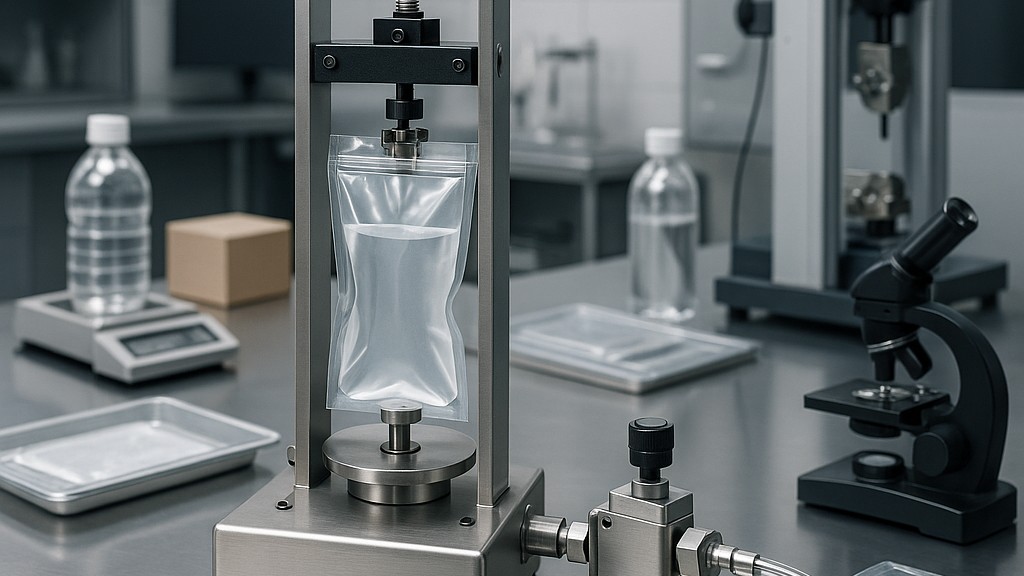
Some flexible barrier materials are designed to resist the passage of air through the membrane structure. These materials are considered non-porous. This test method provides a means of verifying this property by challenging a material with a specified volume of air under pressure for a specified period of time. This test method is not intended to measure the diffusion properties of a material or to determine the presence or extent of pinhole damage in the design that could lead to leaks.
This material challenge is presented in an annex to the ISO-11607-1 standard as a normative test method to demonstrate that a material is non-porous and meets microbial barrier requirements (Annex C).
The equipment used in these tests includes:
Conditioning of the samples depends on the material being evaluated. If conditioning prior to testing is appropriate, normal, and desired, then test samples are conditioned in accordance with ASTM E171/E171M Standard Practice for Conditioning and Testing of Flexible Barrier Packagings.
The material sample to be tested is measured and cut into a square, approximately 50 mm x 50 mm. Samples of other cut sizes can be used if they are easier to insert and position in the holder without causing damage, wrinkling, or leakage. Before inserting the material, ensure the column is raised in the ready position. Loosen the wheel beneath the densometer and place it between the mesh clamps. Material samples are placed with the smoother side facing up against the cylinder to minimize the risk of leakage around the clamp. The wheel is then tightened by turning it to the right until the material is secure.
The stopper is released, and the cylinder is guided downward until the oil level inside is reached. Wait at least 5 seconds for the cylinder to settle. The starting time is recorded. The cylinder's position is measured in mm from position A to position B. This distance is recorded as the starting distance. The device is left in position for one hour, and the end time of the test is recorded.
The cylinder's position is measured in mm from position A to position B. The final test distance is recorded. The difference between the initial and final distance measurements is calculated and recorded. If the difference is less than or equal to 1 mm, the materials are verified as non-porous. If the results for a material designed to be non-porous are greater than 1 mm, an abnormality is checked. The position of the test specimen and the holder is checked for air leakage around the specimen. The material is checked for damage. Excessive wrinkling of the material can cause cracks in the structure.
Results are recorded as pass/fail and deviations from the specified procedure are listed.
The sensitivity of this test method is based on an interlaboratory study of the standard test method to verify the resistance of a non-porous flexible barrier material to air passage. Ten laboratories participated in this study. Two samples from each of the three materials listed below were tested. Materials 1 and 2 were designed to be non-porous. Material 3 was designed to be porous. All samples were correctly identified as porous or non-porous based on the results of each test. The results are included in the table provided in the standard.
No statement about bias is made since there is no reference to determine bias for this test method at the time of the study.
Verifying the air resistance of a non-porous flexible barrier material typically involves testing how well a material blocks air or gases from passing through it. In a technical or industrial context, such as when packaging, medical supplies, or protective equipment are involved, the following steps are typically used to verify this resistance:
The test method briefly described in this standard uses a differential pressure approach to determine whether air can pass through a non-porous flexible barrier material. This method is designed for non-porous materials, meaning they have no holes or pores. This method determines the material's resistance under specified pressure differentials. This method is not designed for porous or breathable materials.
Verifying resistance to air passage in non-porous flexible materials is vital to ensuring product safety, regulatory compliance, performance reliability and quality assurance across a wide range of industries.
Our organization, which has been supporting businesses across all sectors for years through a wide range of testing, measurement, analysis, and evaluation activities, boasts a strong team of employees who closely follow global developments in science and technology and are constantly improving themselves. In this context, we also provide testing services in accordance with the "ASTM F2981 Standard Test Method for Verifying the Air Resistance of Non-Porous Flexible Barrier Material."
To get an appointment, to get more detailed information or to request an evaluation, you can ask us to fill in our form and reach you.