

The "TS 8762 Polystyrene foam for package cushioning" standard published by the Turkish Standards Institute (TSE) describes the requirements for sheet, roll and molded polystyrene foam materials used for cushioning in packaging. This standard does not cover chips, scraps and similar small pieces.
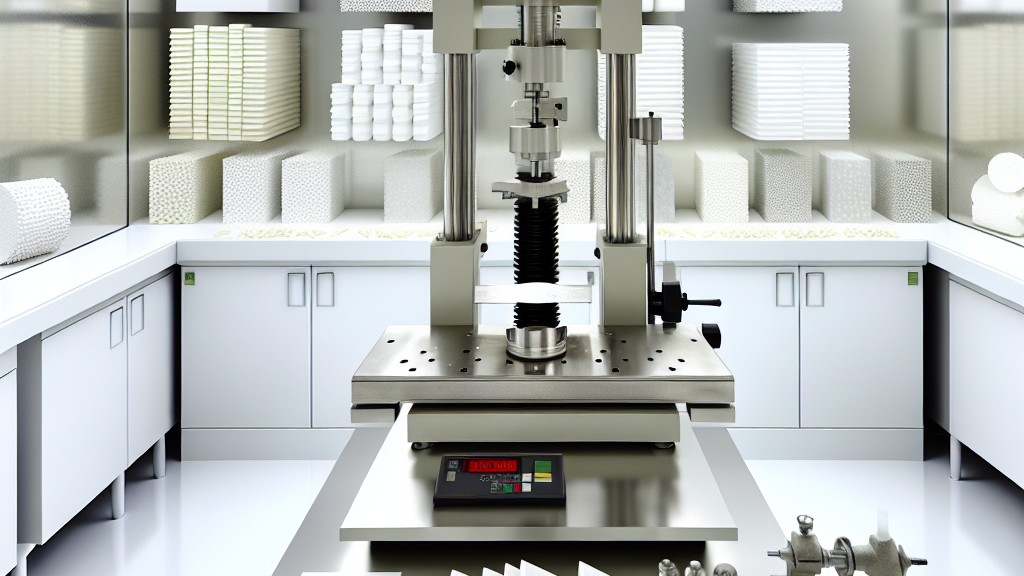
Apart from the well-known heat insulation product standard, the TS 8762 standard is used extensively among white goods manufacturers. This type of polystyrene foam, which is especially important for companies that produce electrical and electronic devices such as white goods, is a strong material. Electrical and electronic manufacturing companies use these products in their packaging when selling to European Union countries.
This standard is designed to prevent or minimize the effects of cushioning, shock and vibration on the packaged product, to prevent the movement of the product within the package or to concentrate the incoming force at a certain point of the product.
In order for the polystyrene foams in the packaging of a white goods trade to fulfill their function correctly, it is of great importance that the production is carried out and the controls are carried out in accordance with this standard. The TS 8762 standard is a standard prepared for a purchased white goods or electronic goods not to cause problems on the first day, and for the product to be transported without being exposed to external factors such as scratches, dents or impacts. Thanks to this standard, various electronic goods produced are protected. The four sides of a white goods or electronic goods are protected with polystyrene foam in its packaging.
According to the standard, appearance, density, compressive strength, flexibility, thickness reduction, moisture content, heat resistance and pH value are important features in packaging and cushioning foams.
In appearance, the pores forming the cushioning material must be well-combined and must not contain cracks, stains, dirt, dust, oil or similar foreign matter that may harm use. Thanks to this feature, which is required by the TS 8762 standard, it is guaranteed that the product in the package provides the same resistance at every point against scratches and possible impacts.
According to the TS 8762 standard, packaging cushioning materials are classified into 5 different classes in terms of density:
One of the most important properties in cushioning and packaging materials is compression strength. While minimum limits are essential for protection against impacts, maximum limits play an important role in protecting the product from scratches. Compression strength is the value calculated under 50% deformation.
Packaging cushioning materials are classified into 5 different classes according to their compressive strength:
Another challenging feature in cushioning and packaging materials is that they must be flexible. When a 5 x 50 x 150 mm test sample is rotated 180 degrees around a mandrel used in different sizes depending on the product class and held for 5 seconds, the products must not have visible cracks, breaks or similar defects as a result of the test.
The upper limit determined for the thickness reduction feature in products conforming to the TS 8762 standard is 25 percent. Tests are performed by slowly pressing the thickness of a sample with dimensions of 25 x 50 x 50 mm or 25 x 100 x 100 mm at a rate of 50 percent plus/minus 2 percent and 10 repetitions. When calculating the thickness reduction, the difference between the thickness at the end of 30 minutes in the last pressing process and the initial thickness is taken into account.
In the TS 8762 standard, foams are accepted in two different types depending on their moisture content:
Type-2 cushioning material is used for electronic components that are very sensitive to moisture.
Packaging materials are subjected to heat resistance tests in accordance with the TS 8762 standard. The acceptable heat resistance rate is 10 percent at the end of the tests conducted on at least three test samples with dimensions of 75 x 300 x 1 mm.
The pH value of packaging cushion materials is also a necessary feature to determine. During the test, 1 g of test sample is broken into pieces and placed in 50 ml of distilled water and boiled for 2 hours. The pH value of the boiled water is measured by cooling it to room temperature. The pH value obtained should be a maximum of 8 and a minimum of 6.
In terms of dimensions and tolerances in the TS 8762 standard, products are divided into two according to the production method: cushioning materials produced by molding and those produced without molding. According to this standard, the dimensional tolerances of cushioning and packaging materials are as follows:
The dimensional tolerances of cushioning materials produced by molding according to this standard are as follows:
Our organization has a strong staff that closely follows the developments in the world in the field of science and technology and constantly improves itself. Among the numerous test, measurement, analysis and evaluation studies provided for businesses in various sectors, there are also test services in accordance with the "TS 8762 Polystyrene foam for package cushioning" standard.
To get an appointment, to get more detailed information or to request an evaluation, you can ask us to fill in our form and reach you.