

The "ASTM D3330/D3330M Standard Test Method for Peel Adhesion of Pressure-Sensitive Tapes" standard, developed by the American Society for Testing and Materials (ASTM), describes the following test methods for measuring the peel adhesion of pressure-sensitive tapes.
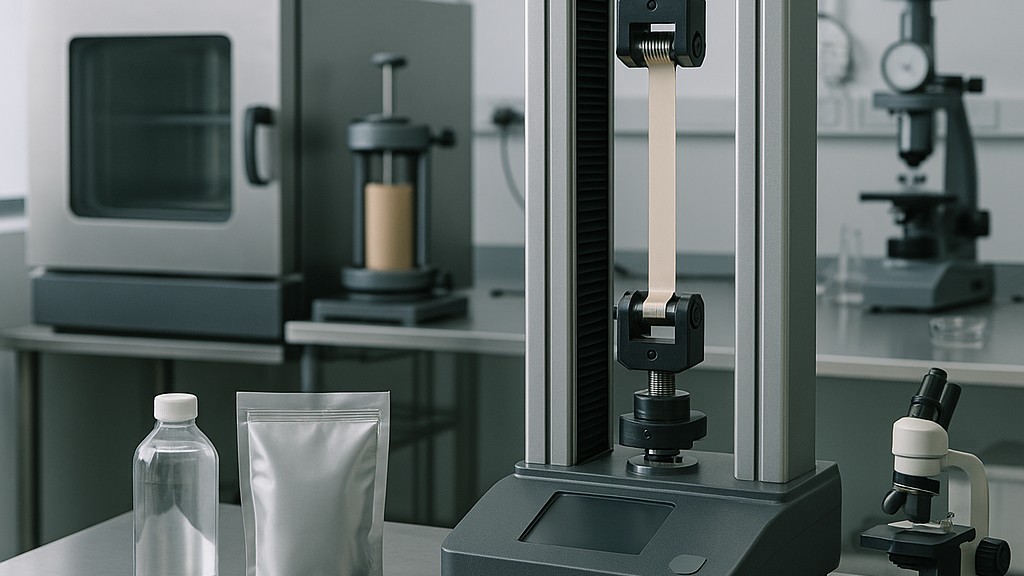
These test methods provide a way to evaluate the uniformity of adhesion of a particular type of pressure-sensitive adhesive tape. The evaluation can be performed within a roll of tape, between rolls, or between production batches.
Changes in the tape backing, adhesive, or both affect the response. Therefore, these test methods cannot be used to determine the specific cause(s) of the unevenness.
These test methods may not be suitable for testing tapes with relatively stiff backings, stiff backings, or backings that exhibit high stretch at low forces. These characteristics result in high variability in the test response, which is not a true indicator of the true nature of the adhesive bond.
These test methods are intended to replace the EN 1939 standard.
This standard outlines how to measure the adhesive strength (peel adhesion) of pressure-sensitive adhesive tapes when peeled from a standard test panel or other substrate. Testing is typically performed at 180 degrees, meaning the tape is pulled directly onto itself. The test speed is typically a specified constant speed (e.g., 300 mm/min). The tape is applied to a standard surface (e.g., stainless steel) under controlled pressure. Tapes can be tested under various environmental conditions (e.g., different temperature and humidity environments).
This standard includes six separate procedures (Method AF) to evaluate:
Each method is designed to evaluate different aspects of adhesive performance under specified conditions. These test methods include:
Common test conditions are as follows (usually used by all methods):
A packaging company testing box sealing tape uses Method A to measure peel strength from cardboard or steel. A medical device company uses Method B to evaluate how well a bandage tape adheres to itself when rolled.
These test methods are mainly used by manufacturers and quality control laboratories for the following purposes:
The ASTM D3330/D3330M standard is considered highly reliable and is widely used across industries.
Our organization, which has been supporting businesses across all sectors for years through a wide range of testing, measurement, analysis, and evaluation activities, has a strong team of employees who closely follow global developments in science and technology and are constantly improving themselves. In this context, we also provide testing services in accordance with the "ASTM D3330/D3330M Standard Test Method for Peeling and Adhesion of Pressure-Sensitive Tapes."
To get an appointment, to get more detailed information or to request an evaluation, you can ask us to fill in our form and reach you.