

The standard "ASTM E398 Standard Test Method for Water Vapor Transmission Rate of Sheet Materials Using Dynamic Relative Humidity Measurement," developed by the American Society for Testing and Materials (ASTM), describes a test method for the dynamic evaluation of water vapor transfer rate through a flexible barrier material. This standard also allows conversion to generally accepted water vapor transmission units obtained by other test methods, including the gravimetric method described in ASTM E96/E96M.
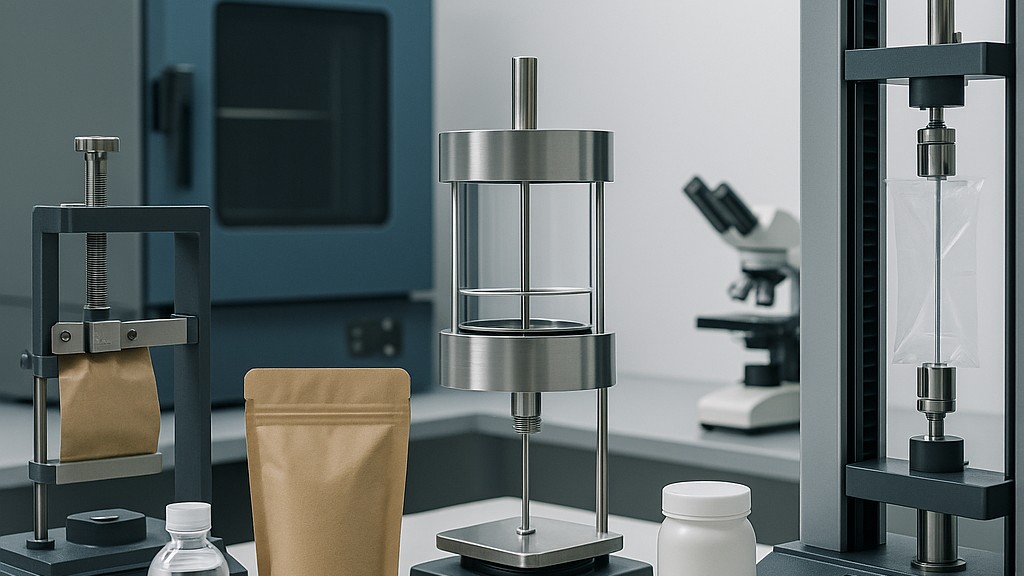
This test method is limited to flexible barrier sheet materials composed entirely of hydrophobic materials or combinations of hydrophobic and hydrophilic materials with at least one surface hydrophobic.
The minimum test value obtained with this test method is limited by the leakage of water vapor through the compression seals of the test device. At 37,8 degrees and 90 percent relative humidity, a reasonable value for any water vapor transmission method, including the ASTM E96/E96M desiccant procedure, may be approximately 0,01 g/24 h·m² . This limit can be checked for each device with an impermeable sample such as aluminum foil. Calibration procedures may compensate for the leakage rate if specified.
This test method is currently not suitable for referee testing, but is suitable for control testing and material comparison.
Several other ASTM test methods exist to test a similar property. This test method is unique in that it closely replicates typical product storage where moisture transfer from a package to the environment is allowed to continue without continuously sweeping the surrounding side with dry gas. Methods that continuously sweep dry sides include the ASTM F1249, ASTM F372, and ASTM F1770 standard test methods.
No single set of test conditions can represent all climatic and usage conditions, so this water vapor transmission rate test method serves to compare different materials within a specified set of conditions rather than to predict their actual performance in the field under any given condition. Under known and carefully controlled conditions, the water vapor transmission rate can be used to evaluate a board's vapor barrier properties. Direct correlation of values obtained under different conditions, such as test temperature and relative humidity, is valid provided that the barrier material under test does not undergo changes in solid state (such as crystalline transition or melting point) during or between test conditions.
The Standard Test Method for Water Vapor Transmission Rate of Sheet Materials Using Dynamic Relative Humidity Measurement is a method used to determine the rate at which water vapor passes through sheet materials such as films, coatings, or membranes. This is critical for evaluating materials used in packaging, construction, textiles, and other applications where moisture control is important.
This method typically includes:
Dynamic relative humidity methods include:
In short, ASTM E398 standard includes a procedure for dynamically evaluating the rate of water vapor transmission through flexible barrier materials. This method is particularly useful for evaluating materials used in packaging, construction, textiles, and other applications where moisture control is critical.
The main areas of application of this standard are:
The test method described in the ASTM E398 standard is considered important for the following reasons:
In short, the ASTM E398 standard is important because it gives engineers, scientists, and manufacturers a more realistic and technically sound way to test and trust the moisture barrier properties of their materials.
Our organization, which has been supporting businesses across all sectors for years through a wide range of testing, measurement, analysis, and evaluation activities, boasts a strong team of employees who closely follow global developments in science and technology and are constantly improving themselves. In this context, we also provide testing services in accordance with the "ASTM E398 Standard Test Method for Water Vapor Transmission Rate of Board Materials Using Dynamic Relative Humidity Measurement."
To get an appointment, to get more detailed information or to request an evaluation, you can ask us to fill in our form and reach you.