

The ISO 7458 Glassware - Internal pressure resistance - Test methods standard, published by the International Organization for Standardization (ISO), describes two test methods used to determine the internal pressure resistance of glassware:
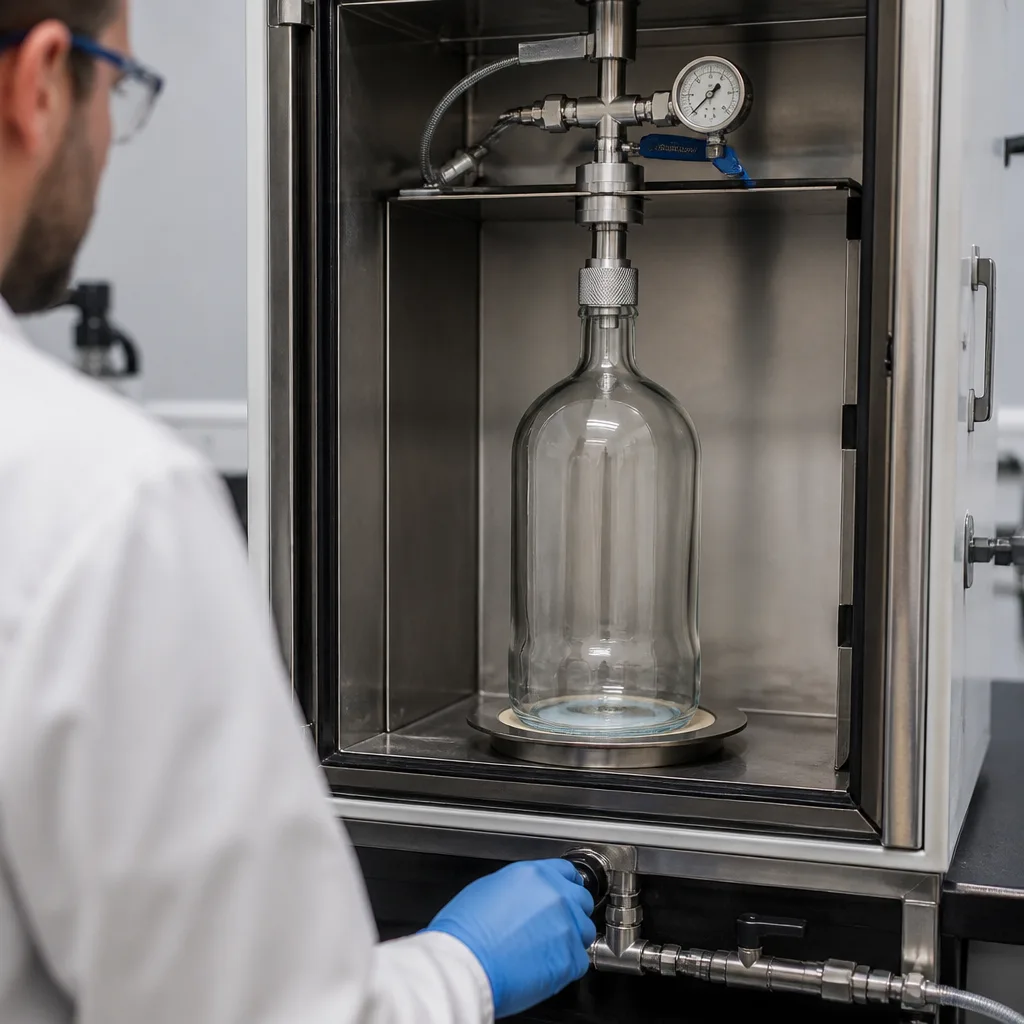
The test is performed on a predetermined number of vessels. The vessels used in the test must not have been subjected to any other mechanical or thermal tests that could affect their internal pressure resistance.
When applying Method A, a consistent internal pressure is applied for a specific period of time. The device must comply with the following principles:
The containers are first filled with water. Ideally, the temperature difference between the container and the water should be within plus or minus 5 degrees Celsius to avoid applying extra stress to the container before testing.
Depending on the purpose of the test, one of the following test procedures is used:
When applying Method B, internal pressure is increased at a predetermined constant rate. The test device must conform to the following principles:
First, the containers are filled with water. Ideally, the temperature difference between the container and the water should be within plus or minus 5 degrees Celsius to avoid applying extra stress to the container before testing.
Depending on the purpose of the test, one of the following test procedures is used:
In short, the ISO 7458 standard outlines procedures for determining the ability of glass containers to withstand internal pressure. This standard is widely used in the packaging industry, particularly for bottles and containers designed for carbonated beverages, sparkling wines, beer, and other pressurized products. It helps manufacturers ensure that glass containers are safe, reliable, and able to withstand the pressures encountered during filling, storage, transport, and consumer use.
The ISO 7458 standard, which defines methods for evaluating the internal pressure resistance of glass containers, is applicable to various glass packaging products and provides consistent procedures for quality control and product development.
The main objectives of the ISO 7458 standard are:
Test method A simulates real-world conditions where containers are subjected to continuous pressure. It determines whether a container can withstand a specific pressure level without failure. This method is commonly used for routine quality control. Typical applications include:
Test method B measures the maximum pressure resistance of the container. It provides information about the safety margin of the design. It is useful during product development and container optimization. Typical applications include:
Testing according to the ISO 7458 standard typically requires the following equipment:
The equipment must be able to apply pressure accurately and consistently throughout the test.
The ISO 7458 standard is commonly used in the following areas:
Organizations that implement the ISO 7458 standard gain several advantages:
Internal pressure resistance is one of the most critical performance characteristics of glass beverage containers. Factors affecting performance include:
The ISO 7458 standard provides a consistent framework for evaluating these factors and ensuring container reliability.
In conclusion, the ISO 7458 standard is a fundamental standard for evaluating the internal pressure resistance of glass containers. By defining fracture test methods under both constant pressure and pressure, it enables manufacturers to assess the durability of containers, enhance safety, and maintain consistent product quality. This standard plays a crucial role in the beverage and packaging industries, where glass containers must reliably withstand internal pressures throughout their lifespan.
For many years, our organization, with its competent and experienced staff, has been understanding the needs of its clients, providing the advanced testing services they require, and assisting them in the establishment, implementation, and improvement of management systems. Within this framework, we also provide testing services compliant with the ISO 7458 standard.
To get an appointment, to get more detailed information or to request an evaluation, you can ask us to fill in our form and reach you.

