

The standard "ASTM D1894 Standard Test Method for Static and Kinetic Coefficients of Friction of Plastic Films and Sheets," published by the American Society for Testing and Materials (ASTM), describes a test method for determining the initial and sliding coefficients of friction of plastic films and sheets as they slide on themselves or on other materials under specified test conditions. This method allows the use of a fixed sled with a moving plane or a moving sled with a fixed plane. Both procedures yield the same coefficients of friction for a given sample. For the friction properties of plastic films partially wrapped around a cylinder or crane, ASTM G143 applies.
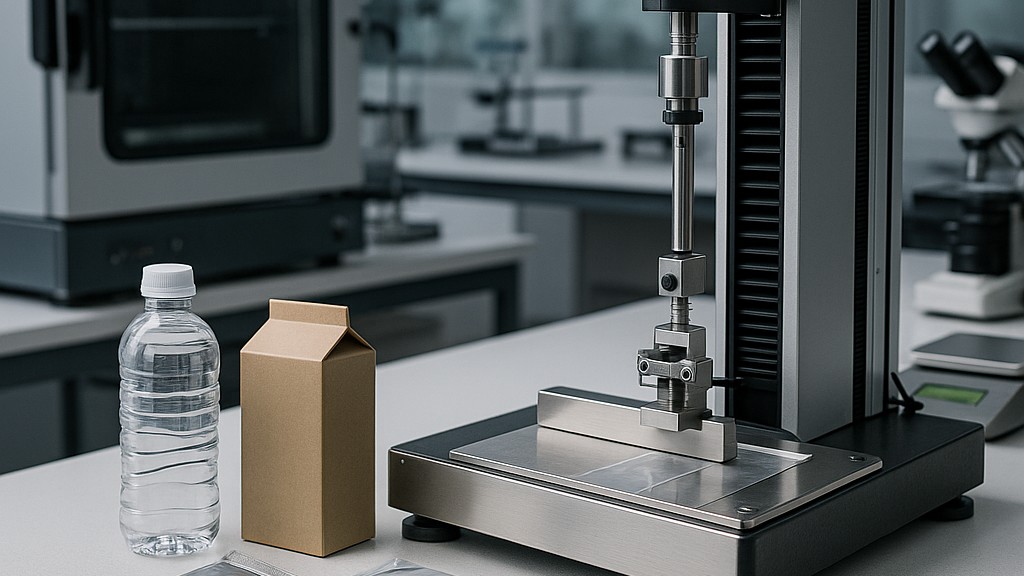
The test data obtained with this test method is suitable and relevant for use in engineering design. As an option, the coefficient of friction can be run at temperatures other than 23°C by heating only the plane while the sled is at ambient temperature. This test method involves testing at temperatures other than 23°C by heating only the plane while the sled is at ambient temperature.
Friction properties can be measured on a film or sheet sample as it slides on itself or over another substance. Coefficients of friction are related to the sliding properties of plastic films, which are of widespread interest in packaging applications. These methods provide experimental data for control purposes in film production. Test results can often be correlated with actual performance.
Sliding properties are mediated by additives in some plastic films, such as polyethylene. The compatibility of these additives with the film matrix varies. Some leach into the surface, lubricating it and making it more slippery. Because this leach effect is not always uniform across all areas of the film surface, the reproducibility of values obtained from these tests may be limited.
The frictional properties of plastic films and sheets can depend on the uniformity of the speed of movement between the two surfaces. Care should be taken to control the equipment's speed as carefully as possible.
Data obtained with these methods can be extremely sensitive to the age of the film or sheet and the condition of the surfaces. The blooming effect of many slip additives is time-dependent. Therefore, comparing the sliding and friction properties of films or sheets produced at different times is sometimes pointless unless the goal is to study this effect.
The friction and sliding properties of plastic films and sheets are based on measurements of surface phenomena. When products are manufactured using different processes, or even the same process on different machines, their surfaces may vary depending on the equipment or operating conditions. These factors should be considered when evaluating data obtained from these methods.
The measurement of the coefficient of static friction depends greatly on the loading speed and the amount of blockage that occurs between the loaded gantry and the platform due to the time difference before movement begins.
Care must be taken not to exceed the response speed of the electronic or mechanical recording device.
For many materials, a specification may exist that requires the use of this test method, but some procedural changes may take precedence over compliance with the specification. Therefore, it is recommended to consult the relevant material specification before using this test method.
Friction plays a key role in the performance and processing of plastic films and sheets in a variety of industries, including packaging, automotive, and consumer goods. Manufacturers rely on standardized testing procedures to ensure consistent quality and functional reliability. One such important standard is ASTM D1894.
This standard outlines the procedure for determining the static and kinetic coefficients of friction of plastic film and sheet materials. These values are important for understanding how the materials will behave during production, transportation, and end-use.
The ASTM D1894 standard includes a laboratory method for measuring the resistance to sliding motion between two surfaces of plastic film or sheet under controlled conditions. This standard evaluates two types of friction:
These measurements help determine how easily a film or sheet will slide on itself or over other materials, which affects machine performance and product usability.
Understanding the friction properties of plastic films is critical for:
Films with a high coefficient of friction may stick and jam in machines, while films with a low coefficient of friction may be difficult to stack or may slip easily during use.
The ASTM D1894 test method includes:
The following steps are generally involved when performing the test:
The coefficient of friction is calculated using the formulas provided in the standard. The resulting values are dimensionless and are generally reported based on test conditions and sample orientation.
Common applications of this standard include:
However, this testing method does not simulate complex real-world conditions, such as multi-directional forces or irregular surfaces. Furthermore, results can vary significantly depending on environmental conditions such as humidity and temperature.
As a result, ASTM D1894 provides a standardized and reliable method for measuring the friction properties of plastic films and sheets. By knowing the static and kinetic coefficients of friction, manufacturers can ensure that material performance meets the requirements of specific applications and improve quality control during production.
Anyone working in materials science, packaging, or quality assurance in plastics relies on the ASTM D1894 standard to optimize material selection and processing.
Our organization, which has been supporting businesses across all sectors for years through a wide range of testing, measurement, analysis, and evaluation activities, has a strong team of employees who closely follow global developments in science and technology and are constantly improving themselves. In this context, we also provide testing services in accordance with ASTM D1894, Standard Test Method for Static and Kinetic Coefficients of Friction of Plastic Films and Sheets.
To get an appointment, to get more detailed information or to request an evaluation, you can ask us to fill in our form and reach you.