

The ISO 21898 Packaging – Flexible intermediate storage containers (FIBCs) for non-hazardous goods, published by the International Organization for Standardization (ISO), describes the material, construction and design requirements, type testing and marking requirements for flexible intermediate bulk containers (FIBCs) designed to contain non-hazardous solid materials in powder, granular or paste form and designed to be lifted from above with integrated or demountable devices. This standard also provides guidance on the selection and safe use of FIBCs.
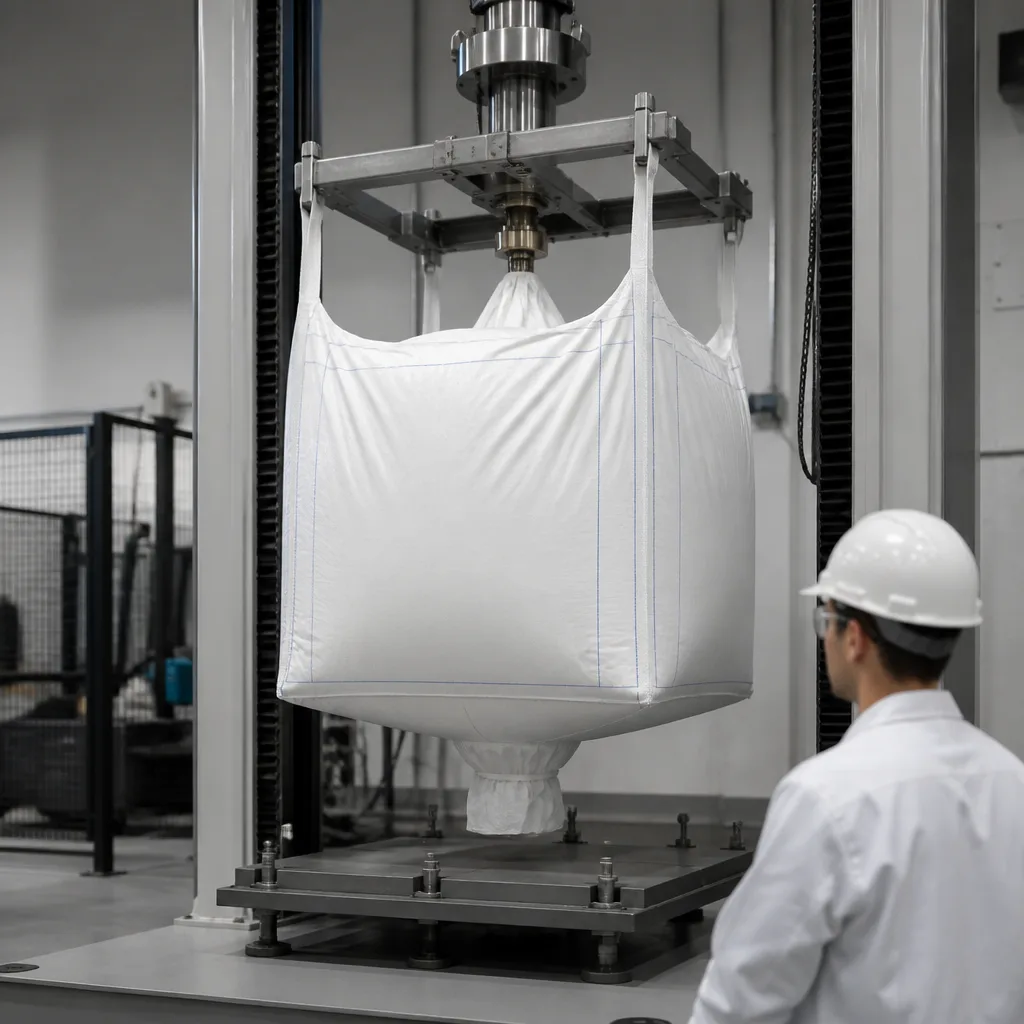
For the purposes of this standard, a flexible intermediate bulk container (FIBC) refers to an intermediate bulk container having a body made of flexible material such as woven plastic fabric or plastic film, designed to be in contact with its contents directly or indirectly through its inner liner, and which is foldable when empty.
The ISO 21898 standard provides requirements for the design, manufacture, testing, and safe handling of FIBCs, commonly known as big bags, big containers, or supercontainers.
Flexible intermediate storage containers (FIBCs) are large, collapsible bags made primarily of woven polypropylene (PP) fabric. They are widely used in industries such as chemical, food, agriculture, mining, and pharmaceuticals for storing and transporting non-hazardous solid materials in powder, granular, or paste form. FIBCs are designed to be lifted from above using integrated or removable lifting devices (e.g., rings).
These are available in various types:
The safe working load can reach 2.500 kg or more, depending on the design.
The ISO 21898 standard specifies the following:
This standard applies only to non-hazardous goods (hazardous goods are subject to separate United Nations/International Maritime Organization regulations and stricter testing).
The latest update to this standard has introduced improvements in areas such as stacking and compression testing to better reflect real-world transportation conditions and enhance safety. For example, it offers clearer recommendations regarding filling height (suggesting it should not exceed twice the shortest base dimension for better stability) and strengthens compression and stacking performance requirements.
A compliant FIBC label typically includes the following:
FIBC manufacturers, fillers, logistics companies, and end-users in global supply chains rely on this standard to ensure safety, traceability, and performance consistency. Testing is typically carried out by accredited laboratories.
The ISO 21898 standard is essential because it specifies common safety and performance requirements for flexible intermediate bulk containers (FIBCs) commonly used for the handling and storage of dry bulk materials such as powders, granules, and chemicals.
In practice, without such a standard, FIBCs from different manufacturers differ significantly in terms of strength, safety, and reliability, leading to risks during handling, storage, and transport. The main reasons why this standard is considered important are as follows:
This consistency allows users to trust that certified FIBCs behave predictably, regardless of the supplier.
In conclusion, the ISO 21898 standard makes bulk packaging safer, more reliable, and globally consistent, protecting workers, products, and supply chains in industries heavily reliant on bulk material handling. This helps FIBCs to:
For many years, our organization, with its competent and experienced staff, has been understanding the needs of its clients, providing the advanced testing services they require, and assisting them in the establishment, implementation, and improvement of management systems. Within this framework, we also provide testing services compliant with the ISO 21898 standard.
To get an appointment, to get more detailed information or to request an evaluation, you can ask us to fill in our form and reach you.

