

The standard "ASTM D3121 Standard Test Method for Adhesion of Pressure-Sensitive Adhesives by Rolling Ball," developed by the American Society for Testing and Materials (ASTM), describes a test method for measuring the comparative adhesion of pressure-sensitive adhesives using a rolling ball. This test is most suitable for low-tack adhesives. This test method is only one of several methods available for measuring adhesion. This test method is not recommended for the specification of end-use products.
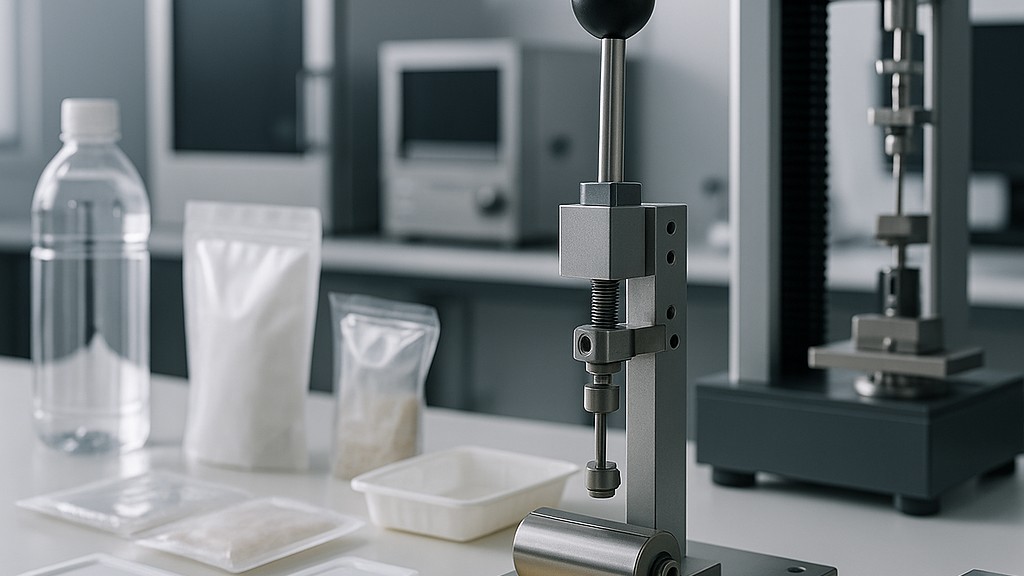
The rolling ball adhesion test is rapid, easy to run, and requires minimal equipment investment and operator training. This method is primarily intended for quality control use, as it demonstrates good reproducibility within a single laboratory and the ability to accurately detect batch-to-batch variations when the adhesive film thickness is held constant. Rolling ball adhesion testing is not intended as a research tool because, in most pressure-sensitive adhesive applications, rolling ball adhesion results do not correlate well with application adhesion requirements.
ASTM D3121 standard includes a procedure for measuring the tack (tackiness) of pressure-sensitive adhesives, such as those used in tapes, labels, or other adhesive products. This procedure is used to determine how effectively a rolling ball adheres to the adhesive surface. The purpose is to measure the tack of pressure-sensitive adhesives—that is, the ability of an adhesive to form a bond with minimal pressure and contact time.
During the test, a steel ball is rolled across a horizontal adhesive surface on an inclined plane. The distance the ball travels before coming to rest is measured. A shorter stopping distance indicates greater adhesion (a more viscous adhesive).
In these tests, a standardized incline is set at an angle, typically 21,5 degrees. A steel ball of the specified size and weight (usually 11 mm in diameter) is used. A clean adhesive sample mounted on a flat surface is prepared and placed horizontally. The steel ball is released from the top of the incline and rolled onto the adhesive. The distance the ball travels through the adhesive before coming to rest is recorded. Multiple trials are performed to ensure repeatability.
This test method is used to evaluate adhesive performance for quality control or product development in industries such as packaging, automotive, and electronics. It provides a simple and repeatable way to compare the adhesion of different adhesives under controlled conditions.
The test is sensitive to factors such as surface cleanliness, temperature, and ball condition, so strict adherence to the standard's specifications is critical. This standard is widely used but is only one of several methods (e.g., ring adhesion or probe adhesion tests) used to evaluate adhesive properties.
This standard is widely used for the following reasons:
In short, its widespread adoption stems from its balance between simplicity, reliability, and relevance to real-world adhesive behavior.
Our organization, which has been supporting businesses across all sectors for years through a wide range of testing, measurement, analysis, and evaluation activities, boasts a strong team of employees who closely follow global developments in science and technology and are constantly improving themselves. In this context, we also provide testing services in accordance with the "ASTM D3121 Standard Test Method for Adhesion of Pressure-Sensitive Adhesives by Rolling Ball" standard.
To get an appointment, to get more detailed information or to request an evaluation, you can ask us to fill in our form and reach you.