

The American Society for Testing and Materials (ASTM) standard, "ASTM D7386 Standard Practice for Performance Testing of Packages for Single-Package Delivery Systems," provides a uniform basis for laboratory evaluation of the ability of shipping units not exceeding 68 kg (150 lb) designed for single-package delivery systems to withstand the hazards associated with the distribution environment. This is accomplished by subjecting the units to a test plan consisting of a series of hazardous elements expected to be encountered in distribution cycles. This practice is not intended to replace material specifications or existing pre-shipment testing procedures. However, the suitability of this standard for use with hazardous materials has not yet been established.
This standard provides guidance for evaluating shipping units according to a uniform system, using established test methods at levels representative of those occurring in actual distribution. The recommended test levels are based on current knowledge of the shipping and handling environment and current industry/government practices and experience. Tests should be performed on identical containers in the specified sequence. To be used as a performance test, this standard requires that the shipping unit under test not be opened until the test sequence is completed. If used for other purposes, such as package development, it may be beneficial to open and inspect the shipping units at various times throughout the sequence. However, this may obscure the impact of the container closure on container performance.
The intended use of ASTM D7386 is to evaluate the performance of packaged products in a small package delivery system. Due to the rigorous testing involved, this test method is often used to validate packaged products in pharmaceutical and biotechnology companies.
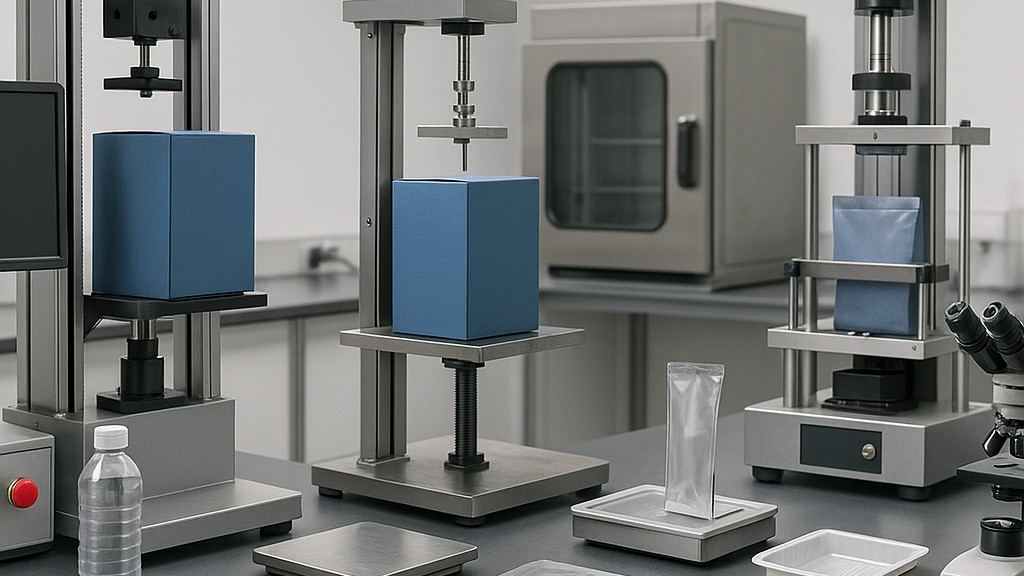
Supporting this standard utilizes specialized equipment from advanced laboratories. For example, temperature and humidity chambers, hazard units, free-fall testers, forklifts, vacuum chambers, darts, and more. ASTM D7386 criteria can be simple pass/fail decisions or quantitative data. The final decision for both the criteria and the package is determined by the package's conditions and the needs previously described.
Some of the hazards a packaged shipment may encounter on land, in the air, or at sea include, but are not limited to, manual and automated handling, vibration, high and low impact, intense and non-intense punctures, and drops. These hazards are typically simulated in a laboratory environment using heavy-duty machinery.
ASTM D7386 standard includes a series of test programs to evaluate the ability of shipping units designed for single-package delivery systems to withstand the most common hazards encountered in the distribution environment. The test program is determined by the weight and size of the packaged product being tested. This test method provides a guide to accurately conducting the test using repeatable procedures.
Developed to meet the evolving needs of today's increasingly widespread e-commerce and small-package logistics, this standard plays a key role in helping manufacturers and packaging engineers design protective packaging that can withstand real-world shipping conditions. It provides a comprehensive set of procedures for evaluating how well a packaged product can withstand the rigors of shipping through a typical package delivery network (e.g., FedEx, UPS, DHL). This standard is designed for packages weighing up to 68 kg and is typically used for consumer goods shipped via courier services rather than palletized or freight shipments.
Parcel delivery systems can subject packages to various mechanical stresses (dropping, vibration, compression, impact, and temperature fluctuations). The objectives of the ASTM D7386 standard are to:
The ASTM D7386 standard defines a series of laboratory tests designed to simulate the journey of a package through a package delivery system. These tests include:
This standard is widely used by:
As a result, the ASTM D7386 standard is a vital tool for companies shipping products through parcel delivery systems. It allows manufacturers to validate packaging designs and ensure product protection from warehouse to door. By simulating realistic distribution hazards in a controlled environment, it helps businesses reduce costs, minimize product damage, and increase customer satisfaction.
For businesses operating in the e-commerce, electronics or consumer goods sectors, integrating these tests into their packaging development process is a strategic investment in quality and reliability.
Our organization, which has been supporting businesses across all sectors for years through a wide range of testing, measurement, analysis, and evaluation activities, has a strong team of employees who closely follow global developments in science and technology and are constantly improving themselves. In this context, we also provide testing services in accordance with ASTM D7386 Standard Practice for Performance Testing of Packages for Single Package Delivery Systems.
To get an appointment, to get more detailed information or to request an evaluation, you can ask us to fill in our form and reach you.