
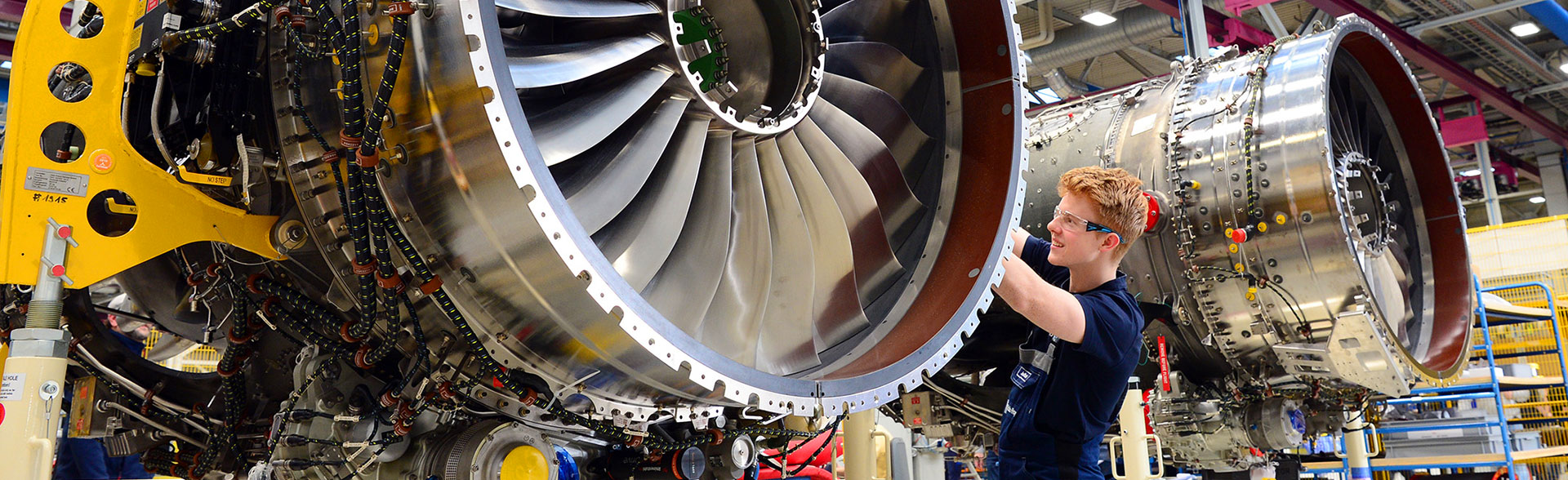
The test method described in the “Airbus USA 0031 Aircraft Material Fire Test” standard, developed by Airbus, a European-based multinational aerospace company , evaluates aircraft materials not only in terms of their fire resistance but also in terms of the toxicity of gases released during combustion.
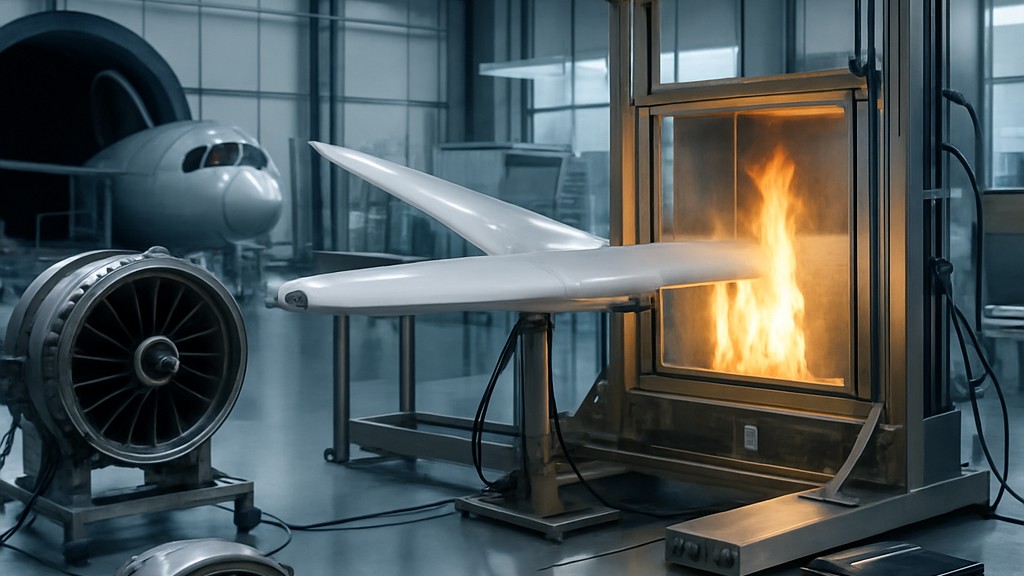
This standard, implemented after a plane crash in 1985, has since become a universal standard. At the time, it was determined that the majority of fatalities during evacuations were due to highly toxic fumes released by igniting cabin materials. Therefore, following this tragedy, aviation authorities and aircraft manufacturers decided to establish new safety standards.
For compliance, it is mandatory to perform 15 Airbus test methods, including the AITM 3.005 protocol , which guarantees that the smoke is non-toxic in the event of a fire. The assessment is required for the insulation of all materials (fabric, foam), equipment, and cables used in the interior of the aircraft cabin. To be approved, the smoke emitted from the tested material during combustion must not contain the following gases above a fixed concentration limit measured in ppm (parts per million): 100 ppm hydrogen fluoride, 150 ppm hydrogen cyanide, 100 ppm nitrous oxide, 150 ppm hydrogen chloride, 100 ppm sulfur dioxide, and 1000 ppm carbon monoxide.
The AITM 3.005 protocol simultaneously assesses both the toxicity and opacity of smoke. The test begins by igniting a sample of the material in a closed chamber. A pump then captures the combustion fumes and analyzes the levels of carbon monoxide and carbon dioxide. The exhaust fumes then bubble through an aqueous solution, allowing their composition to be analyzed later.
The US 0031 standard applies only to Airbus aircraft. For Boeing aircraft, certification to the Boeing Safety Standard is mandatory.
The US 0031 Airbus fire test is considered useful for the following reasons:
Fire testing is performed for the following types of aircraft materials:
Fire tests for aircraft materials conducted under Airbus standard US 0031 cover:
In the aviation industry, the US 0031 standard is a comprehensive Airbus standard outlining fire safety requirements for materials used in aircraft interiors. It includes criteria for flammability, smoke density, heat release, and toxicity of gases emitted during combustion. Materials must meet these standards to ensure they do not pose significant risks in the event of fire, particularly in areas accessible to passengers and crew. This includes demonstrating acceptable control over ignition risk and limiting the emission of harmful gases.
Fire safety requirements for Airbus aircraft are primarily governed by the US 0031 standard, in addition to regulatory mandates from the European Union Aviation Safety Agency (EASA) and the Federal Aviation Administration (FAA). The purpose of this standard is to test the flammability, smoke density, heat release, and toxicity of materials used in Airbus aircraft interiors to ensure they are safe in the event of a fire.
Essentially, the US 0031 test is required for the following components:
To be used on Airbus aircraft, materials must pass all relevant US 0031 tests. Test reports are typically reviewed and accepted by Airbus or its certified laboratories.
In short, aircraft and the materials used in their construction must comply with national and international regulations.
Our organization, which has been supporting businesses across all sectors for years through a wide range of testing, measurement, analysis, and evaluation activities, has a strong team of employees who closely follow global developments in science and technology and are constantly improving themselves. In this context, we also provide testing services in accordance with the Airbus ABD 0031 Aircraft Material Fire Testing Standard.
To get an appointment, to get more detailed information or to request an evaluation, you can ask us to fill in our form and reach you.