
The “AMS-S-8802E Fuel-resistant sealing compound for integrated fuel tanks and fuel cell cavities” standard, developed by the Society of Automotive Engineers (SAE), describes two-component, fuel-resistant polysulfide synthetic rubber compounds that cure at room temperature.
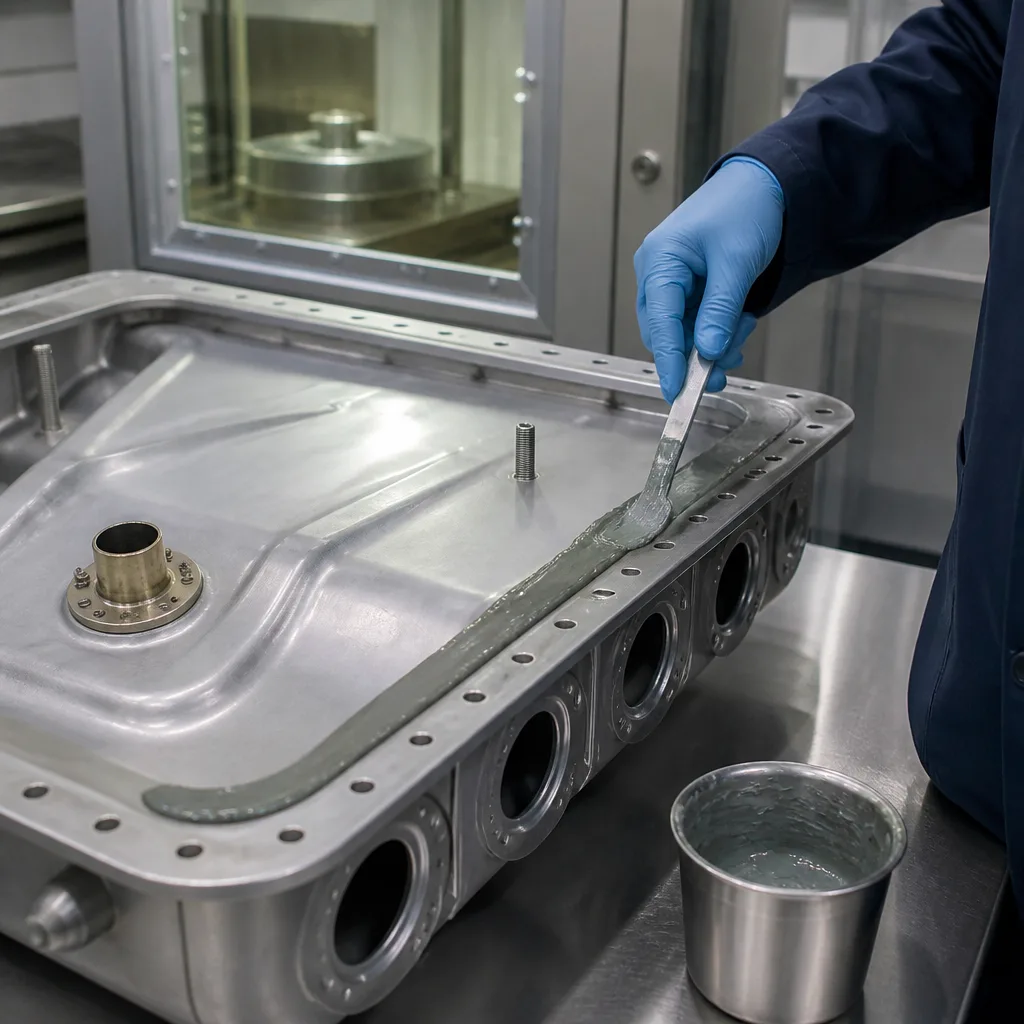
These sealing materials are primarily used for sealing and repairing integrated fuel tanks and fuel cell cavities in aircraft, as well as other areas exposed to aviation fuels, oils, lubricants, water, and weather conditions. They provide high adhesion, flexibility, and long-term durability in harsh aviation environments.
The SAE AMS-S-8802E standard, focusing on sealing compounds for aviation fuel tanks and critical applications, replaces the earlier MIL-S-8802 standard while maintaining technical continuity.
The basic characteristics of this standard are as follows:
The AMS-S-8802E standard classifies materials by Type (curing agent) and Class (application method and viscosity/service life).
Dashed numbers (e.g., B-2, B-1/2) indicate the working/application life in hours (e.g., -2 means approximately 2 hours of working time before it becomes too viscous to be effectively applied).
Integrated fuel tanks in modern aircraft (e.g., wings and fuselage sections) are structural and must remain leak-proof under extreme conditions: vibration, thermal cycling, pressure changes, and continuous fuel exposure. The AMS-S-8802E standard specifies that sealing materials ensure structural integrity, prevent fuel leaks (creating fire and safety risks), and reduce maintenance costs. They are widely specified in commercial, military, and general aviation programs.
The latest revision (E) of this standard includes updated test methods, quality requirements, and technical descriptions. Previous revisions were based on the MIL-S-8802F standard. Manufacturers should always verify the latest revision and the list of qualified products for specific applications.
Sealants conforming to the AMS-S-8802E standard are two-component compounds requiring appropriate mixing ratios. Shelf life is generally limited (typically 6-9 months for unopened kits), and while cured material is durable, uncured components should be used according to the manufacturer's safety data sheet.
This standard remains a cornerstone of aerospace sealing technology, balancing performance, reliability, and manufacturability in one of the industry's most critical applications.
In short, the SAE AMS-S-8802E standard defines performance requirements for sealants that must withstand aviation fuels, lubricants, weather conditions, and extreme operating temperatures while maintaining adhesion and flexibility. Primarily derived from military sealant requirements, this standard is widely used in both military and commercial aviation manufacturing and maintenance programs.
This standard covers temperature-resistant sealing compounds designed for:
These sealants are typically supplied as two-component compounds that chemically harden after mixing. The primary aim is for a sealant to be able to provide the following:
The basic material and performance criteria of the AMS-S-8802E standard are as follows:
High adhesion is critical because vibration, thermal expansion, and pressure changes can continuously stress the sealed joints.
The tests assess the following:
This prevents seal failure after continuous fuel contact.
Typical aviation environments involve rapid thermal cycling, so cracking or brittleness is unacceptable.
Rigid materials will not crack under aircraft operating loads.
This facilitates maintenance in both production and field repair environments.
The AMS-S-8802E standard includes the following tests:
These tests simulate realistic aviation service conditions.
In conclusion, the SAE AMS-S-8802E standard is a fundamental aerospace sealing standard that regulates high-performance polysulfide sealants for fuel containment and structural sealing. By standardizing adhesion, chemical resistance, temperature stability, and durability, it helps aircraft manufacturers and maintenance organizations ensure the safe and leak-free operation of fuel systems under demanding aviation conditions.
For many years, our organization, with its competent and experienced staff, has been understanding the needs of its clients, providing the advanced testing services they require, and assisting them in the establishment, implementation, and improvement of management systems. Within this framework, we also provide testing services compliant with the AMS-S-8802E standard.
To get an appointment, to get more detailed information or to request an evaluation, you can ask us to fill in our form and reach you.

