

The “ SMC-S-018 Lithium-ion Battery for Launch Vehicle Applications” standard, published by the Space and Missile Systems Center (SMC) of the U.S. Air Force Space Command, describes the requirements and guidelines for the development, testing, storage, processing, and use of lithium-ion cells and batteries for launch vehicle applications, including boosters and upper stages.
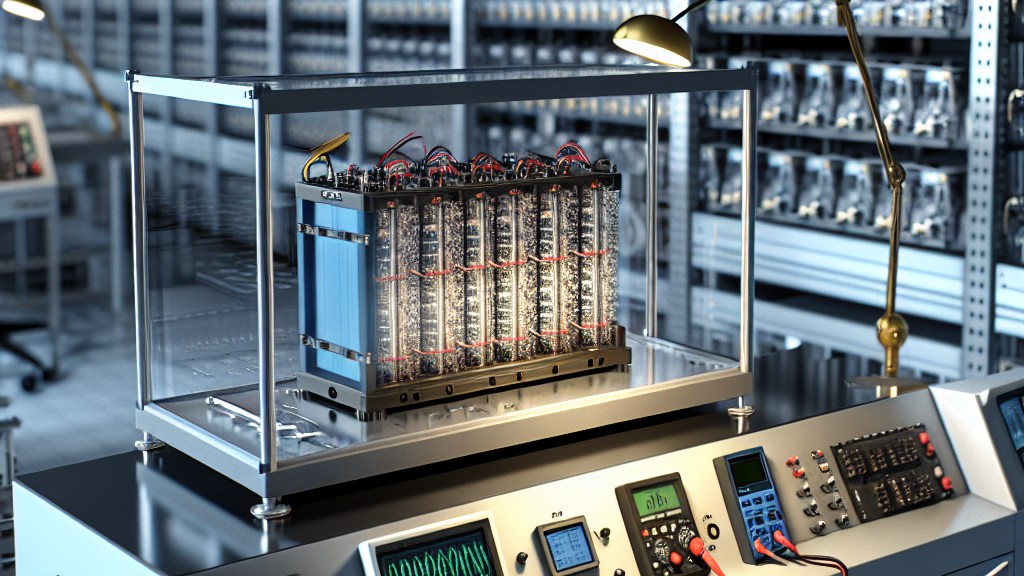
Compliance with this standard is intended to provide a high-reliability product to achieve adequate battery performance during the mission. Lithium-ion-based batteries are an emerging technology that has had little use in launch vehicles to date. They are attractive over more commonly used primary batteries because full electrical performance, including voltage regulation and capacity, can be verified directly in the flight hardware prior to use. It is anticipated that these standards will be updated as these batteries are used and lessons specific to the challenges of lithium-ion technology are learned.
This standard, together with associated citations, is intended to be used by reference in applicable launch vehicle specifications or other documents to include common requirements and practices necessary to ensure successful battery operation during space launches.
The requirements herein are intended to augment and clarify those expressed in MIL STD 1540E regarding the use of lithium-ion batteries in launch vehicles. They are also designed to not conflict with launch site system safety requirements or range safety requirements for the use of lithium-ion batteries in flight termination systems. However, appropriate range documentation must be consulted for any intended use of lithium-ion batteries in launch site or flight termination systems.
The addition of an electrolyte to a battery cell constitutes cell activation, and the earliest cell to be activated determines the beginning of the service life of the cell, module or battery. Lithium-ion cells are activated at the manufacturing facility during cell production. Following activation, lithium-ion cells typically undergo several charge/discharge cycles to condition the surface of the electrodes and stabilize capacity.
A battery is an assembly of battery cells or modules electrically connected in series to provide the desired voltage and capacity. Typically, the cells are physically integrated into a single assembly (or battery) or into several separate assemblies (or modules) connected in series. The battery may also contain components such as charge control electronics, fuses, filters, isolation resistors, electrical bypass devices, heaters, temperature sensors, thermostats, thermal switches, thermal controllers, and pressure relief devices. These devices are used to monitor the health of the battery and prevent unsafe operation of the battery that could harm personnel or damage battery performance.
The calendar life of a cell or battery is the maximum period of time that the cell or battery is allowed to be used, defined from the manufacturing date of the oldest cell in the battery.
Battery capacity is measured in units of ampere-hours and watt-hours. The actual ampere-hour capacity for a given condition is equal to the integral of the discharge current from the beginning of discharge of a fully charged battery (i.e., charged to the maximum upper allowable voltage limit under the rated charge rate and temperature) until the lowest usable voltage limit is reached. The actual watt-hour capacity for a given condition is equal to the integral of the product of the discharge current and the voltage from the beginning of discharge of a fully charged battery to the lowest usable voltage limit is reached.
Actual battery capacity should be stated in both units to facilitate energy balance assessments, thermal assessments, and comparison of different battery types. For lithium-ion cells, the measured capacity can be strongly dependent on the end-of-charge voltage, the discharge voltage limit, the temperature during charging and discharging, and the current used during charging and discharging. Therefore, when comparing capacity changes over cycle life, it is important to retain these variables and select values based on worst-case usage during ground operations (for charging) and mission (for discharging).
Operating battery capacity is measured in units of ampere-hours and watt-hours. It is equal to the integral of the values from the beginning of the discharge of a fully charged battery until the lowest usable voltage limit for duty charge control and load conditions is reached. However, to maintain cycle life and meet minimum bus voltage limits, the upper and lower voltage limits may be more conservative than those permitted by the cell design. Therefore, the operating capacity is always less than or equal to the actual capacity of the cell or battery.
Rated battery capacity is measured in units of ampere-hours and watt-hours. Rated battery capacity is provided by the battery or cell vendor and is usually less than the actual capacity. Manufacturers often provide excess capacity above the rating to compensate for batch variability and expected capacity losses over the life of the battery.
A battery cell is a single device within a single cell casing that converts chemical energy into electrical energy at a characteristic voltage when discharged at a nominal rate. Battery cells are usually electrically connected in series to form a battery of the desired voltage. Battery cells are connected in series or in parallel to form a module to increase capacity, voltage, and current capacity beyond the limits of the cell. In such cases, modules are connected in series to form a battery.
Cell design accounts for factors that result in unique cell performance, including the size and number of electrodes, the type and porosity of separators, the composition and volume of the electrolyte, the type of active material in the positive and negative electrodes, the current collector alloy, the cell terminal structure, and the safety and heat transfer devices within the cells. Lithium-ion cells typically use a wound structure consisting of a single, long, positive and negative electrode, or a prismatic structure consisting of alternating positive and negative electrode plates.
A charge cycle is defined as the discharge of a significant portion of the nominal capacity of a cell or battery, followed by recharging to the initial state of charge. Discharge may be the result of an electrical load or self-discharge of the cell or battery.
The charge life of a battery is the time from when the battery charge is completed until recharging is required to compensate for capacity losses due to self-discharge.
The cycle life of a cell or battery is the maximum number of charge cycles that the cell or battery can provide before irreversible performance losses occur. Cycle life may vary by application and should be verified by qualification testing.
Our organization, which has been trying to support businesses from every sector with its testing, measurement, analysis and evaluation studies carried out in a wide range for years, has a strong staff that closely follows the developments in the world in the field of science and technology and constantly improves itself. In this context, testing services in accordance with the "SMC-S-018 Lithium-ion battery for launch vehicle applications" standard are also provided to businesses.
To get an appointment, to get more detailed information or to request an evaluation, you can ask us to fill in our form and reach you.

