
The “NASA-STD-7001 Payload Vibration Acoustic Test Criteria” standard, developed by the National Aeronautics and Space Administration (NASA), is a NASA engineering standard that establishes uniform requirements for the qualification and acceptance of spacecraft payloads exposed to vibrational acoustic environments during launch. This standard provides consistent methods for defining acoustic and random vibration test levels to ensure spacecraft payloads can withstand the severe mechanical environments encountered during launch.
The NASA-STD-7001 standard is widely used in NASA missions and is commonly referenced by commercial launch providers, spacecraft manufacturers, and aerospace contractors developing hardware for NASA programs. The primary objectives of this standard are:
By using common criteria, NASA reduces uncertainty during payload verification and increases confidence that the flight hardware will survive launch.
A vibroacoustic environment is a combination of the following:
During launch, rocket engines generate sound pressure levels that can exceed 150 dB. These acoustic waves excite the launch vehicle structure, producing complex, random vibrations that propagate throughout the spacecraft. The NASA-STD-7001 standard specifically addresses these:
This standard does not prioritize other launch environments such as those listed below:
These are met by other NASA standards and mission-specific requirements.
The NASA-STD-7001 standard applies to the following:
This standard supports both qualification tests and acceptance tests for payload hardware prior to launch.
The NASA-STD-7001 standard provides guidance in several key engineering fields:
The goal is to reproduce realistic launch noise without unnecessarily overstressing the hardware.
Random vibration testing is one of the most important verification activities for spacecraft hardware.
This test confirms sufficient structural integrity.
These tests ensure the production equipment is suitable for launch.
Appropriate testing factors help prevent both under-testing and over-testing.
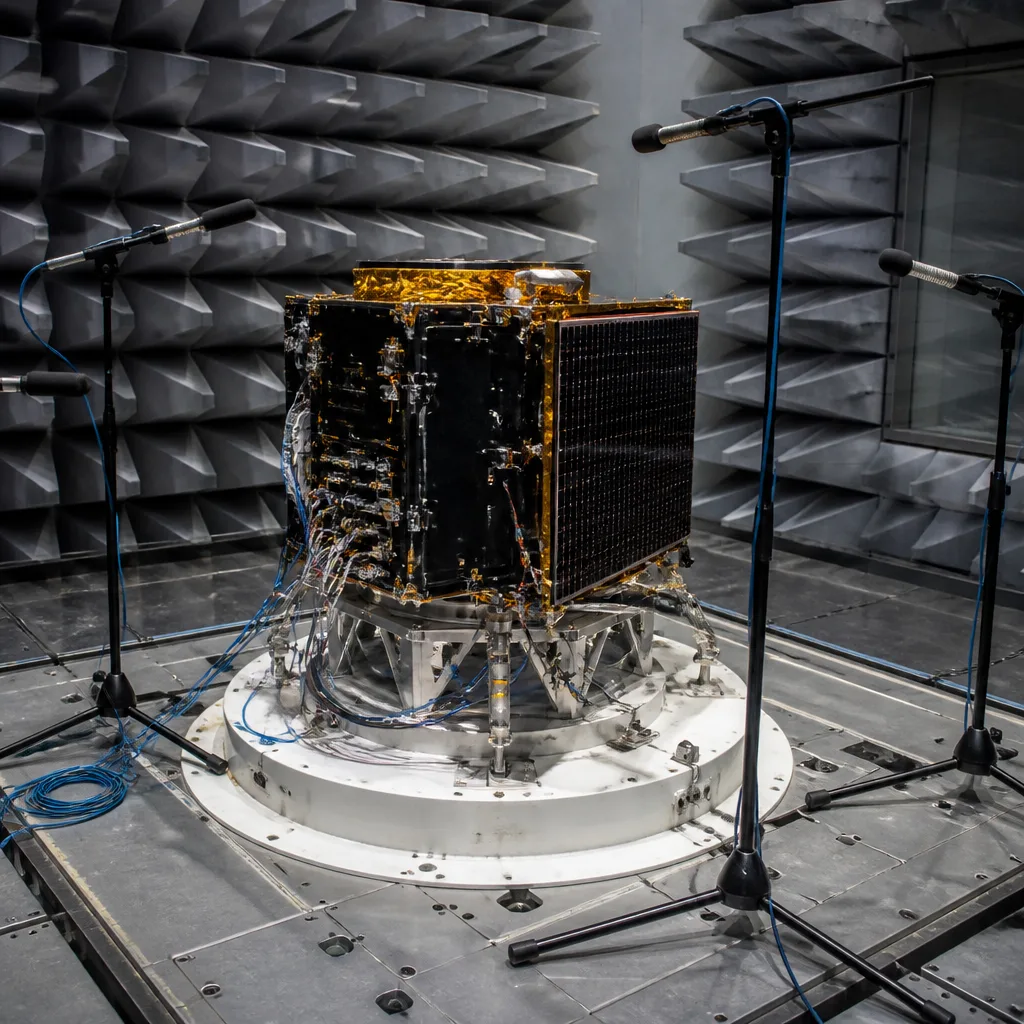
Tests conducted under the NASA-STD-7001 standard utilize large reverberant acoustic chambers equipped with the following:
These facilities reproduce the intense launch sound field.
Random vibration tests are performed using electrodynamic vibration devices:
The vibration device reproduces the launch vibration environment specified by this standard.
The NASA-STD-7001 standard offers numerous engineering advantages.
The NASA-STD-7001 standard is part of NASA's 7000 series of standards for system testing and evaluation. Common complementary standards include:
Together, these standards provide a comprehensive framework for verifying spacecraft payloads.
Although the NASA-STD-7001 standard was developed for NASA, it is widely used by:
In conclusion, launch is one of the most challenging phases of any space mission. Payloads are subjected to intense acoustic energy and random vibrations that can loosen fasteners, crack circuit boards, damage optical components, or cause structural failures. The NASA-STD-7001 standard provides a scientifically based, standardized approach to reproducing these conditions on the ground, allowing engineers to identify weak points prior to flight. By defining consistent qualification and acceptance testing criteria, it enhances mission reliability, reduces development risk, and helps ensure spacecraft reach orbit fully functional.
Its emphasis on realistic test environments, standardized margins, and repeatable verification practices has made this standard a key reference for NASA missions and the wider aerospace industry.
For many years, our organization, with its competent and experienced team, has been understanding the needs of its clients, providing the advanced testing services they require, and assisting them in the establishment, implementation, and improvement of management systems. Within this framework, we also provide testing services compliant with the NASA-STD-7001 standard.
To get an appointment, to get more detailed information or to request an evaluation, you can ask us to fill in our form and reach you.

