
The standard "ASTM E1559-09 Standard Test Method for Contamination Outgassing Properties of Spacecraft Materials" developed by the American Society for Testing and Materials (ASTM) describes a test method that includes a data generation technique to characterize the release kinetics of outgassing products from materials. This technique determines both the total mass flux emitted by a material when exposed to a vacuum environment and its deposition on surfaces held at various specified temperatures.
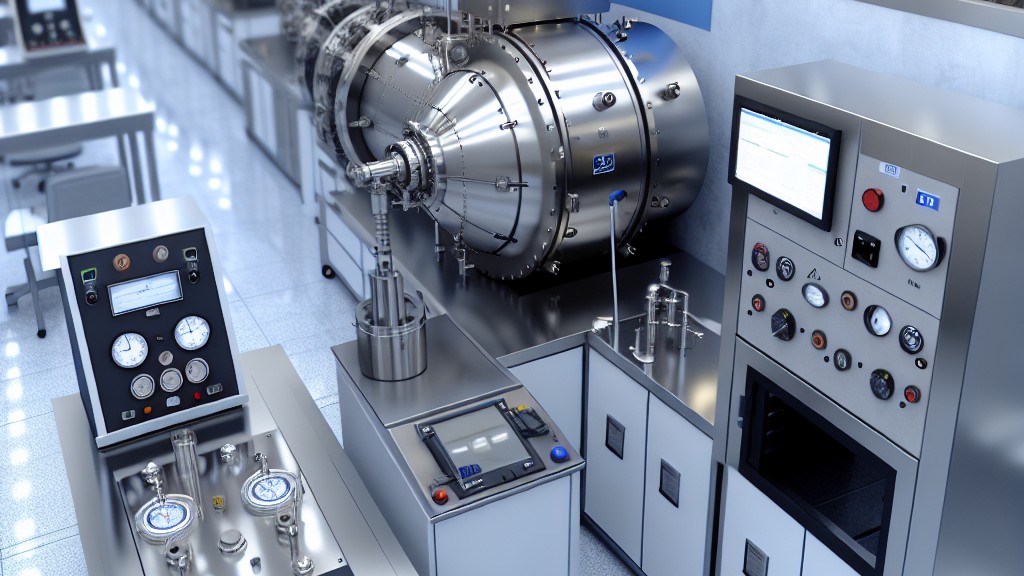
This test method includes test apparatus and associated operating procedures to evaluate the total mass flow emanating from a material exposed to temperatures between 298 and 398 K. Pressures outside the sample effusion cell are less than 7 x 10 Pa. Deposition rates are measured during material outgassing tests. A test procedure for collecting data and a test method for processing and presenting collected data are included.
This test method can be used to generate the data needed to support mathematical models used to predict the formation, migration and accumulation of molecular contaminants. All types of organic, polymeric and inorganic materials can be tested. These include polymer filler compounds, foams, elastomers, films, tapes, insulations, shrink tubing, adhesives, coatings, fabrics, tethers and lubricants.
There are two test methods in this standard. Test Method A uses standard sample and collector temperatures. Test Method B allows flexibility of user-specified sample and collector temperatures, material and test geometry, and user-specified quartz crystal microbalances.
For the purposes of this standard, the following terms and definitions apply:
The test apparatus described in this test method is designed to measure outgassing rate data used to develop kinetic expressions for use in models predicting the evolution of molecular contaminants and their migration and deposition on spacecraft surfaces. Materials containing volatile species that will outgas under the temperature and vacuum conditions of this test method can be characterized. The quartz crystal microbalances used in this test method provide a sensitive technique for measuring very small amounts of deposited mass. In addition to providing data for kinetic expressions, the reduced data can also be used to compare the outgassing behavior of different materials for material selection purposes.
There are two test methods in this standard:
Measurements are made by placing the material sample in an effusion cell so that the outgassing flow from the cell orifice impinges on three quartz crystal microbalances arranged to image the orifice. A fourth quartz crystal microbalance is optional. The effusion cell is maintained at a constant temperature in a high vacuum chamber and has a small orifice directed towards the quartz crystal microbalances. The quartz crystal microbalances are controlled to selected temperatures. The total outgassing rate is determined from the collection rate on a cryocooled quartz crystal microbalance. At the end of the isothermal test, the quartz crystal microbalances are heated in a controlled manner to determine the evaporation characteristics of the deposits.
The effusion cell is loaded into the main test chamber from the vacuum locking chamber and positioned at a fixed distance and angle relative to the quartz crystal microbalance surfaces. The temperature of the effusion cell is controlled to ensure continuous and uniform heating of the sample. The vacuum locking chamber is a device that allows the test sample to be conveniently inserted into the high vacuum of the main test chamber. Using the locking chamber for loading and unloading samples prevents vacuum loss in the main chamber and reduces the need to release the vacuum before each test.
Our organization, which has been trying to support businesses from every sector with its testing, measurement, analysis and evaluation studies carried out in a wide range for years, has a strong staff that closely follows the developments in the world in the field of science and technology and constantly improves itself. In this context, testing services in accordance with the "ASTM E1559-09 Standard test method for contamination gas release properties of spacecraft materials" standard are also provided to businesses.
To get an appointment, to get more detailed information or to request an evaluation, you can ask us to fill in our form and reach you.